
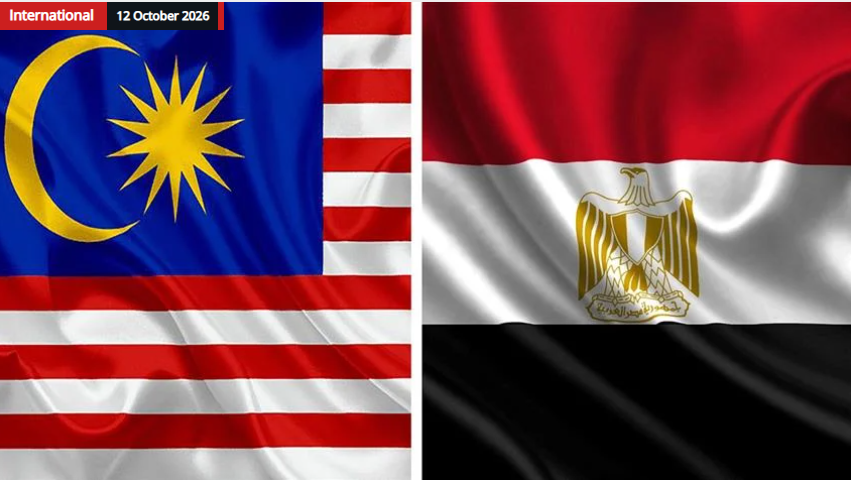
Egypt and Malaysia have reaffirmed their strategic partnership following President Abdel Fattah el-Sisi’s official visit to Malaysia, announcing plans to expand cooperation in manufacturing, renewable energy, infrastructure, agriculture and advanced technologies.
According to a joint statement published by the Egyptian Presidency, discussions between President el-Sisi and Malaysian Prime Minister Anwar Ibrahim focused on strengthening economic relations and identifying new opportunities for investment and industrial cooperation.
Both governments emphasized their countries’ potential to serve as strategic gateways connecting African, Arab, European and Southeast Asian markets.
Expanding Industrial and Technological Cooperation
The joint statement identified several priority sectors, including digital transformation, semiconductor technology, technical education and infrastructure development.
These areas are particularly important as Egypt seeks to strengthen its manufacturing capabilities, attract foreign investment and expand its participation in international production networks.
Malaysia’s experience in electronics manufacturing and semiconductor production presents potential opportunities for industrial partnerships and technology transfer.
Cooperation in renewable energy and agriculture could also support Egypt’s economic diversification and sustainable development objectives.
However, the statement establishes areas for future cooperation rather than confirming specific new investments or completed industrial projects.
Egypt Seeks Stronger Relations With ASEAN
Another significant development was Malaysia’s support for Egypt’s ambition to obtain Sectoral Dialogue Partner status with the Association of Southeast Asian Nations (ASEAN).
Such a relationship could provide Egypt with additional opportunities to strengthen economic and diplomatic engagement with Southeast Asian countries.
Both governments also emphasized the importance of cooperation between ASEAN and the African Union.
These discussions reflect growing interest in strengthening institutional connections between Africa and Asia, particularly in trade, investment and industrial development.
Red Sea Security and International Trade
The joint statement also addressed Red Sea security and freedom of navigation.
The Red Sea remains a critical international shipping corridor connecting Asian manufacturing centers with European and African markets through the Suez Canal.
Disruptions to maritime transportation can affect shipping costs, supply chains and international trade.
For Egypt, maintaining secure maritime routes is closely connected to its economic interests and its role as a major international transportation hub.
Stronger cooperation on maritime security could therefore support broader economic relations between Africa and Southeast Asia.
What This Means for African Integration
Egypt’s expanding relationship with Malaysia has implications beyond bilateral diplomacy.
As a member of the African Union and a participant in the African Continental Free Trade Area (AfCFTA), Egypt is positioned to connect Asian investment and manufacturing expertise with emerging African production networks.
If successfully implemented, industrial partnerships could support regional value chains, encourage technology transfer and expand opportunities for African businesses.
The potential benefits could extend beyond Egypt if new investments strengthen production, sourcing and trade relationships with other African economies.
However, these outcomes will depend on actual investment commitments, infrastructure development and the participation of African industries.
Conclusion: From Strategic Partnership to Economic Results
The Egypt–Malaysia joint statement represents an effort to deepen cooperation between two strategically positioned economies.
Its emphasis on manufacturing, renewable energy, semiconductors and trade connectivity reflects opportunities for stronger economic relations between Africa and Southeast Asia.
The central question is whether these diplomatic commitments will produce measurable investments, technology transfers and industrial development that benefit the wider African continent.
For Africa’s integration agenda, the significance of this partnership will ultimately depend on whether Egypt can help connect Asian industrial capabilities with African production networks and the broader AfCFTA market.