
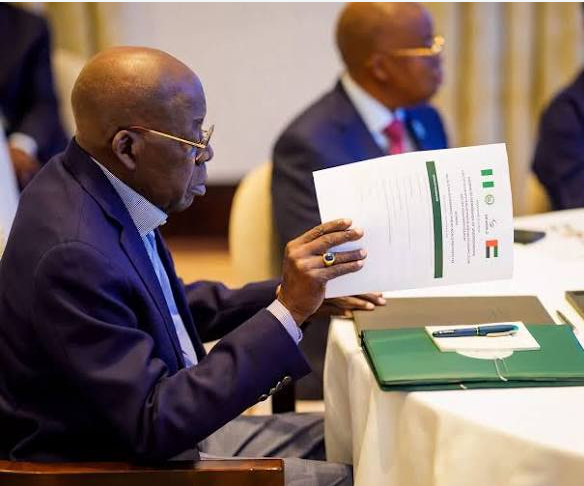
Nigerian President Bola Tinubu has welcomed the October 2026 Nigeria Development Update from the World Bank, highlighting improved economic growth, stronger government revenues and increased infrastructure spending.
According to figures presented in a statement by the Nigerian Presidency, the country’s economy expanded by 4.2% during the first half of 2026, compared with 3.9% during the corresponding period in 2025.
The Presidency also reported improvements in foreign reserves, increased government revenues and expanded infrastructure investment by state governments.
It cited World Bank projections indicating that Nigeria’s economic growth could average at least 4.4% between 2026 and 2028.
However, President Tinubu acknowledged that stronger economic indicators must translate into improvements in household living standards, employment opportunities and the cost of essential goods.
Economic Growth and Government Revenue
The figures presented by the Presidency suggest an improvement in Nigeria’s economic performance.
Higher government revenues and stronger foreign reserves could provide additional resources for infrastructure development, public services and economic stabilization.
Increased spending by state governments may also support transportation networks, public facilities and other development priorities.
However, economic growth does not automatically translate into improved living conditions.
For many households, food prices, employment opportunities and purchasing power remain essential measures of economic progress.
Tinubu Outlines Priorities for Household Relief
President Tinubu reaffirmed his administration’s commitment to several initiatives intended to address economic pressures.
These include targeted cash transfers, increased agricultural productivity, expanded compressed natural gas deployment, and investment in healthcare and education.
Agricultural improvements could help increase domestic food production and address supply constraints contributing to high food costs.
Compressed natural gas initiatives are intended to provide alternative energy options, particularly in transportation.
Meanwhile, investments in education and healthcare could support long-term workforce development and productivity.
The effectiveness of these measures will depend on implementation, accessibility and measurable benefits for households.
What Nigeria’s Growth Means for West Africa
Nigeria’s economic performance has implications beyond its national borders.
As a major economy within the Economic Community of West African States (ECOWAS), Nigeria plays an important role in regional trade, investment, transportation and industrial development.
Stronger Nigerian production and infrastructure could support commercial activity with neighboring countries and contribute to regional supply chains.
These developments are also relevant to the African Continental Free Trade Area, which seeks to expand trade and strengthen economic integration among African countries.
However, sustained regional benefits will depend on whether economic growth supports productive industries, improves transportation infrastructure and increases opportunities for cross-border commerce.
The Bigger Question: Will Economic Growth Improve Living Standards?
The October 2026 Nigeria Development Update raises an important question about the relationship between national economic performance and household prosperity.
While the Presidency’s figures indicate stronger growth and government finances, the challenge is ensuring that improvements reach ordinary citizens.
Progress will need to be evaluated through employment creation, food affordability, infrastructure delivery and access to essential services.
Conclusion
President Tinubu’s response to the World Bank’s latest economic update reflects the Nigerian government’s emphasis on improving growth and strengthening public finances.
Yet the President’s acknowledgment of continuing household challenges underscores the importance of translating economic gains into measurable improvements in living standards.
For Nigeria and the wider ECOWAS region, the central question is whether stronger economic growth can support industrial development, affordable living conditions and greater regional trade.
Nigeria’s economic progress could contribute to Africa’s broader integration ambitions, but its long-term significance will depend on results experienced by households, businesses and neighboring economies.