
DJIBOUTI — September 1, 2026 — The Intergovernmental Authority on Development (IGAD) is strengthening public awareness of regional free movement and labour mobility as part of its broader effort to deepen economic and social integration across the Horn of Africa and East Africa.
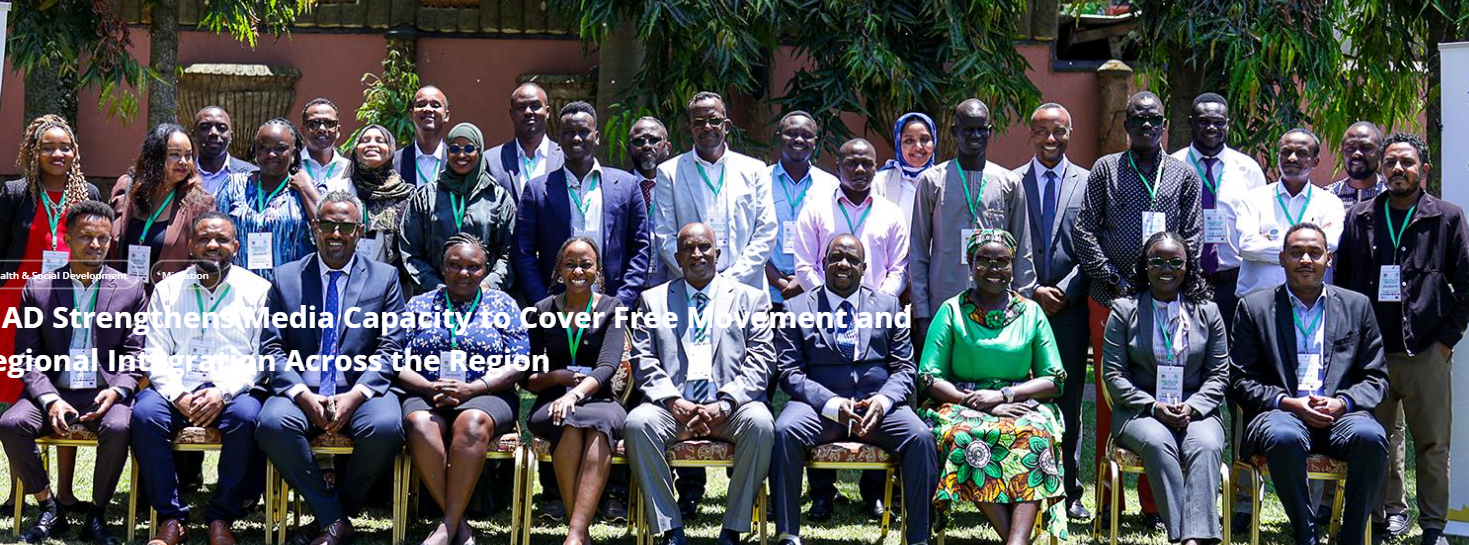
IGAD reported that 27 media and communications professionals from seven member states participated in a regional training initiative focused on improving understanding and communication surrounding human mobility.
Conducted in cooperation with the International Labour Organization (ILO) and the European Union, the programme focused particularly on the IGAD Protocol on Free Movement of Persons, as well as labour migration, human trafficking, migrant smuggling and regional integration.
The initiative reflects IGAD’s recognition that implementing free movement requires more than agreements between governments. Citizens, workers, businesses and communities must also understand what regional mobility means, the opportunities it can provide and the legal frameworks governing movement across borders.
Mobility as an Economic Opportunity
IGAD emphasized that properly governed mobility can contribute to cross-border trade, employment, investment and skills transfer among its member states.
For workers, regional mobility could provide access to employment opportunities beyond their home countries. Businesses could potentially draw from a larger regional workforce, while professionals and skilled workers moving across borders could help transfer knowledge and expertise between economies.
Greater mobility can also support traders and entrepreneurs operating across national boundaries, strengthening regional markets and economic connections.
At the same time, IGAD’s training addressed some of the risks associated with poorly managed migration, including human trafficking and migrant smuggling.
The challenge for the regional organization is therefore to make legitimate cross-border movement easier while strengthening protections against exploitation and criminal networks.
Free Movement and African Integration
The initiative also has broader implications for African integration.
Free movement is an important part of efforts to create increasingly connected regional economies. Alongside trade agreements and infrastructure development, the ability of people and workers to move between countries can help transform regional integration from agreements between governments into something experienced directly by citizens.
For IGAD, effective implementation of its Free Movement Protocol could strengthen economic connections among member states while complementing wider continental ambitions involving the African Continental Free Trade Area and African Union integration agenda.
The latest communications initiative highlights another important element of that process: regional policies must be understood by the people they are intended to serve.
If well managed, IGAD argues that greater mobility could become not simply a migration issue, but an important tool for employment, trade, investment, skills development and deeper regional integration.