
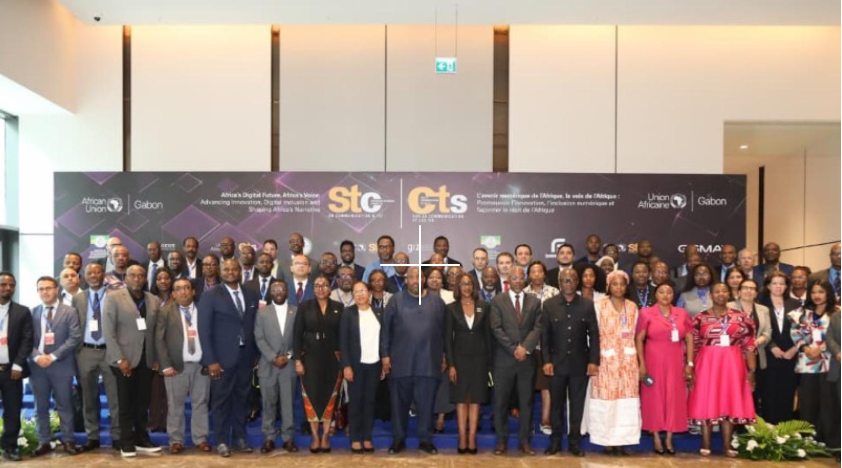
The African Union has opened the Sixth Ordinary Session of its Specialized Technical Committee on Communication and Information and Communication Technologies (STC-CICT), bringing together delegates to discuss the future of Africa’s digital transformation and technological cooperation.
The session includes discussions on artificial intelligence, cybersecurity, data governance, digital identity and the development of interoperable digital systems across African countries.
Delegates also elected a new Bureau responsible for coordinating the committee’s work and supporting cooperation among member states.
Ghana Takes Leadership of AU Digital Committee
Under the newly elected leadership structure, Ghana will serve as Chair, with Kenya assuming the position of First Vice-Chair.
Gabon will serve as Third Vice-Chair, while Lesotho takes the position of Rapporteur. The Second Vice-Chair position, allocated to North Africa, remains pending.
The leadership arrangement reflects the African Union’s approach to ensuring regional representation within its specialized technical committees.
Artificial Intelligence and Cybersecurity Among Key Priorities
The committee is examining several issues central to Africa’s digital development, including the governance of artificial intelligence, protection of digital infrastructure, cybersecurity cooperation and the establishment of common standards for digital identity.
Another important area is interoperability — the ability of digital systems in different countries to communicate and exchange information securely.
Improved interoperability could eventually make it easier for African governments, businesses and public institutions to coordinate services across national borders.
These discussions also support the broader objectives of the African Union’s Digital Transformation Strategy for Africa (2020–2030), which seeks to strengthen digital infrastructure, expand connectivity and support a more integrated African digital economy.
The Challenge of Coordinating 55 Sovereign Nations
Outgoing committee chair Kanono Ramashamole of Lesotho emphasized one of the African Union’s most significant institutional challenges: achieving consensus among 55 sovereign countries.
Each country maintains its own laws, national development priorities, technological capabilities and regulatory institutions.
Establishing common digital standards therefore requires extensive consultation, negotiation and political cooperation.
This challenge extends beyond the ICT sector. It is central to Africa’s wider effort to build a more integrated continental economy while respecting the sovereignty of individual member states.
Why This Matters for African Integration
Digital cooperation is becoming increasingly important to the African Continental Free Trade Area (AfCFTA) and the broader goals of Agenda 2063.
Common digital standards could support cross-border trade, improve government services, strengthen cybersecurity cooperation and help African businesses participate in regional markets.
However, the election of a new Bureau does not itself establish binding continental technology rules. The committee’s influence will depend on the recommendations adopted, subsequent AU decisions and implementation by member states.
For Africa’s eight Regional Economic Communities, stronger continental digital coordination could also provide a framework for aligning regional technology initiatives with African Union priorities.
WDS Perspective: Building Africa’s Digital Future
For When the Dust Settles, the significance of this meeting extends beyond the election of new committee leadership.
Africa is undertaking an unprecedented experiment in continental integration: coordinating the development priorities of 55 sovereign nations through shared institutions, strategies and agreements.
Digital transformation represents another important test of that ambition.
The central question is whether African countries can move beyond policy discussions toward practical systems that allow governments, businesses and citizens to connect more efficiently across borders.
With Ghana leading the committee’s new Bureau, attention will turn to whether the AU can translate discussions on artificial intelligence, cybersecurity, digital identity and interoperability into measurable progress.
Africa’s digital integration will ultimately be judged not by the number of strategies adopted, but by how effectively those strategies connect the continent.