
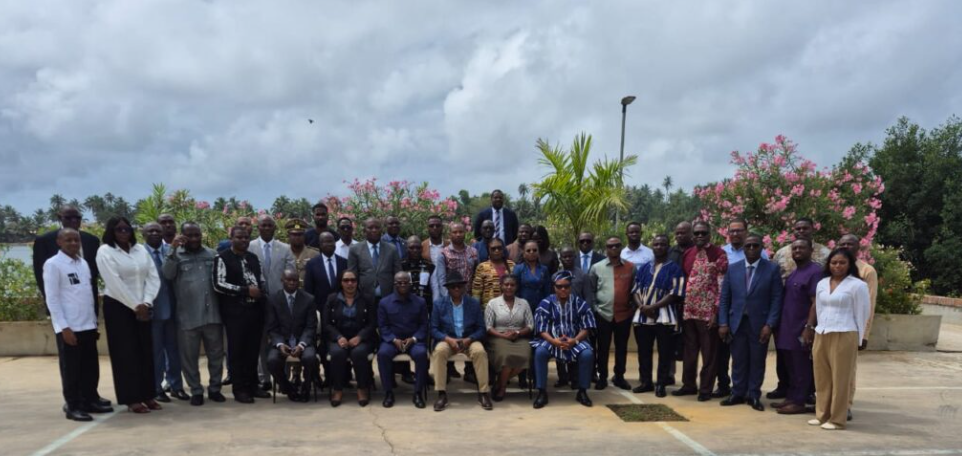
GRAND-BASSAM, Côte d’Ivoire — The Economic Community of West African States (ECOWAS) has reported an important step toward reducing technical barriers to trade between Ghana and Côte d’Ivoire, as both countries move forward with implementing a Mutual Recognition Agreement (MRA) on product inspection certificates.
The development follows a bilateral meeting held October 21–23, 2026, in Grand-Bassam, Côte d’Ivoire, where representatives from both countries reviewed arrangements for putting the agreement into operation.
Originally approved by trade ministers in May 2025, the agreement seeks to simplify cross-border commerce by allowing participating authorities to recognize qualifying inspection certificates issued by their counterparts, reducing the need for repeated inspections of the same products.
During the meeting, participants selected an initial list of products for a pilot phase and approved an implementation action plan, marking a transition from policy commitments toward practical application.
Reducing Trade Costs and Border Delays
For businesses operating between Ghana and Côte d’Ivoire, repeated inspections and compliance procedures can increase transportation expenses, delay deliveries, and complicate access to neighboring markets.
Under the proposed mutual recognition arrangement, products that meet agreed inspection and certification requirements could move more efficiently between the two countries without undergoing unnecessary duplicate inspections.
The agreement is intended to address three persistent challenges affecting regional commerce:
- Duplicated inspections: Reducing repeated product checks when qualifying certificates have already been issued by recognized authorities.
- High compliance costs: Lowering administrative and inspection expenses for businesses, particularly small and medium-sized enterprises.
- Border delays: Improving the movement of goods while preserving appropriate product safety and quality controls.
Mutual recognition does not mean eliminating inspections or abandoning national standards. Rather, it involves establishing confidence between participating regulatory authorities so that qualifying certificates can be accepted across borders.
The effectiveness of the arrangement will depend on how consistently the two countries implement the agreed procedures.
A Strategic Development for the Abidjan–Lagos Corridor
The Ghana–Côte d’Ivoire agreement carries significance beyond bilateral trade.
Both countries occupy strategic positions along the Abidjan–Lagos transport corridor, one of West Africa’s major commercial routes, connecting Côte d’Ivoire, Ghana, Togo, Benin and Nigeria.
The corridor links important ports, industrial centers, agricultural markets and major urban populations.
However, physical infrastructure alone cannot guarantee efficient trade. Differences in national regulations, inspection procedures and documentation requirements can create additional costs even where roads and border facilities are available.
By improving cooperation between Ghanaian and Ivorian inspection authorities, the agreement could provide a model for addressing similar regulatory barriers elsewhere along the corridor.
If the pilot demonstrates measurable improvements, its lessons could inform broader ECOWAS trade facilitation efforts.
From Regional Agreements to Practical Implementation
For decades, ECOWAS has pursued the objective of creating a more integrated West African market through policies designed to promote the movement of goods, services, people and capital.
Yet implementing regional agreements across sovereign countries remains a major institutional challenge.
National governments maintain their own regulatory systems, enforcement responsibilities and consumer protection requirements. Harmonizing these arrangements requires more than political declarations.
The October meeting is therefore significant because it addressed practical implementation.
Selecting products for the pilot and approving an action plan are concrete administrative steps. They create a framework through which participating authorities can begin testing whether mutual recognition works under actual trading conditions.
Nevertheless, the announcement does not establish that the pilot has already begun operating or that border delays and compliance costs have been reduced.
Those outcomes will require evidence from implementation.
Implications for the African Continental Free Trade Area
The agreement also supports the wider objectives of the African Continental Free Trade Area (AfCFTA).
The AfCFTA seeks to expand trade among African countries by progressively reducing tariff and non-tariff barriers, strengthening regional value chains and creating a more connected continental market.
Technical trade barriers remain a critical issue because removing tariffs does not automatically eliminate regulatory obstacles.
A product may qualify for preferential market access but still face repeated certification requirements, inspections or administrative procedures when crossing a border.
Mutual recognition arrangements can help address these challenges by building trust between national conformity assessment systems.
The Ghana–Côte d’Ivoire initiative illustrates how regional economic communities such as ECOWAS can contribute to continental integration through practical bilateral cooperation.
Rather than waiting for every African country to establish identical regulatory procedures, participating governments can develop arrangements that recognize equivalent inspection processes while maintaining agreed safeguards.
What Happens Next?
The next phase will be determined by the implementation action plan approved during the Grand-Bassam meeting.
Important indicators of progress will include whether participating authorities begin accepting eligible inspection certificates, whether businesses experience fewer repeated inspections and whether border processing becomes more efficient.
The initial product list and specific implementation deadlines were not included in the information provided.
Successful implementation could encourage additional countries to explore similar arrangements, particularly along heavily used regional trade corridors.
However, the benefits will depend on effective coordination, reliable certification systems, transparent procedures and consistent enforcement.
WDS Perspective: Integration Must Deliver Results at the Border
For When the Dust Settles, this development highlights a central question confronting African regional integration: How can political commitments be translated into improvements that businesses and ordinary citizens can experience?
The African Union and its eight recognized Regional Economic Communities are participating in an extraordinary continental experiment—bringing 55 sovereign African countries together around shared economic and institutional objectives while preserving their national independence.
That undertaking requires coordination across different legal systems, regulatory institutions, economic priorities and national interests.
The Ghana–Côte d’Ivoire Mutual Recognition Agreement represents one practical approach to that challenge.
Rather than attempting to eliminate national regulatory authority, the agreement seeks to establish cooperation between existing institutions.
Its success should not be measured solely by the number of meetings held or agreements approved.
The real measure will be whether a business transporting goods from Côte d’Ivoire into Ghana can cross the border with fewer unnecessary inspections, less paperwork and lower costs without compromising product safety.
If the agreement produces those results, it could demonstrate how regional integration moves from diplomatic commitments into everyday commercial activity.
And if similar arrangements expand across the Abidjan–Lagos corridor, they could contribute to the broader transformation of West Africa’s regional trading system.
For ECOWAS, the challenge is now implementation.
For Africa’s wider integration agenda, the lesson is clear: Regional integration becomes meaningful when agreements begin changing how goods, services and people move across borders.