
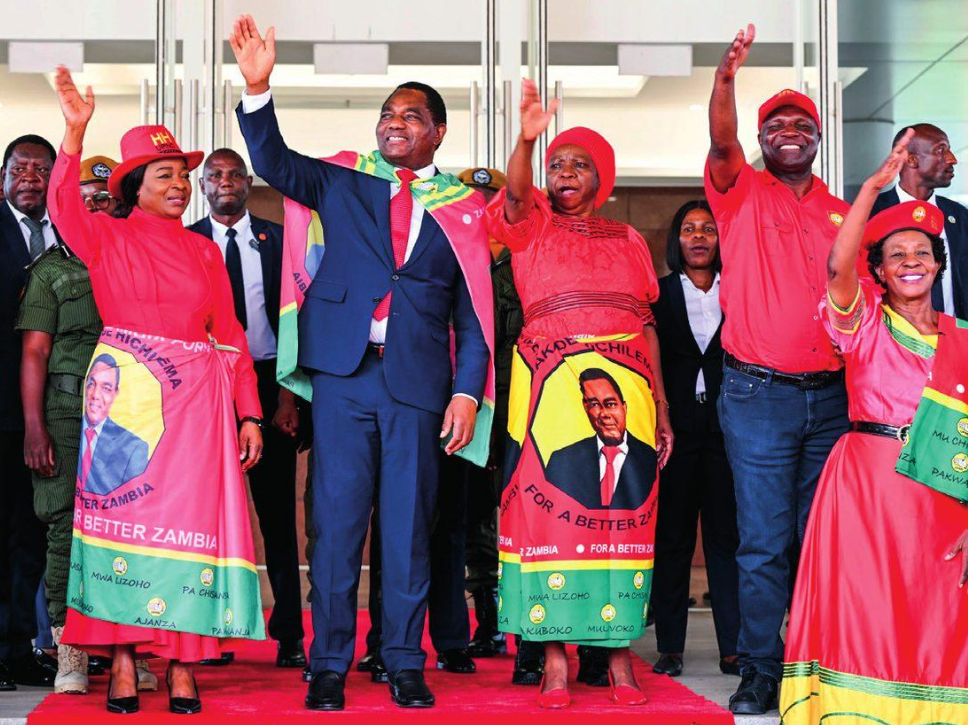
LUSAKA, Zambia — Zambia is preparing for a closely watched general election on August 13, with more than eight million registered voters expected to elect a president, members of the National Assembly, and local government representatives.
The election is widely viewed as a decisive test of President Hakainde Hichilema’s first term in office, as he seeks re-election under the banner of the United Party for National Development (UPND). Although fourteen presidential candidates are on the ballot, political analysts have largely characterized the race as a contest between Hichilema and Brian Mundubile, the candidate representing the Forum for Democracy and Development (FDD) under the Tonse Alliance.
Hichilema is campaigning on his administration’s record of economic reforms, debt restructuring, and efforts to revive Zambia’s mining sector. His government has pledged to expand copper production, attract foreign investment, strengthen infrastructure, and maintain macroeconomic stability.
“Our focus remains on creating jobs, growing the economy, and ensuring Zambia continues on the path of sustainable development,” Hichilema has repeatedly emphasized during campaign events.
Mundubile has centered his campaign on addressing the rising cost of living, creating employment opportunities, and expanding social welfare programs. The opposition argues that while macroeconomic indicators have improved under the current administration, many Zambians continue to struggle with high prices and unemployment.
Other presidential candidates include Fred M’membe of the Socialist Party, who advocates greater state involvement in the economy and expanded social programs, and Harry Kalaba of Citizens First, whose campaign focuses on anti-corruption reforms, youth employment, and agricultural development.
Key Issues Driving the Campaign
Several issues have dominated the election campaign:
- The cost of living and inflation.
- Employment, particularly for young people.
- Expansion of Zambia’s copper mining industry.
- Electricity shortages and energy security.
- Public debt management and economic recovery.
- Governance, democratic freedoms, and institutional reforms.
Economic management has remained at the center of public debate following Zambia’s debt restructuring and ongoing efforts to restore investor confidence while improving living standards.
SADC Deploys Election Observation Mission
The Southern African Development Community (SADC) has announced the deployment of its SADC Electoral Observation Mission (SEOM) to monitor Zambia’s general election.
According to the SADC Secretariat, the mission is being deployed in accordance with the Revised SADC Principles and Guidelines Governing Democratic Elections (2021). Observers have been assigned across Zambia’s ten provinces to assess the pre-election environment, polling day procedures, vote counting, and the immediate post-election process.
The observation mission will monitor the opening of polling stations, the voting process, ballot counting, and the tabulation of results before issuing a Preliminary Statement on August 15, providing its initial assessment of the credibility and conduct of the election.
SADC said the deployment reflects the regional body’s continued commitment to promoting democratic governance, credible elections, peace, security, and political stability throughout Southern Africa.
In addition to SADC, the European Union and other international organizations have also deployed election observation missions to monitor the electoral process.
A Closely Watched Vote
The outcome of the August 13 election will shape Zambia’s political and economic direction over the next five years. For President Hichilema, the vote represents a referendum on his government’s economic reforms and governance agenda. For the opposition, it offers an opportunity to persuade voters that a change in leadership is necessary to address everyday economic challenges.
With regional and international observers on the ground and millions of Zambians expected to cast their ballots, attention is now turning to whether the election will reinforce Zambia’s reputation as one of Southern Africa’s more stable democracies.