
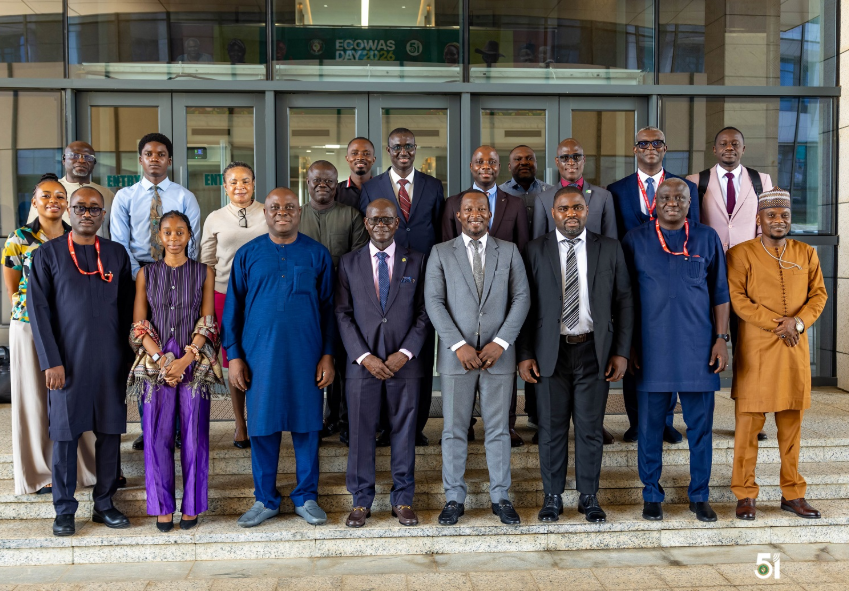
ABUJA, Nigeria — The Economic Community of West African States (ECOWAS) Commission is strengthening its ability to track regional integration through a capacity-building initiative focused on the African Regional Integration Synthesized Index (ASRII) digital platform.
The four-day exercise is designed to improve the ability of ECOWAS institutions and officials to use the digital platform to measure progress toward regional integration and identify areas where member states may be falling behind established commitments.
The ASRII provides a framework for assessing integration across several important areas, including regional trade, infrastructure development, productive capacity, movement of people and financial integration.
For ECOWAS, access to stronger and more consistent data could help transform regional integration commitments into measurable results.
Turning Regional Commitments Into Measurable Progress
Regional integration has long been at the center of the ECOWAS mission. The organization has worked to promote greater economic cooperation, facilitate movement across borders and strengthen connections among West African economies.
However, agreements and policies alone do not necessarily demonstrate whether integration is actually occurring.
The ASRII platform is intended to help address that challenge by giving policymakers a clearer way to measure progress.
Through the digital system, ECOWAS institutions can examine indicators across different areas of integration and determine where progress is being made and where additional intervention may be necessary.
For example, data could help policymakers assess whether trade between countries is expanding, whether infrastructure is improving cross-border connectivity, whether people are benefiting from regional mobility arrangements, and whether financial systems are becoming more interconnected.
Why Better Data Matters for West Africa
The initiative could have practical implications beyond government institutions.
Regional integration affects everyday issues such as the ability of businesses to sell products across borders, the movement of workers and travelers between countries, transportation costs, access to regional markets and opportunities for investment.
Better monitoring can also help ECOWAS distinguish between commitments that exist primarily on paper and policies that are producing measurable results.
When weaknesses are identified, policymakers can potentially direct resources and policy interventions toward the countries or sectors where implementation is lagging.
That makes the ASRII more than simply a statistical exercise. It can serve as an accountability and policy-planning tool for regional integration.
Building Institutional Capacity
The four-day capacity-building exercise also highlights the importance of ensuring that ECOWAS personnel understand how to collect, interpret and use integration data effectively.
A digital platform is only as valuable as the quality of the information entered into it and the ability of policymakers to translate that information into decisions.
Strengthening institutional knowledge of the ASRII therefore represents another step toward creating a more evidence-based approach to regional policymaking.
As West Africa confronts economic, infrastructure and development challenges, the ability to accurately measure regional cooperation could become increasingly important.
The ultimate test will be whether improved monitoring leads to stronger implementation.
For ECOWAS, the ASRII platform provides an opportunity to move beyond simply asking whether West African countries have committed to integration—and begin measuring how much integration is actually taking place.