
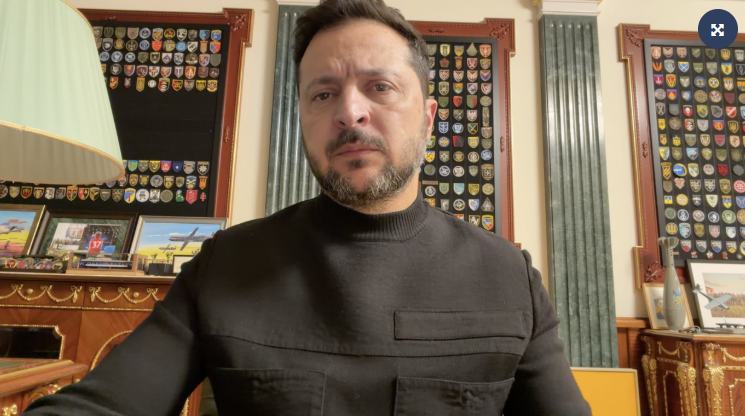
As Ukrainian President Volodymyr Zelenskyy noted following discussions among leaders of the so-called “Coalition of the Willing,” there remains no common understanding of what Article 5-style security guarantees for Ukraine would actually mean. That uncertainty should force a difficult but necessary conversation: perhaps NATO membership is not the security guarantee many Ukrainians believe it to be.
This argument is not about Russia’s objections to NATO expansion. Ukraine is a sovereign nation and should have the right to choose its own alliances. The real question is whether NATO itself would be willing to fight a war with Russia if Ukraine were attacked again.
The answer is far less certain than many politicians would like to admit.
Article 5 of the North Atlantic Treaty is often portrayed as an automatic trigger for military intervention. In reality, the language is more complicated. It requires allies to respond when a member is attacked, but it does not prescribe exactly how they must respond. Each member state determines for itself what actions it considers necessary.
Throughout the war in Ukraine, NATO countries have repeatedly demonstrated their reluctance to become direct participants in the conflict. The alliance has supplied weapons, intelligence, training, and economic assistance worth billions of dollars. Yet it has also drawn clear red lines against direct military confrontation with Russia. Western leaders have consistently sought to support Ukraine while avoiding a NATO-Russia war.
That raises an uncomfortable question. If many NATO governments are unwilling to risk direct conflict with Russia while Ukraine is outside the alliance, what confidence can Ukrainians have that those same governments would suddenly be prepared to send troops into battle under Article 5?
The reality is that political will matters more than treaty language. A security guarantee is only as strong as the willingness of nations to honor it under the most dangerous circumstances. The debate among Western leaders itself suggests there is no consensus about what defending Ukraine would actually entail.
History offers another lesson. In both 2014 and 2022, Russia attacked Ukraine because Moscow believed the strategic and military costs were manageable. The Kremlin did not expect Ukraine to possess the capabilities necessary to impose devastating consequences. That calculation proved disastrously wrong in 2022, when Ukrainian forces halted Russia’s advance on Kyiv and later liberated significant territory.
The most effective deterrent is not a document signed in Brussels. It is the ability to make an aggressor conclude that an attack will fail.
That is why Ukraine’s strongest security guarantee is ultimately Ukraine itself.
Over the past several years, Ukraine has transformed its military into one of the most experienced and battle-hardened fighting forces in Europe. Its armed forces have demonstrated innovation in drone warfare, missile defense, intelligence integration, and battlefield adaptation. The country’s rapidly expanding domestic defense industry is reducing dependence on foreign suppliers and creating the foundation for long-term military self-sufficiency.
Rather than focusing exclusively on NATO membership, Ukraine and its partners should prioritize building a military so capable that Russia never again believes a successful invasion is possible. That means investing in domestic weapons production, advanced air defenses, long-range strike capabilities, drone technology, cyber warfare, and a reserve force able to mobilize quickly in times of crisis.
A heavily armed, technologically advanced, and economically resilient Ukraine would present a deterrent far more credible than ambiguous promises of future intervention.
None of this means Ukraine should cut ties with NATO. Cooperation, training, intelligence sharing, and arms partnerships remain crucial. But Ukraine’s security strategy should not depend on the assumption that foreign soldiers will come to fight its wars.
The harsh reality of international politics is that nations ultimately defend themselves. Alliances can help. Treaties can help. Foreign aid can help. But when survival is at stake, military strength remains the most reliable guarantee.
The lesson of both 2014 and 2022 is clear: Ukraine was vulnerable when it was weak, and it survived when it became strong. The best way to ensure Russia never again considers another invasion is not to rely on uncertain interpretations of Article 5, but to build a military so formidable that any future attack would be doomed from the start.
For Ukraine, lasting security will come not from promises on paper, but from strength on the ground.