
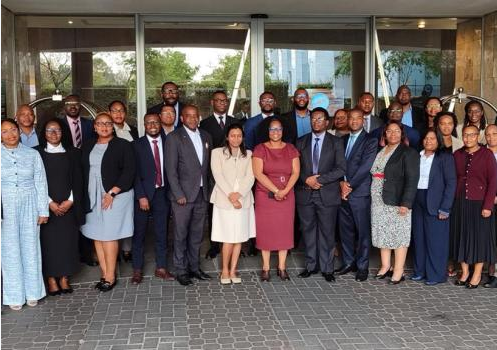
JOHANNESBURG, South Africa — October 3, 2026 — The Southern African Development Community is advancing efforts to deepen regional economic integration after its Tax Working Group concluded five days of technical discussions with concrete action points covering tax incentives, double taxation agreements, digital services, value-added tax and the proposed SADC UNIVISA.
The SADC Tax Working Group met in Johannesburg, South Africa, from September 28 to October 2, bringing together representatives of Member States and the SADC Secretariat. According to SADC, the meeting focused on strengthening regional tax cooperation while supporting sustainable domestic revenue mobilization.
Tax Incentives Under Greater Scrutiny
One major area of discussion was the use of tax incentives across the region.
SADC reported that the Working Group reviewed implementation of the SADC Guidelines on Tax Incentives and examined developments across 15 participating Member States. Governments across the region continue to use measures including tax holidays, reduced corporate tax rates, investment allowances, accelerated depreciation, customs relief and VAT exemptions to attract investment, encourage exports, create employment and support economic diversification.
But attracting investment is only one side of the equation.
Tax incentives can also reduce government revenue. The Working Group therefore emphasized the importance of determining how much revenue governments give up through these measures and whether the incentives ultimately produce the economic benefits they were designed to generate.
Member States agreed to strengthen national frameworks for monitoring tax incentives, improve transparency and reporting of tax expenditures, and promote more systematic reviews of incentive programmes.
That could become increasingly important as SADC countries compete for investment while simultaneously needing revenue for infrastructure, education, healthcare and other public services.
Regional Tax Agreement Moves Toward Implementation
The meeting also reviewed progress on the SADC Agreement on Assistance in Tax Matters, or AATM.
The agreement is intended to strengthen cooperation between tax authorities across the region. According to SADC, the required signature threshold has already been achieved, but five additional ratifications are still needed before the agreement can enter into force. The Working Group called for the ratification process to be accelerated.
Greater cooperation between national tax authorities could become increasingly important as businesses operate across multiple SADC countries and economic activity becomes more regional and digital.
The Working Group also examined the region’s network of Double Taxation Avoidance Agreements, commonly known as DTAAs.
These agreements are designed to address situations in which income or business activity could potentially be taxed in more than one jurisdiction. SADC Member States discussed existing and planned agreements as well as the need to modernize older arrangements, strengthen institutional capacity and protect national taxing rights as international tax standards evolve.
For businesses considering cross-border investment, greater clarity and coordination in this area can help make regional operations more predictable.
Digital Economy Forces Tax Systems to Adapt
Another significant issue was taxation of the rapidly expanding digital economy.
Digital platforms can provide services to consumers in one country while being headquartered or operating from another jurisdiction, creating new challenges for traditional tax systems.
SADC said Member States exchanged experiences involving VAT on digital services, including simplified registration systems, taxpayer engagement, risk-based compliance and proportionate enforcement.
The discussions demonstrate how regional integration increasingly involves more than physical borders, highways and customs posts. Governments must also determine how taxation works when economic activity crosses borders digitally.
UNIVISA Moves Into the Technical Details
Perhaps the most visible integration issue discussed during the meeting was the proposed SADC UNIVISA.
The concept is intended to facilitate travel across participating Southern African countries through a more coordinated visa arrangement. But establishing such a system requires governments to resolve practical questions—including how visa revenue would be distributed among participating states.
The Tax Working Group reviewed the proposed UNIVISA revenue-sharing model and agreed that work should continue toward finalizing the framework.
This may sound like a technical accounting issue, but it illustrates one of the central challenges of regional integration: countries must agree not only on broad objectives but also on how the financial costs and benefits of integration will be shared.
A functioning regional visa arrangement could have implications for tourism, business travel and movement within Southern Africa, although the Working Group’s latest decisions concern the technical framework rather than the launch of a fully operational region-wide visa.
From Declarations to Implementation
The broader significance of the Johannesburg meeting is the emphasis on implementation.
Regional integration is often associated with summits, treaties and political declarations. But those agreements ultimately depend on technical work carried out by ministries, tax authorities, customs administrations and other national institutions.
The Tax Working Group concluded its meeting with action points that include stronger tax-expenditure reporting, accelerated ratification of the Agreement on Assistance in Tax Matters, improved monitoring of double-taxation agreements, targeted capacity building, finalization of the UNIVISA revenue-sharing framework and greater cooperation on VAT and digital taxation.
These measures address some of the less visible barriers to regional economic integration.
For a company operating across several SADC countries, differences in taxation and treaty arrangements can affect investment decisions and operating costs. For governments, poorly coordinated tax incentives can create competition for investment while reducing public revenue. And for travelers, regional mobility initiatives such as UNIVISA depend on governments resolving the administrative and financial details behind the scenes.
The Johannesburg meeting therefore represents another example of SADC attempting to move regional integration from broad commitments toward practical implementation.
The next test will be whether Member States carry these action points into their national institutions—ratifying agreements, improving tax reporting, coordinating digital taxation and resolving the remaining financial arrangements necessary for initiatives such as UNIVISA.
For Southern Africa, that implementation work may ultimately determine whether regional integration becomes something that exists mainly in agreements—or something businesses, governments and travelers can experience in practice.