
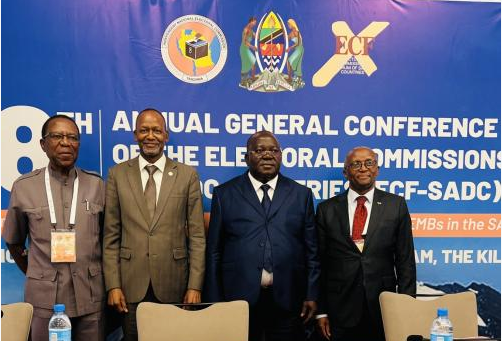
DAR ES SALAAM, Tanzania — The Southern African Development Community (SADC) has called for the strengthening of electoral institutions across the region as democracies face increasingly complex challenges, including electoral violence, misinformation, the growing influence of artificial intelligence, and rapidly evolving political dynamics.
Speaking in Dar es Salaam, SADC officials emphasized the need for electoral management bodies to adapt to a changing political and technological environment. The regional bloc stressed that credible, transparent, and resilient electoral institutions remain essential to safeguarding democracy and maintaining public confidence in electoral processes.
According to SADC, election authorities must be equipped not only to administer voting processes effectively but also to respond to emerging threats that can undermine the integrity of elections. Among the concerns highlighted were the spread of misinformation and disinformation through digital platforms, the use of artificial intelligence-generated content, and the potential for new technologies to influence voter behavior and public opinion.
The organization also underscored the importance of preventing and addressing electoral violence, which continues to pose risks to political stability in several parts of the region. Strong institutions, SADC said, are critical to ensuring that electoral disputes are managed peacefully and that democratic transitions occur through established legal and constitutional mechanisms.
The remarks reflect a growing regional focus on election integrity and democratic governance at a time when technological advancements are reshaping political communication worldwide. As artificial intelligence becomes more accessible and sophisticated, election management bodies across Africa and beyond are increasingly confronted with questions about how to detect manipulated content, combat false information, and maintain public trust in official electoral processes.
SADC’s call comes as many member states continue efforts to strengthen governance frameworks and promote democratic participation. The regional body has long supported election observation missions and initiatives aimed at enhancing transparency, accountability, and citizen confidence in electoral systems.
Analysts say the emphasis on institutional resilience signals recognition that the future of democratic governance will depend not only on traditional electoral administration but also on the ability of institutions to respond effectively to emerging digital and political challenges.
As Southern Africa prepares for future electoral cycles, SADC’s message highlights the growing importance of modernizing democratic institutions to ensure elections remain credible, inclusive, and resistant to both conventional and technology-driven threats.