
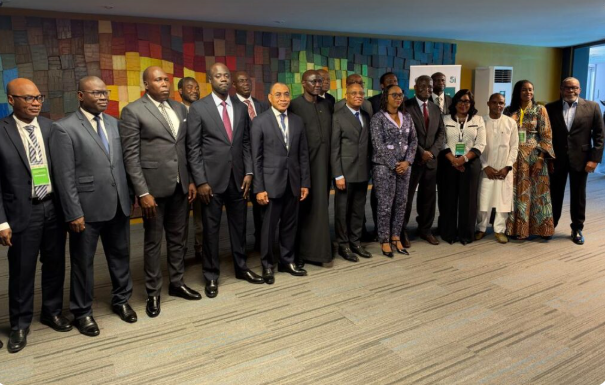
ABUJA, Nigeria — Ministers participating in the Presidential Task Force on the ECOWAS Single Currency Programme have called for decisive measures to accelerate the implementation of the ECO, the proposed common currency for West Africa, with a phased launch targeted for 2027.
The meeting brought together senior officials from across the Economic Community of West African States (ECOWAS) to assess progress on the long-standing monetary integration project and identify the steps needed to move the initiative from planning to execution.
According to ECOWAS, ministers emphasized the importance of maintaining political commitment and strengthening coordination among member states to ensure the successful rollout of the ECO. Participants urged governments and regional institutions to intensify efforts toward meeting the economic and financial convergence criteria required for a common monetary system.
The call for a phased launch reflects the complexity of establishing a single currency across a diverse region of more than 400 million people. Rather than a simultaneous introduction across all member states, the ECO is expected to be implemented gradually, allowing countries that meet the required benchmarks to move forward while others continue preparations.
The ECO has long been viewed as one of the flagship projects of regional integration within ECOWAS. Supporters argue that a common currency could reduce transaction costs, facilitate cross-border trade, increase investment flows, and deepen economic cooperation among member states. Businesses operating across national borders could benefit from fewer exchange-rate risks and simplified financial transactions.
However, the initiative has faced repeated delays over the years as member states worked to meet agreed economic targets, including requirements related to inflation, fiscal deficits, debt sustainability, and foreign reserve levels. Differences in economic performance among member countries have made convergence a significant challenge.
At the latest meeting, ministers reportedly underscored the need for practical actions and renewed momentum, signaling that the region is entering a more decisive phase of preparations. The Presidential Task Force was urged to continue providing strategic guidance and oversight to ensure that technical, institutional, and legal frameworks are in place ahead of the planned launch timeline.
The renewed push for the ECO comes as ECOWAS continues broader efforts to strengthen regional integration through initiatives in trade, infrastructure, energy, and the free movement of people. Regional leaders increasingly view economic integration as essential for improving competitiveness, attracting investment, and building resilience against global economic shocks.
If the 2027 target is achieved, the ECO would mark one of the most significant milestones in ECOWAS’ nearly five-decade history, bringing the region closer to its vision of a fully integrated West African economic community.
For West African citizens, the success of the ECO could ultimately mean easier travel, simpler business transactions, and stronger regional economic ties. Yet the project’s future will depend largely on whether member states can translate political commitments into the economic reforms and institutional coordination required to sustain a shared currency.