
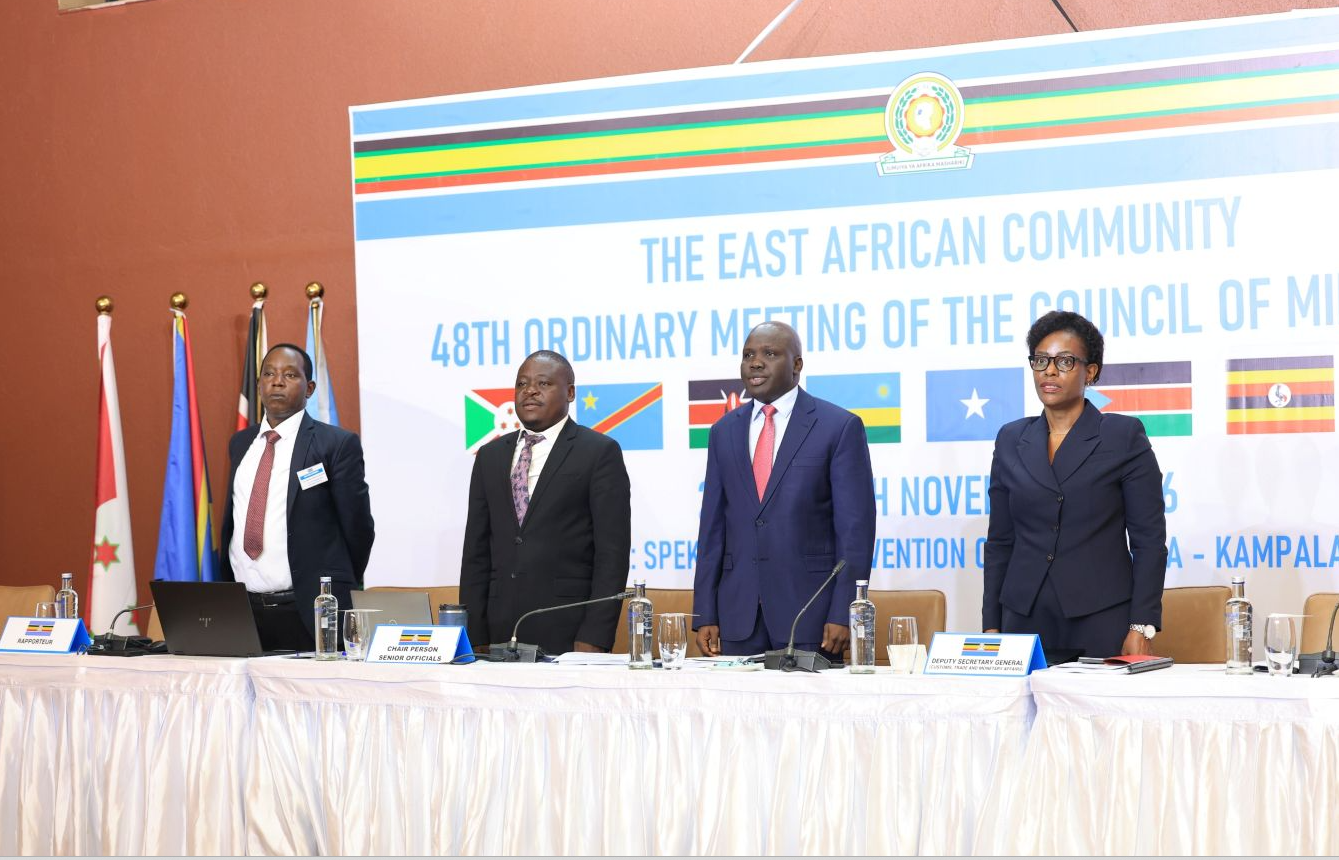
Kampala, Uganda – The East African Community (EAC) has convened its 48th Ordinary Meeting of the Council of Ministers in Kampala, Uganda, with regional leaders reviewing key policies and strategies aimed at accelerating East Africa’s integration agenda.
The meeting brings together ministers responsible for EAC affairs from the bloc’s member states to consider measures designed to strengthen regional cooperation, boost intra-regional trade, enhance the free movement of people and goods across borders, and advance implementation of the newly adopted EAC Development Strategy 2026/27-2030/31.
One of the most notable updates emerging from the meeting is the EAC’s report that nearly 70 percent of decisions and directives issued by previous Council meetings have been fully implemented. The figure signals steady progress in translating regional commitments into action, a longstanding challenge for many regional organizations around the world.
The Council of Ministers serves as the EAC’s main policy-making organ and is responsible for overseeing the implementation of decisions that drive the bloc’s economic, political, and social integration agenda. The latest implementation rate indicates growing momentum behind efforts to harmonize policies and deepen cooperation among partner states.
Among the key issues under discussion are initiatives to remove barriers to trade, improve cross-border movement, strengthen regional institutions, and support the objectives outlined in the new five-year development strategy. The strategy is expected to guide the Community’s priorities through 2031, focusing on economic transformation, competitiveness, and greater regional connectivity.
The meeting comes at a time when the EAC continues to expand its regional integration ambitions. The bloc, which now comprises eight partner states, has pursued major initiatives including the Customs Union, Common Market, infrastructure development projects, digital integration efforts, and the eventual establishment of a Monetary Union.
Officials say the Kampala meeting will provide an opportunity to assess progress, address implementation challenges, and agree on new policy directions that can accelerate integration while delivering tangible benefits to East African citizens and businesses.
With nearly seven out of every ten Council decisions already implemented, EAC leaders are likely to view the current meeting as an opportunity not only to set new priorities but also to build on a record of growing execution across the Community’s integration agenda.