
MOSCOW/PYONGYANG, July 29, 2026 — Russia and North Korea are nearing completion of their first road bridge, a project officially intended to expand trade and tourism. Still, it is increasingly scrutinized over its potential use as a military logistics route during the war in Ukraine.
The two-lane bridge crosses the Tumen River between Khasan in Russia’s Far East and Tumangang in North Korea. Measuring approximately 850 meters, it will connect North Korea directly to Russia’s highway system and complement the Friendship Bridge, a rail crossing that has operated since 1959.
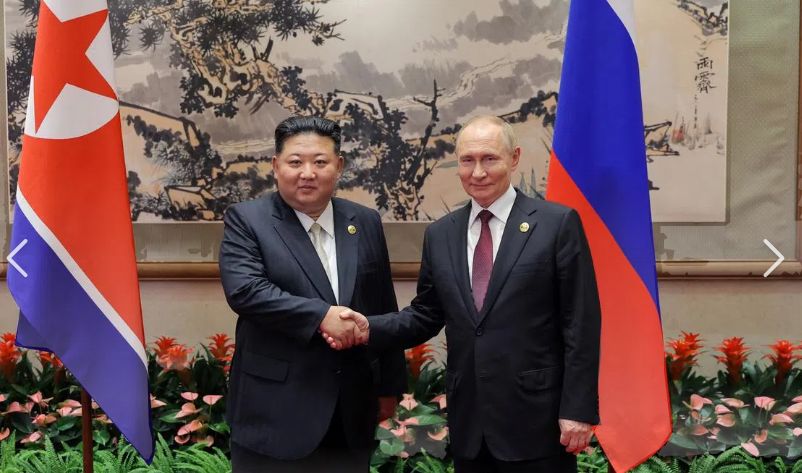
Construction began in April 2025 after Russian President Vladimir Putin and North Korean leader Kim Jong Un agreed to the project during Putin’s 2024 visit to Pyongyang. The two governments connected their sections of the bridge during a ceremony in April 2026. Reuters
Although the bridge structure appears largely complete, work on customs facilities, access roads and other supporting infrastructure has reportedly delayed its opening. Analysts at 38 North said the crossing may not become operational for several months despite earlier plans to open it in June. 38 North
Governments emphasize trade and tourism
Russian and North Korean officials say the crossing will increase trade, reduce transportation costs and support tourism and economic development. Regional officials have said it could eventually accommodate as many as 300 vehicles per day.
The bridge would also shorten the road journey between Vladivostok and North Korea’s Rason economic zone, potentially creating a more reliable commercial connection between the two countries.
However, analysts have questioned whether the current level of bilateral trade is sufficient to explain the project’s cost and strategic importance.
Possible military logistics route
Some security specialists and Ukrainian investigators believe the bridge could support the movement of military supplies, personnel and equipment between North Korea and Russia.
Unlike the existing rail connection, a highway would allow goods to be transported in individual trucks and dispersed quickly across Russia’s extensive road network. Analysts argue that this could make cargo movements more difficult to monitor using satellite imagery.
Those claims have not been independently confirmed, and Moscow and Pyongyang maintain that the crossing is intended for economic and civilian purposes.
Concerns surrounding the project have nevertheless grown alongside expanding military cooperation between the two countries. North Korea has been accused of providing Russia with artillery ammunition, ballistic missiles and military personnel for its war against Ukraine. Kyiv has also warned that Russia could seek additional North Korean troops.
Sanctions implications
The new crossing could attract greater attention from the United States, European Union, South Korea and Japan, particularly if evidence emerges that it is being used to transport weapons or sanctioned goods.
United Nations sanctions restrict arms transfers involving North Korea, while separate Western sanctions target Russia’s military supply networks. A road connection would not itself violate international sanctions, but the cargo transported across it could become the subject of enforcement actions.
The bridge therefore represents more than a transportation project. It is a visible sign of the deepening relationship between Moscow and Pyongyang—one that could strengthen economic ties but also complicate international efforts to monitor arms transfers, enforce sanctions and limit outside support for Russia’s war in Ukraine.