
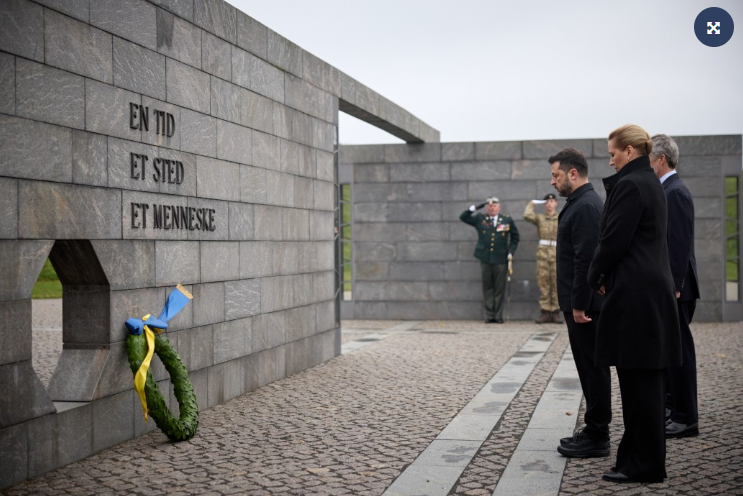
COPENHAGEN, Denmark — Ukrainian President Volodymyr Zelenskyy met with Denmark’s King Frederik X and representatives of the Danish government in Copenhagen, as Ukraine and Denmark explored opportunities to deepen bilateral security cooperation, protect critical infrastructure and develop longer-term economic and industrial partnerships.
According to Ukraine’s presidential office, the discussions focused on strengthening cooperation between the two countries at a time when Ukraine continues to prioritize national security, infrastructure resilience and international partnerships.
The visit also included discussions with Danish business representatives about potential joint production initiatives, highlighting the growing importance of industrial cooperation in Ukraine’s relationships with European partners.
Security Cooperation Remains a Central Priority
Security cooperation was a major focus of Zelenskyy’s engagements in Copenhagen.
Denmark has been an important European partner for Ukraine, providing military assistance and supporting Ukraine’s broader efforts to strengthen its defense capabilities.
The latest discussions reflect an interest in developing cooperation that extends beyond immediate security requirements and supports Ukraine’s longer-term national resilience.
Although Ukraine’s presidential office reported that security cooperation was discussed, the information provided did not identify a newly signed defense agreement or announce additional military assistance resulting from the meetings.
Protecting Critical Infrastructure
Another important subject was the protection of critical infrastructure.
For Ukraine, maintaining essential infrastructure remains central to economic stability, civilian protection and national security.
Energy facilities, transportation networks, communications systems and other essential services are particularly important to the country’s ability to sustain economic activity and provide public services.
Cooperation with Denmark could create opportunities to exchange technical expertise, strengthen infrastructure protection and support reconstruction planning.
However, the presidential office’s reported discussions should not be interpreted as confirmation that specific infrastructure projects have been approved or funded.
Danish Businesses Explore Joint Production Opportunities
Beyond diplomatic and government-level engagements, Zelenskyy also held discussions with Danish businesses concerning potential joint production.
These conversations point toward a possible expansion of Ukraine–Denmark relations into industrial development, investment and production partnerships.
Joint production arrangements could help Ukraine strengthen domestic manufacturing capacity while allowing Danish companies to participate in longer-term commercial cooperation.
Such partnerships could also contribute to technology exchange, workforce development and industrial modernization, depending on the sectors involved and the agreements ultimately reached.
The presidential office did not identify specific companies, investment commitments, production facilities, or implementation schedules in the information provided.
Consequently, the discussions represent potential opportunities rather than confirmed industrial projects.
Denmark’s Role in Ukraine’s European Partnerships
Denmark’s relationship with Ukraine illustrates the broader importance of European bilateral partnerships in supporting Ukraine’s security and economic development.
While European institutions provide frameworks for cooperation, individual governments can also develop targeted partnerships addressing national priorities.
For Ukraine, these relationships matter because they can link immediate security needs to longer-term economic reconstruction and institutional development.
The Copenhagen engagements suggest that both government-level cooperation and private-sector participation remain important elements of Ukraine’s international strategy.
The involvement of Denmark’s monarch also underscores the diplomatic significance of the visit, although responsibility for government policy and security agreements rests with Denmark’s elected government and relevant institutions.
From Diplomatic Discussions to Practical Implementation
The central question following Zelenskyy’s Copenhagen meetings is whether the discussions will produce measurable cooperation.
Potential indicators of progress include formal bilateral agreements, announced industrial investments, funded infrastructure initiatives and operational joint production arrangements.
Until such developments are officially confirmed, the reported engagements should be understood as diplomatic discussions and expressions of potential cooperation.
Nevertheless, the meetings demonstrate Ukraine’s continued efforts to strengthen relationships with European partners across security, infrastructure and economic sectors.
A Partnership Looking Beyond Immediate Security Needs
President Zelenskyy’s engagements with King Frederik X, Danish government representatives and business leaders reflect a diplomatic approach that combines national security with longer-term economic cooperation.
For Ukraine, maintaining international support remains important, but developing productive partnerships may also help shape the country’s future economic capacity.
For Denmark, cooperation with Ukraine presents opportunities to contribute to European security while exploring industrial and commercial relationships.
The significance of the Copenhagen meetings will ultimately depend on whether the discussions translate into funded projects, formal agreements and lasting cooperation between the two countries.
Source: Office of the President of Ukraine, as described in the supplied briefing. This article distinguishes reported meetings from potential future agreements and projects. The original presidential release and its publication date have not been independently verified.
When the Dust Settles (WDS) — International Perspective
This development raises a broader question relevant to African regional integration: how can countries use international partnerships not only to address immediate security concerns but also to build domestic industrial capacity, strengthen infrastructure and establish long-term economic cooperation?
That distinction between diplomatic commitments and measurable implementation is equally important for the African Union and Africa’s eight Regional Economic Communities.