
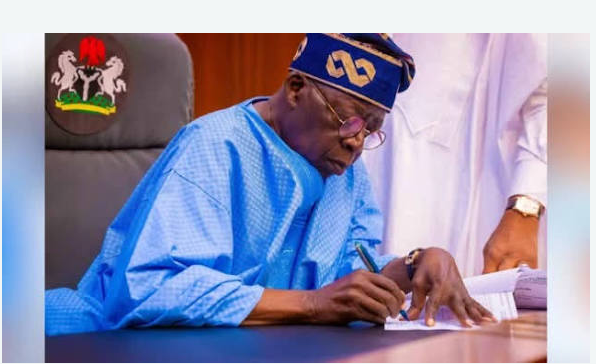
ABUJA, NIGERIA — Nigerian President Bola Ahmed Tinubu has nominated several officials to fill vacancies at the Independent National Electoral Commission (INEC), the institution responsible for organizing and administering elections in Africa’s most populous country.
According to an announcement attributed to the Nigerian Presidency, the nominations include national commissioners and resident electoral commissioners, who play important roles in overseeing electoral operations across the federation.
The nominations come as Nigeria prepares for its 2027 general elections, placing renewed attention on the composition, independence and operational readiness of the country’s electoral management body.
Tinubu announces electoral commission nominations
The Presidency identified Mustapha Aliu, Bashir Muhammed Umar and Oluwatoyin Babalola among the nominees.
President Tinubu also recommended Samuel Akinjide Akinleye and Zahradden Basiru Sanusi for resident electoral commissioner positions.
Additionally, the announcement confirmed the proposed reappointment of Bala Bila as national commissioner representing Nigeria’s North East geopolitical zone.
The nominees must undergo the required Senate consideration before their appointments can be finalized.
The announcement therefore represents a nomination process rather than confirmation that all the individuals have formally assumed office.
Electoral independence and public confidence
INEC occupies a central position in Nigeria’s democratic system, with responsibility for conducting presidential, parliamentary, governorship and other elections within its constitutional mandate.
Its commissioners oversee important aspects of electoral administration, including preparations for voting, implementation of electoral procedures and coordination of election activities.
Appointments to the commission are therefore closely connected to public confidence in the electoral process.
As Nigeria approaches its next national elections, the qualifications, impartiality and institutional responsibilities of electoral commissioners are expected to attract significant attention.
The Senate’s consideration of the nominees will be an important stage in the appointment process.
Implications for Nigeria’s 2027 elections
Nigeria’s 2027 general elections will represent another major test of the country’s electoral institutions.
Effective election administration requires credible voter registration systems, transparent procedures, reliable election logistics and consistent application of electoral laws.
The composition of INEC’s leadership is particularly important because commissioners are responsible for supervising key administrative functions that support these processes.
Although the President has constitutional responsibilities in the appointment process, the commission’s ability to carry out its duties independently remains essential to maintaining public trust.