
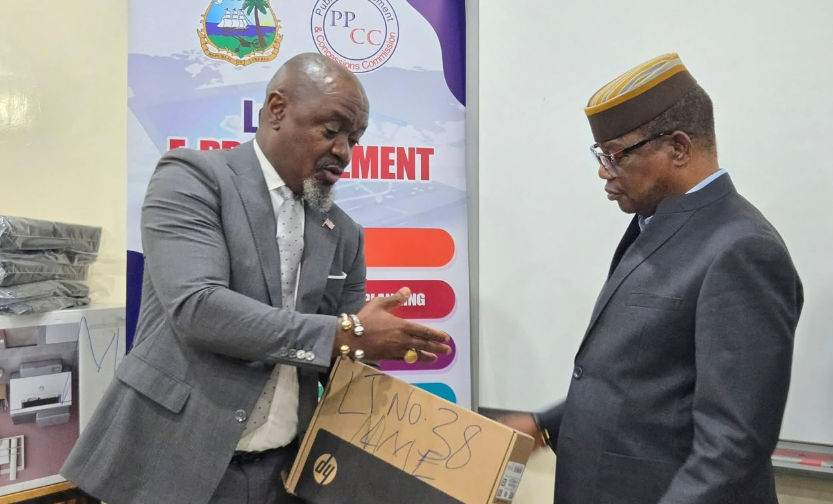
MONROVIA, Liberia — Liberia is advancing efforts to modernize government purchasing and strengthen public-sector accountability as the Public Procurement and Concessions Commission (PPCC) distributes information and communications technology equipment to 50 government institutions to support the country’s electronic government procurement system.
The initiative represents another step in Liberia’s transition from traditional, paper-based procurement toward a more digital system for managing government purchases and contracts.
Moving Government Procurement Online
Government procurement involves the process through which ministries, agencies and other public institutions purchase goods and services or contract companies to carry out publicly funded projects.
The introduction of an electronic government procurement system is intended to make more of that process digital.
Providing ICT equipment to the 50 participating institutions is particularly important because government agencies need adequate computers and related technology to effectively access and operate an electronic procurement platform.
As implementation expands, the system could allow procurement information to be recorded and managed more consistently while reducing dependence on physical paperwork.
Why Digital Procurement Matters
Public procurement accounts for significant government spending and can directly affect services that citizens rely upon, including infrastructure, education, health care and public administration.
Digitizing the procurement process can create stronger electronic records showing how government purchasing decisions are made. Those records can make procurement activities easier to track, review and audit.
A well-implemented electronic system can also improve efficiency by reducing paperwork, standardizing procedures and allowing government institutions to process procurement activities through a common digital framework.
For Liberia, the transition could become an important component of broader efforts to strengthen transparency and accountability in the management of public resources.
Technology Alone Will Not Guarantee Transparency
However, introducing an electronic system does not automatically eliminate procurement problems.
The effectiveness of Liberia’s digital procurement reforms will ultimately depend on how consistently government institutions use the system, the quality of information entered into it, the level of public access to procurement information, and whether existing procurement laws and regulations are effectively enforced.
Officials responsible for procurement will also need appropriate training and technical support to ensure the equipment and electronic platform are properly utilized.
Cybersecurity and data protection will become increasingly important as more government procurement records move online.
A Step Toward More Accountable Government Spending
The distribution of ICT equipment to 50 institutions therefore represents more than a technology upgrade. It is part of a potentially significant change in how Liberia manages and documents public spending.
For citizens, businesses and civil-society organizations, the larger question will be whether digitization eventually makes it easier to see how public contracts are awarded, who receives them and how government money is being spent.
If Liberia successfully expands the electronic procurement system across public institutions while maintaining strong oversight and public accessibility, the initiative could help build greater confidence in government procurement and improve the management of public resources.
For now, equipping 50 government institutions provides another foundation for Liberia’s transition toward a more modern, transparent, and digitally managed public procurement system.