
Federal government appoints new regional leadership to restore security, rebuild institutions and prepare for elections as questions emerge over the future of the Pretoria peace agreement.

ADDIS ABABA, ETHIOPIA — Ethiopia’s federal government has announced the establishment of a six-month caretaker administration for the Tigray Region following renewed conflict and the breakdown of previous political arrangements in the country’s north.
According to a statement attributed to the Prime Minister’s Office, the decision follows a resolution by the House of Federation and approval by the federal Council of Ministers.
The administration will operate under federal oversight, with responsibility for restoring peace and security, rebuilding damaged infrastructure, reestablishing essential public services and facilitating the return of displaced residents.
It will also oversee efforts to disarm and reintegrate former combatants, reconstruct regional institutions and prepare conditions for regional elections within six months.
Federal government announces new leadership
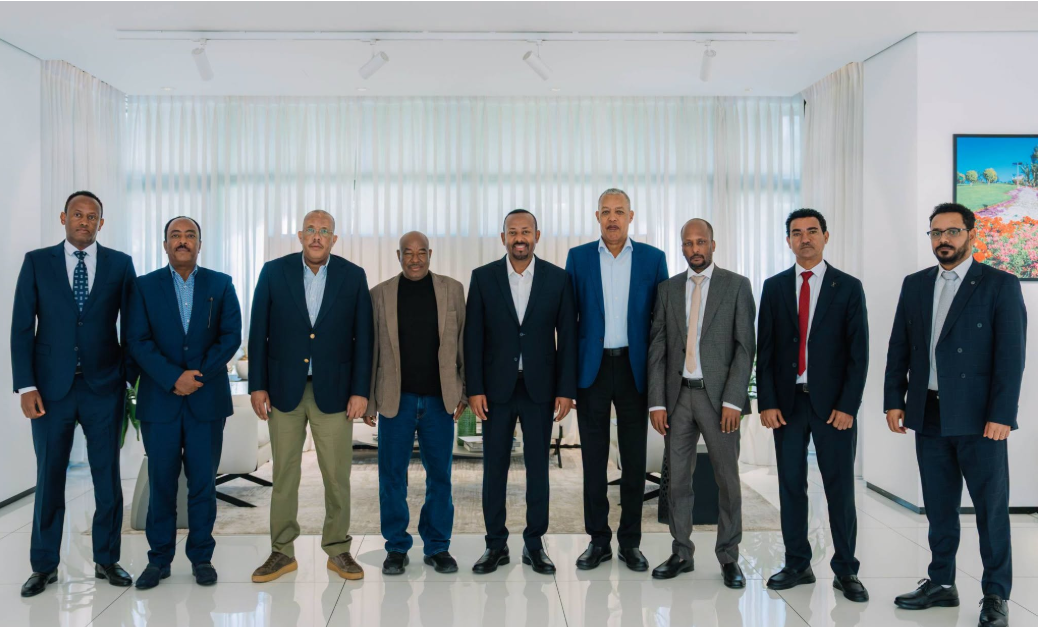
The government named five officials to lead key areas of the transition:
- Assefa Abreha Hagos: Administration and public services.
- Tewodros Aregawe Woldeselassie: Economic affairs and reconstruction.
- Brigadier General Gebre-Egziabher Beyene Hailu: Peace and security.
- Redae Halefom Woldeselassie: Political affairs and public mobilization.
- Shishay Amare: Mayor of Mekelle, Tigray’s regional capital.
The appointments place responsibility for the region’s immediate political, economic and security recovery under a federally supervised transitional structure.
Pretoria peace agreement faces renewed uncertainty
The announcement raises important questions about the future implementation of the November 2022 Pretoria peace agreement, which sought to end the devastating conflict between Ethiopia’s federal government and Tigrayan forces.
That agreement established a framework for ending hostilities, disarmament, humanitarian access and the restoration of constitutional order.
The creation of another transitional administration underscores the continuing difficulties of achieving a durable political settlement in northern Ethiopia.
The federal government attributes the renewed conflict to actions by the Tigray People’s Liberation Front (TPLF). However, that allegation represents the government’s position and should not be treated as an independently established finding.
Questions surrounding regional representation, political legitimacy and the participation of Tigrayan communities will be central to the transition’s credibility.
Implications for the Horn of Africa
Tigray’s stability carries consequences beyond Ethiopia’s borders.
Ethiopia is a major political and economic actor in the Horn of Africa and a member of the Intergovernmental Authority on Development (IGAD).
Renewed instability could complicate regional security cooperation, humanitarian operations and broader efforts to strengthen economic integration.
For the African Union, which helped facilitate the Pretoria peace process, the latest development represents another important test of conflict resolution and post-conflict reconstruction efforts.