
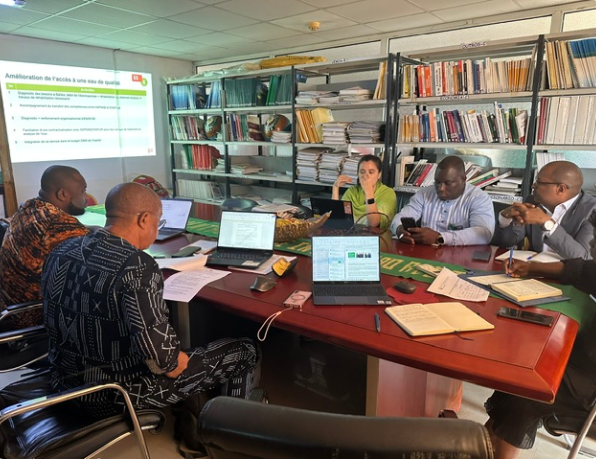
The Economic Community of West African States (ECOWAS) has reported progress in strengthening drug prevention, treatment, and rehabilitation services across West Africa, highlighting improvements to healthcare facilities and professional training during the 16th Biennial International Conference on Drugs, Alcohol and Society in Africa, held in Abuja, Nigeria.
According to the ECOWAS Commission, 12 treatment and rehabilitation centres across 10 member states had received renovation and equipment upgrades as of September 2026, reflecting ongoing efforts to improve access to services for people affected by substance-use disorders.
The Commission also reported that more than 300 healthcare and related professionals had received training in evidence-based drug prevention and treatment approaches.
These initiatives form part of broader regional efforts to strengthen institutional capacity and develop coordinated responses to drug-related public health challenges.
Strengthening Regional Cooperation on Drug Prevention
The Abuja conference brought together stakeholders to examine drug-use information systems, treatment strategies and opportunities for greater cooperation among West African countries.
A central focus was the importance of reliable information in understanding patterns of substance use and developing effective public health responses.
For ECOWAS, improving regional information-sharing systems could help member states identify emerging challenges, strengthen prevention programmes and coordinate treatment services across national borders.
The rehabilitation-centre upgrades and professional training initiatives also demonstrate how regional institutions can support national healthcare systems through shared programmes and technical cooperation.
However, the reported improvements do not yet establish how many additional patients have received treatment or whether rehabilitation outcomes have improved.
Drug Abuse as a Regional Public Health and Security Challenge
Drug-related challenges extend beyond individual countries, making cooperation particularly important in a region characterized by extensive cross-border movement of people and goods.
Substance-use disorders place pressure on healthcare systems, families and communities, while illicit drug trafficking can contribute to organized crime and broader security concerns.
Addressing these challenges requires cooperation among public health institutions, law enforcement agencies, social services and regional organizations.
ECOWAS’s emphasis on evidence-based treatment and rehabilitation reflects an approach that recognizes substance use as a public health issue requiring medical care, prevention, rehabilitation and community support.
Why This Matters for African Integration
The ECOWAS initiatives highlight an important dimension of African regional integration that often receives less attention than trade agreements, infrastructure development and monetary cooperation.
Regional integration also involves developing institutions capable of responding collectively to challenges that individual governments cannot effectively address alone.
By supporting treatment facilities, training healthcare professionals and encouraging information-sharing, ECOWAS is working to strengthen regional public health cooperation.
Such initiatives may also contribute to broader African Union objectives concerning public health, human development and institutional cooperation.
The When the Dust Settles Perspective
For When the Dust Settles (WDS), the significance of this development extends beyond the renovation of 12 rehabilitation centres or the training of more than 300 professionals.
It demonstrates how Africa’s Regional Economic Communities can serve as platforms for practical cooperation in areas that directly affect citizens.
Africa’s ambitious integration experiment seeks to bring 55 sovereign nations together through continental and regional institutions. While economic integration remains a central objective, cooperation on healthcare, security and social development is equally important to the continent’s long-term stability.
The ECOWAS programme raises an important question: Can West African countries build sustainable regional public health systems that improve treatment access, strengthen prevention and respond effectively to cross-border challenges?
The reported infrastructure improvements and professional training represent measurable institutional activities. Their long-term significance, however, will depend on whether they produce lasting improvements in treatment availability, rehabilitation outcomes and regional coordination.
For ECOWAS, the challenge is not simply to establish regional programmes, but to ensure that cooperation translates into meaningful improvements in the lives of West African citizens.
Source: ECOWAS Commission — Reporting on the 16th Biennial International Conference on Drugs, Alcohol and Society in Africa, Abuja, Nigeria.
Reporting note: The figures reflect ECOWAS Commission statements as supplied and have not been independently verified.
When the Dust Settles (WDS)
Examining African integration through the African Union and Africa’s eight Regional Economic Communities.