
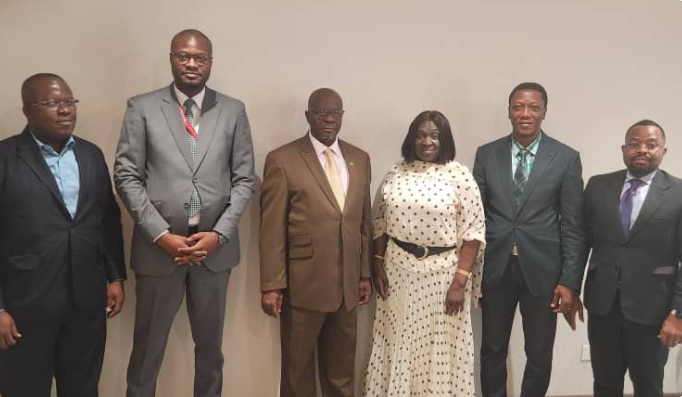
The Economic Community of West African States (ECOWAS) has reported progress in regional energy cooperation following discussions between Commissioner for Infrastructure, Energy and Digitalisation Amin Amidu Sulemani and representatives of the West African Gas Pipeline Authority.
During the meeting, the Authority reported that natural gas supply through the West African Gas Pipeline had increased by approximately 22% compared with previous years, signaling improved gas delivery through one of the region’s important energy infrastructure networks.
The pipeline connects Nigeria, Benin, Togo and Ghana, transporting natural gas to support electricity generation and industrial activity.
Strengthening Regional Energy Infrastructure
Discussions focused on pipeline operations, institutional coordination and the continued importance of natural gas in West Africa’s energy mix.
The West African Gas Pipeline represents a practical example of regional infrastructure cooperation, allowing participating countries to share energy resources across national borders.
Reliable gas supplies are particularly important for electricity generation, where disruptions can affect manufacturing, businesses and essential public services.
The reported increase in gas deliveries could support improved electricity production, although the impact will depend on power plant capacity, distribution networks and national energy policies.
Energy Security and Industrialization
Access to reliable and affordable electricity remains a major challenge for industrial development across West Africa.
Manufacturing facilities, transportation systems and commercial enterprises depend on consistent power supplies to operate efficiently and remain competitive.
Regional energy infrastructure can help countries diversify supply sources, improve energy security and potentially reduce electricity generation costs.
However, maintaining these benefits requires continued investment in pipeline maintenance, operational reliability and cooperation among participating governments.
A Practical Example of Regional Integration
The West African Gas Pipeline demonstrates how ECOWAS can advance economic integration through shared infrastructure projects.
As the region seeks to strengthen industrial production and expand trade under the African Continental Free Trade Area (AfCFTA), reliable energy supplies will remain essential.
The central challenge is ensuring that increased regional gas deliveries translate into more dependable electricity, lower production costs and stronger industrial competitiveness.
When the Dust Settles | WDS Perspective
Africa’s experiment of bringing 55 sovereign nations together depends on more than political agreements and trade policies. It requires functioning infrastructure that connects national economies.
The West African Gas Pipeline offers a practical example of four countries cooperating to share energy resources.
The reported 22% increase raises an important question: Can ECOWAS turn expanded regional energy supplies into reliable electricity that supports manufacturing, job creation and long-term economic integration?
Source: ECOWAS — Meeting between the Commissioner for Infrastructure, Energy and Digitalisation and the West African Gas Pipeline Authority. Article based on the information provided; the original announcement and location of the meeting have not been independently verified.