
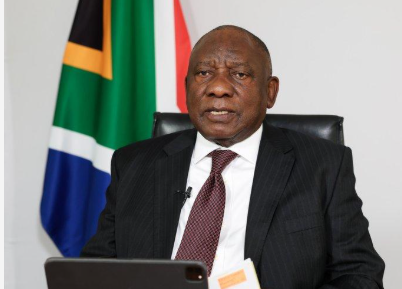
South African President Cyril Ramaphosa is set to inaugurate the second phase of Vedanta Zinc International’s Gamsberg expansion project in the Northern Cape, marking a significant development in the country’s mining sector and its efforts to strengthen industrial production, employment, and regional economic growth.
According to the South African Presidency, the expansion will increase Gamsberg’s annual zinc-in-concentrate production capacity to approximately 500,000 tonnes, positioning the operation as a major contributor to South Africa’s mineral production industry.
The government expects the expanded operation to sustain approximately 800 to 1,000 jobs, providing an important source of employment and economic activity in the Northern Cape.
The project has been described by the Presidency as one of South Africa’s largest mining investments of the past decade, reflecting continued interest in the country’s mineral resources and industrial potential.
Expanding South Africa’s Mining Capacity
The Gamsberg expansion represents an important investment in South Africa’s mining infrastructure at a time when the country is seeking to strengthen economic growth, attract capital, and improve industrial competitiveness.
Zinc is an essential industrial mineral used primarily in galvanizing steel to prevent corrosion. It also plays an important role in construction, transportation, infrastructure development, and manufacturing.
Increasing zinc production capacity could strengthen South Africa’s position as a supplier of industrial minerals to domestic and international markets.
The expansion may also create opportunities for supporting industries, including transportation, logistics, equipment maintenance, engineering, and other services associated with large-scale mining operations.
For the Northern Cape, the project could provide an additional foundation for sustained regional economic activity.
Employment and Regional Economic Development
One of the central economic benefits highlighted by the South African government is the project’s potential to sustain approximately 800 to 1,000 jobs.
Employment associated with major mining operations can generate additional economic activity through local businesses, suppliers, contractors, and service providers.
However, the broader development impact will depend on how effectively mining investment supports local communities, workforce development, and long-term economic diversification.
Large mining projects also raise important questions about infrastructure, environmental management, water resources, and the extent to which surrounding communities benefit from industrial expansion.
For South Africa, ensuring that major investments translate into sustainable employment and wider economic opportunities remains an important policy objective.
Beyond Mineral Extraction: The Industrialization Challenge
While increased zinc production represents an important development, the Gamsberg expansion also highlights a larger economic challenge confronting South Africa and the African continent.
Africa possesses substantial mineral resources, yet many countries continue to export raw materials or minimally processed minerals while importing higher-value manufactured products.
This pattern can limit the economic benefits countries receive from their natural resources.
Zinc concentrate, for example, can undergo additional processing and refining before being used in industrial manufacturing.
Developing these downstream activities creates opportunities for additional investment, technical expertise, skilled employment, and domestic industrial production.
For South Africa, the strategic question is whether expanded mining capacity can contribute to a broader industrial ecosystem that includes mineral processing, refining, manufacturing, and infrastructure development.
The Gamsberg expansion provides an opportunity to evaluate how major mining investments can support those objectives.
Regional Integration and African Industrial Value Chains
The significance of the Gamsberg project extends beyond South Africa’s domestic mining sector.
As a member of the Southern African Development Community (SADC), South Africa plays an important role in regional trade, industrial development, and infrastructure connectivity.
Expanded mineral production could support regional industrial value chains if accompanied by investment in processing facilities, transportation networks, reliable energy supplies, and cross-border manufacturing partnerships.
The African Continental Free Trade Area (AfCFTA) also provides a wider framework for developing regional production networks and increasing trade in manufactured goods.
For African economies, the opportunity lies in connecting mineral resources with industrial capabilities across national borders.
Rather than viewing mining operations solely as sources of export revenue, governments can examine how they contribute to regional manufacturing, technological development, and economic integration.
Such an approach could help African countries retain a greater share of the value generated by their natural resources.
A Test of Investment-Led Industrial Development
The inauguration of Gamsberg’s second expansion phase represents a significant milestone for Vedanta Zinc International and South Africa’s mining industry.
With annual zinc-in-concentrate capacity expected to reach approximately 500,000 tonnes and an estimated 800 to 1,000 jobs sustained, the project demonstrates the scale of investment possible in Africa’s mineral sector.
However, production capacity and employment figures alone will not determine its long-term economic significance.
The broader measure of success will include whether the investment strengthens local suppliers, expands industrial capabilities, supports communities, and creates opportunities for additional processing and manufacturing.
For South Africa, the challenge is to ensure that increased mineral production becomes a foundation for broader economic transformation.