
EL ALAMEIN, Egypt — October 3, 2026 — African leaders are preparing to gather in Egypt on Sunday for the 8th African Union Mid-Year Coordination Meeting, a high-level forum designed to strengthen coordination between the African Union, Africa’s Regional Economic Communities and the institutions responsible for turning continental policies into action.
The meeting will take place on October 4 at the International Convention and Exhibition Center in Alamein, Egypt, bringing together the African Union, Regional Economic Communities, Regional Mechanisms and Member States. The African Union says the opening session is scheduled for 10:00 a.m. local time.
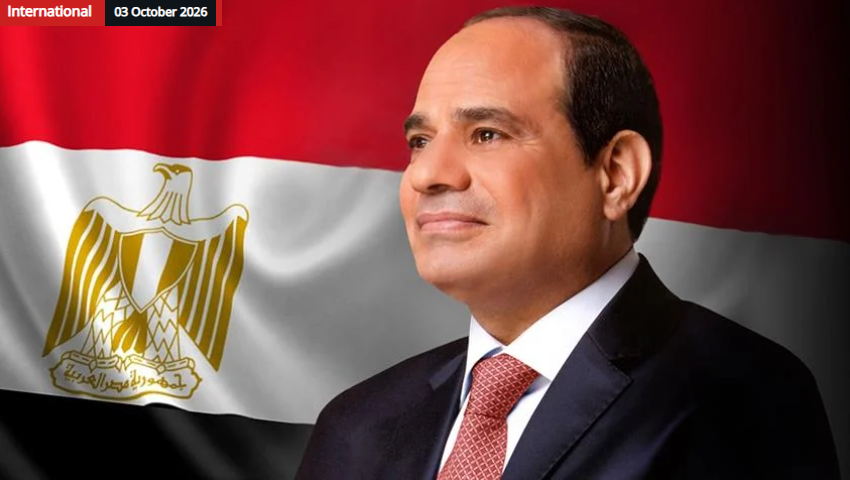
Among the leaders scheduled to address the opening are African Union Commission Chairperson Mahmoud Ali Youssouf, Egyptian President Abdel Fattah el-Sisi, who is hosting the meeting, and Burundi President Évariste Ndayishimiye, the current Chairperson of the African Union.
More Than Another African Summit
The significance of the meeting lies in its purpose.
The Mid-Year Coordination Meeting was established as the principal forum through which the AU and the Regional Economic Communities align their work and coordinate implementation of Africa’s continental integration agenda.
Under its mandate, the meeting is expected to assess the state of continental integration, coordinate the division of responsibilities between institutions, harmonize AU and REC policies, identify areas for cooperation and review implementation of decisions governing relations between the AU, RECs and Regional Mechanisms.
That makes tomorrow’s gathering particularly important to one of the central questions facing African integration:
Who is responsible for implementing Africa’s continental decisions—and how do the AU, regional organizations and national governments work together to make those decisions operational?
The Eight RECs at the Center of African Integration
The African Union recognizes eight Regional Economic Communities:
- Arab Maghreb Union — AMU/UMA
- Common Market for Eastern and Southern Africa — COMESA
- Community of Sahel-Saharan States — CEN-SAD
- East African Community — EAC
- Economic Community of Central African States — ECCAS
- Economic Community of West African States — ECOWAS
- Intergovernmental Authority on Development — IGAD
- Southern African Development Community — SADC
These organizations form an important bridge between continental ambitions and implementation at the regional and national levels. SADC, for example, says the meeting will review progress on major integration priorities while seeking stronger institutional coordination, policy harmonization and complementarity between regional and continental institutions.
The Division of Labour Question
One of the most consequential issues is the division of labour between the AU, RECs, Regional Mechanisms and Member States.
The AU framework calls for responsibilities to be organized around the principles of subsidiarity, complementarity and comparative advantage. In practice, that means determining which level of Africa’s institutional architecture is best positioned to formulate, coordinate and implement particular policies.
This distinction matters because continental agreements do not implement themselves.
The African Union can establish continent-wide frameworks and policy directions, but implementation frequently depends on regional organizations and, ultimately, the governments of individual Member States.
The success of African integration therefore depends not only on what leaders agree to at continental meetings, but also on whether those decisions move through regional institutions and into national laws, budgets, infrastructure projects and administrative systems.
Implementation Expected to Be in Focus
Preparations for tomorrow’s meeting suggest implementation will feature prominently.
At an earlier coordination meeting chaired by AU Commission Chairperson Mahmoud Ali Youssouf, officials discussed the AU-REC division of labour, continental integration, conflict prevention, implementation of the African Continental Free Trade Area, regional operational readiness, infrastructure, water and sanitation, and the role of AUDA-NEPAD in the integration process.
Those discussions demonstrate how broad the coordination challenge has become.
African integration now touches trade, infrastructure, transportation, payments, peace and security, agriculture, energy, migration and numerous other sectors. Many of these areas cross national borders and therefore require coordination among several levels of government and regional institutions.
Why Tomorrow’s Meeting Matters
The central issue facing the 8th Mid-Year Coordination Meeting is therefore not simply whether Africa has enough continental strategies.
It is whether the continent’s institutions can improve the machinery required to implement them.
Africa already possesses an extensive architecture for integration: the African Union at the continental level, eight recognized RECs at the regional level, Member States at the national level, and specialized institutions including the AfCFTA Secretariat and AUDA-NEPAD.
The challenge is ensuring that these institutions do not operate as disconnected layers.
If continental policies are to produce measurable results, responsibilities must be clearly defined, duplication reduced, regional strategies aligned with continental priorities and Member States equipped to carry decisions through at the national level.
That is why the Mid-Year Coordination Meeting occupies a distinctive place within the African Union system.
It is where the continental vision meets the regional institutions expected to help deliver it.
And as African leaders gather in El Alamein on October 4, the central question will be whether the AU and its regional partners can continue moving African integration from declarations and frameworks toward coordinated implementation and measurable results.