
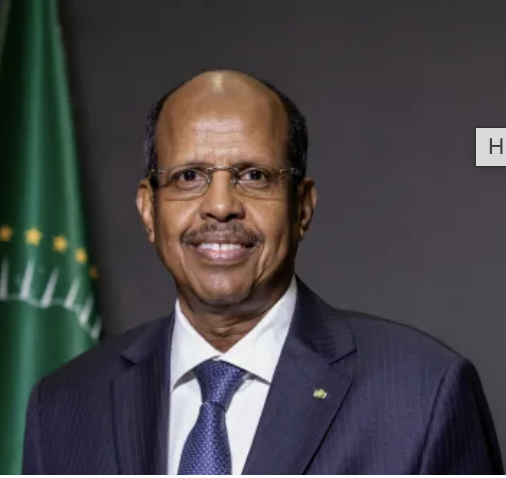
NEW YORK — September 20, 2026 — The African Union’s senior leadership has arrived in New York for the High-Level Week of the 81st Session of the United Nations General Assembly, carrying a message focused on Africa’s representation in global institutions, greater African ownership of the continent’s future, and a stronger role for Africa in addressing international challenges.
African Union Commission Chairperson Mahmoud Ali Youssouf is leading the delegation, accompanied by Deputy Chairperson Selma Malika Haddadi, AU commissioners and heads of African Union organs. The AU confirmed their arrival on Sunday, September 20.
The 81st General Assembly is being held under the theme “Restoring Trust, Managing Transformation: A United Nations That Delivers for All.” The high-level meetings are scheduled for September 22–26, bringing heads of state, government leaders, ministers and senior officials from around the world to New York.
Africa Demands a Stronger Voice in Global Decision-Making
At the center of the AU’s agenda is its longstanding demand for a more representative international system.
The African Union says Africa must have a stronger voice in decisions that affect the continent and the wider international community. That includes pushing for meaningful African representation on the United Nations Security Council as well as greater representation in international financial institutions.
For the AU, the issue extends beyond representation for its own sake. The organization argues that the institutions responsible for international peace, security, finance and development should better reflect today’s geopolitical and economic realities.
Africa currently accounts for more than a quarter of UN member states, yet the continent does not hold a permanent seat on the Security Council. Reform of global governance is therefore expected to remain an important part of the African Union’s diplomatic engagement during the week.
Africa Wants Greater Ownership of Its Future
The AU’s second message emphasizes African leadership and ownership.
According to the Commission, the delegation will highlight Africa’s efforts to take greater responsibility for peace and security, continental integration and economic transformation. It will also promote institutional reform and greater financial autonomy within African institutions.
This message places Africa’s development ambitions within a broader continental strategy: rather than relying primarily on outside initiatives, African institutions want to play a greater role in determining priorities, mobilizing resources and implementing solutions.
Infrastructure, energy, digital transformation, trade and industrial development remain important parts of that transformation. These priorities are closely connected to the AU’s wider Agenda 2063 vision of building a more integrated and economically competitive continent.
From Aid Recipient to Global Partner
The AU’s third major message is that Africa should increasingly be viewed as a strategic actor and partner in solving global problems, rather than simply as a recipient of international assistance.
The Commission says the continent intends to contribute to international solutions involving peace and security, climate action, global health, trade, technology and sustainable development.
That approach could become an important theme of the AU’s diplomacy in New York. Africa’s growing population, natural resources, expanding markets and strategic position give the continent increasing importance in debates over energy, climate policy, critical minerals, global trade and emerging technologies.
The AU is effectively seeking to connect Africa’s growing economic and demographic significance with greater influence over the international rules and institutions that shape those areas.
High-Level Diplomacy Ahead
During his stay in New York, Chairperson Youssouf is scheduled to meet UN Secretary-General António Guterres, heads of state and government, and business leaders. The AU delegation is also expected to participate in side events aimed at advancing continental priorities and strengthening international partnerships.
The AU’s participation follows African engagement in the UN’s September 18 SDGs Moment, where African representatives emphasized issues including climate resilience, employment, health, food security and stronger international partnerships while connecting implementation of the UN’s 2030 Sustainable Development Agenda with the AU’s Agenda 2063.
Why This Matters for African Integration
The significance of the AU’s presence in New York goes beyond diplomatic representation.
The central question is whether Africa can increasingly negotiate internationally through common continental positions while simultaneously strengthening integration at home.
Projects such as the African Continental Free Trade Area, continental digital initiatives and African-led peace and security mechanisms depend not only on cooperation among African states but also on the international financial and political environment in which those initiatives operate.
For that reason, debates over UN Security Council reform, international finance, climate financing and development investment have direct implications for Africa’s integration agenda.
The message emerging from the African Union ahead of UNGA 81 is therefore broader than a request for additional international assistance.
It is a call for greater representation, stronger African ownership and a larger African role in shaping global solutions.
As world leaders gather in New York this week, the question will be how much progress the AU can make in translating those longstanding objectives into concrete international commitments.