
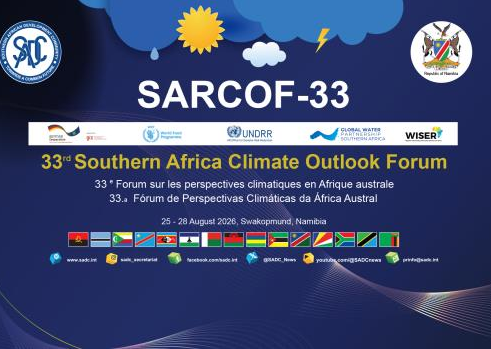
SWAKOPMUND, Namibia — August 25, 2026 — Climate specialists and government officials from across Southern Africa are gathering in Swakopmund for the 33rd Southern Africa Climate Outlook Forum (SARCOF-33), as the region works to improve its ability to prepare for droughts, floods and other climate-related threats.
The regional forum opens today and is scheduled to continue through August 28, bringing together climate experts, agriculture officials, water specialists, disaster-management agencies, health professionals and energy stakeholders.
A central objective of SARCOF-33 is to develop a shared regional seasonal climate outlook and translate scientific forecasts into practical early-warning information that governments and communities can use when making decisions.
For Southern Africa, those forecasts can have significant consequences. Drought can reduce agricultural production and hydropower generation, while excessive rainfall and flooding can damage crops, roads, homes and other critical infrastructure.
Agriculture officials can use seasonal information to help farmers determine planting strategies and prepare for possible dry conditions. Water authorities can plan reservoir management, while energy officials can assess potential impacts on hydropower production. Disaster-management agencies can also position resources before severe weather develops.
The forum demonstrates the importance of regional cooperation through the Southern African Development Community (SADC). Weather systems, droughts and river basins extend across national borders, meaning climate risks affecting one country can quickly have economic and humanitarian consequences elsewhere in the region.
A coordinated climate outlook allows SADC countries to work from a broader regional picture rather than relying entirely on separate national assessments.
The initiative also connects climate resilience with regional economic integration. Food shortages in one country can affect prices and trade throughout neighboring states, while disruptions to electricity, transportation corridors and water supplies can interfere with regional commerce.
By strengthening forecasting and early-warning cooperation, Southern African governments can potentially move from reacting to disasters toward anticipating and preparing for them.
SARCOF-33 therefore represents more than a gathering of climate scientists. It is part of a wider regional effort to protect food security, infrastructure, energy systems and livelihoods through shared information and coordinated planning.
As the forum continues through August 28, its seasonal outlook could help shape important government decisions across Southern Africa in the months ahead.