
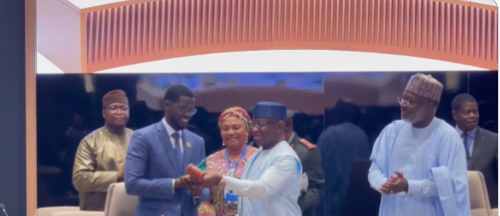
FREETOWN, Sierra Leone — Senegalese President Bassirou Diomaye Faye has been elected Chairman of the Economic Community of West African States Authority of Heads of State and Government, placing him at the forefront of the regional organization during a period of major political, security, and humanitarian challenges.
Faye was elected during the 69th Ordinary Session of the ECOWAS Authority, held on July 19, 2026, in Sierra Leone. He succeeds Sierra Leonean President Julius Maada Bio, who previously led the regional bloc.
The Senegalese leader will now be responsible for guiding ECOWAS as it works to strengthen regional integration, promote economic development, address insecurity, and rebuild unity across West Africa.
His appointment comes at a particularly important time for ECOWAS. The regional organization continues to confront terrorism, political instability, unconstitutional changes of government, economic hardship, climate-related disasters, and tensions surrounding the withdrawal of Burkina Faso, Mali, and Niger from the bloc.
During the summit, West African leaders also endorsed a new regional initiative intended to improve the bloc’s ability to prepare for and respond to humanitarian emergencies caused by armed conflict, disease outbreaks, and natural disasters.
The initiative is expected to promote greater coordination among ECOWAS institutions, national governments, emergency response agencies, humanitarian organizations, and international partners.
The move reflects growing concerns about the humanitarian situation across West Africa, where communities continue to face flooding, drought, food insecurity, epidemics, violent conflict, displacement, and damage to critical infrastructure.
ECOWAS already maintains a regional humanitarian policy focused on strengthening the prevention and management of emergencies and disasters. The policy calls for stronger institutions, improved emergency-response capacity, protection of vulnerable populations, and greater cooperation among member states.
The regional organization has also taken steps to strengthen climate and disaster resilience. In February 2026, ECOWAS officially joined the Coalition for Disaster Resilient Infrastructure, a global partnership supporting infrastructure capable of withstanding natural disasters and climate-related risks.
President Faye’s election gives Senegal an increasingly influential role within ECOWAS. In December 2025, Senegal was also selected to lead the ECOWAS Commission for the 2026–2030 term.
Faye has previously called for reforms that would make ECOWAS more responsive, united, and focused on the needs of West African citizens. He has also played a diplomatic role in regional discussions involving Burkina Faso, Mali, and Niger.
As chairman, Faye is expected to promote dialogue among West African governments while supporting regional approaches to security, trade, humanitarian relief, political stability, and economic integration.
The decisions taken in Freetown demonstrate ECOWAS leaders’ efforts to reposition the organization as a more coordinated and responsive regional body.
However, the success of the new humanitarian initiative will depend on whether member states provide the necessary funding, personnel, equipment, political support, and information-sharing systems needed to respond rapidly when emergencies occur.
President Faye now begins his tenure with the difficult responsibility of strengthening cooperation among ECOWAS members while addressing some of the most serious challenges facing West Africa.
His leadership will be closely watched as the bloc seeks to restore regional unity, protect vulnerable communities, and demonstrate that ECOWAS can effectively respond to the security, humanitarian, and economic needs of its citizens.