
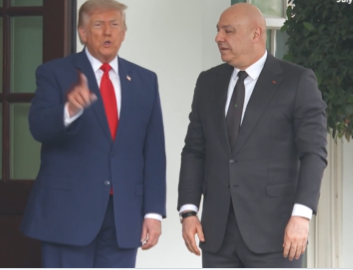
WASHINGTON, D.C. — U.S. President Donald Trump welcomed Lebanese President Joseph Aoun to the White House on Tuesday as Lebanon seeks increased American support while confronting ongoing tensions and conflict involving Hezbollah.
The meeting marked the first official visit by a Lebanese president to the White House since 2009, underscoring the importance both governments place on strengthening bilateral relations during a period of heightened instability in the Middle East.
Speaking alongside President Aoun, President Trump expressed optimism about the relationship between the United States and Lebanon.
“We feel very good about Lebanon,” Trump said.
The high-level talks come as Beirut continues efforts to secure greater diplomatic, economic, and security assistance from Washington. Lebanon has faced mounting challenges as clashes involving Hezbollah have intensified, placing additional pressure on the country’s fragile political and economic landscape.
The United States has long supported Lebanon’s state institutions, particularly the Lebanese Armed Forces, while maintaining that Hezbollah—an Iran-backed armed group and political movement—poses a threat to regional security. Washington has repeatedly called for strengthening Lebanon’s sovereignty and limiting the influence of non-state armed groups.
President Aoun’s visit is expected to focus on regional security, military cooperation, economic assistance, and efforts to maintain stability within Lebanon amid the broader conflict affecting the Middle East.
The White House meeting also reflects continued U.S. engagement with Lebanon as Washington seeks to prevent further escalation in the region while supporting diplomatic efforts aimed at reducing tensions.
Although details of any new agreements were not immediately announced, the visit signals renewed dialogue between Washington and Beirut at a critical moment for Lebanon’s security and future.
Regional observers will closely watch whether the discussions lead to additional U.S. support for Lebanon’s government and armed forces as the country navigates one of the most challenging periods in its recent history.