
NEW YORK — September 22, 2026 — African Union Commission Chairperson Mahmoud Ali Youssouf continued a series of high-level diplomatic engagements on the margins of the 81st Session of the United Nations General Assembly, holding separate discussions with leaders of the Council of Europe and the Commonwealth as the African Union seeks to strengthen its institutional partnerships internationally.
Youssouf held a bilateral meeting in New York with Alain Berset, President of the Council of Europe, as part of the AU Commission Chairperson’s UNGA81 diplomatic programme. The African Union confirmed the September 22 meeting in its official readout.
The engagement is significant because it places the African Union in direct dialogue with another major regional institution. The Council of Europe and the African Union operate in very different political and institutional environments, but both provide frameworks through which member states address issues that extend beyond national borders.
For the African Union, such institutional diplomacy can support broader efforts to strengthen Africa’s representation in international discussions on peace and security, governance, human rights, development and the evolving international system.
AU and Commonwealth Explore Structured Partnership
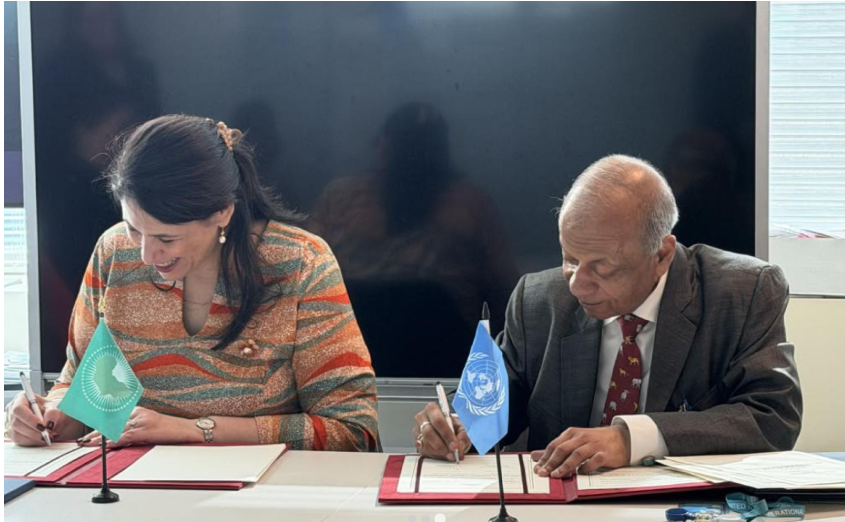
Youssouf also received Commonwealth Secretary-General Shirley Ayorkor Botchwey for a courtesy call on the sidelines of UNGA81.
According to the African Union Commission, the discussions went beyond a ceremonial meeting. The two leaders explored ways of strengthening cooperation between the African Union and Commonwealth Secretariat through a structured Memorandum of Understanding.
The proposed cooperation would focus on areas of shared interest, including peace and security, sustainable development, institutional strengthening and Africa’s priorities in global governance.
Such a framework could be particularly relevant because many African Union member states are also members of the Commonwealth. A more structured AU-Commonwealth relationship could therefore provide another institutional channel for coordinating initiatives affecting African countries while reducing reliance on purely bilateral engagement.
Africa’s Role in Global Governance
Taken together, the meetings illustrate an important element of the African Union’s diplomacy during UNGA81: strengthening relationships not only with individual governments but also with other international and regional institutions.
The AU has increasingly sought to position itself as a continental voice capable of representing collective African priorities within the international system. Partnerships with organizations such as the Commonwealth and Council of Europe provide additional platforms through which the Commission can advance those priorities.
The Commonwealth discussion is especially noteworthy because the AU’s official readout specifically identified Africa’s priorities in global governance as one of the areas for possible cooperation.
That issue extends into wider debates surrounding the representation of African states within international institutions and the continent’s ability to influence decisions on peace and security, development, climate policy and the global economy.
From Diplomacy to Institutional Cooperation
The next question will be whether these high-level meetings produce sustained institutional cooperation.
In the case of the Commonwealth, the proposed Memorandum of Understanding provides a potential mechanism for moving the relationship from periodic diplomatic engagement toward a more structured partnership.
The Council of Europe meeting similarly reflects the AU Commission’s broader diplomatic outreach during UNGA81, where Chairperson Youssouf has held multiple bilateral and multilateral engagements with international partners.
For the African Union, the significance of these meetings ultimately extends beyond diplomatic visibility in New York. Their longer-term importance will depend on whether institutional partnerships translate into practical cooperation that advances priorities established by African states.