
Ukraine launched its most significant drone campaign against Russia this year, striking multiple regions overnight between Tuesday and Wednesday and igniting a large fire at a crucial energy facility in the country’s northwest.
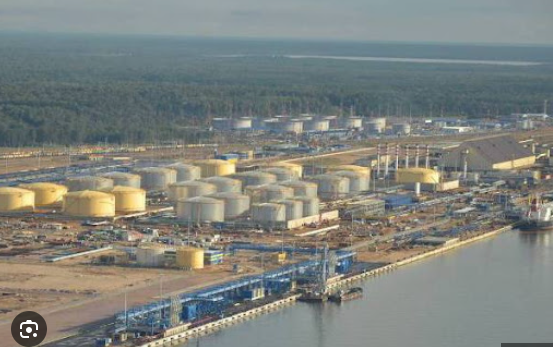
Regional officials reported that the assault caused a fire at the Baltic Sea port of Ust-Luga, a major export terminal with the capacity to process approximately 700,000 barrels of oil per day. Leningrad region Governor Alexander Drozdenko stated that emergency responders were working to contain the blaze, but did not specify the extent of the damage. He noted that no casualties had been recorded.
A source cited by Reuters said several oil storage tanks at the site were set ablaze. The terminal—an important hub for exporting oil, coal, grain, and fertilizers—was reportedly shut down as a safety measure.
The scale of the operation highlights Kyiv’s growing emphasis on long-range drone warfare aimed at penetrating deep into Russian territory, particularly focusing on infrastructure tied to Moscow’s war economy.
Despite Russian air defenses intercepting dozens of drones—56 over the Leningrad region alone—damage was still reported. In Vyborg, roughly 100 kilometers north of Ust-Luga, a residential building was hit. Unverified images shared online appeared to show the structure engulfed in flames.
Further incidents were reported in Kronstadt, where local authorities said homes and vehicles sustained damage. The area is also home to Russia’s Baltic Fleet, adding to its strategic importance.
The strikes follow an earlier reported attack on the Primorsk port, one of Russia’s largest oil export terminals, which was temporarily forced to suspend operations. Industry sources suggested Ust-Luga may have also been impacted during that episode, although officials have not confirmed this.
The effects of the attacks extended beyond Russia. In Estonia, a drone reportedly struck a power facility after entering from Russian airspace, while another crashed in Latvia. Authorities in Riga indicated the latter may have been a Ukrainian drone that deviated from its intended course.
Russia’s Defense Ministry said it intercepted a total of 389 Ukrainian drones across several regions, including annexed Crimea. The Bryansk region reportedly faced the heaviest wave of incoming drones, days after a Ukrainian missile strike on a microchip plant there killed seven people.
In Belgorod, officials said strikes on energy infrastructure left approximately 450,000 residents without electricity, underscoring the broader impact on civilian systems.
The escalation reflects an intensifying pattern of cross-border attacks. Ukrainian authorities have consistently described such operations as retaliatory actions in response to Russia’s ongoing invasion and occupation.
In recent weeks, Kyiv has increasingly targeted Russia’s energy sector, seeking to disrupt a critical revenue stream supporting the Kremlin’s military operations.
The developments come at a time of heightened volatility in global energy markets. Ongoing tensions involving the United States, Israel, and Iran have driven oil price fluctuations and raised concerns about supply stability, amplifying the international significance of strikes on key export infrastructure such as Ust-Luga.