
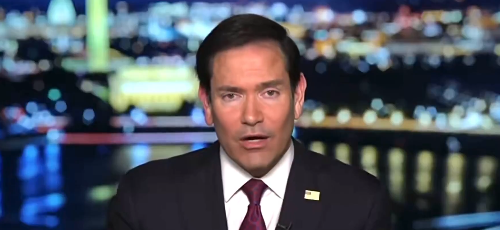
Washington, D.C. — U.S. Secretary of State Marco Rubio has raised questions about the future of the North Atlantic Treaty Organization (NATO), suggesting Washington may reconsider the alliance’s value following refusals by several member states to support U.S. military operations related to the ongoing Iran conflict.
Speaking in a recent interview, Rubio expressed frustration that some NATO allies declined to grant the United States access to military bases and airspace needed for strikes against Iran. “When we need them to allow us to use their military bases, their answer is ‘No.’ Then why are we in NATO?” Rubio said, adding that the U.S. would “have to reexamine the value” of the alliance after the conflict concludes.
His remarks reflect growing tension within the alliance as the war in Iran continues into its fifth week, with European nations largely distancing themselves from direct involvement in the U.S.-led military campaign.
Countries Refusing U.S. Base Access
Several NATO members have explicitly denied U.S. requests to use their territory for offensive operations against Iran:
- Spain: Madrid rejected U.S. requests to use joint bases at Rota and Morón for strikes, citing legal constraints and opposition to the war. Spanish officials described the intervention as unjustified and outside agreed frameworks.
- Italy: Rome denied access to the Sigonella airbase in Sicily for U.S. aircraft carrying weapons, stating that such use would require parliamentary authorization under existing agreements.
- France: While details remain less formalized, France has been criticized by U.S. leadership for restricting support and limiting cooperation tied to the Iran campaign.
In addition, Spain reportedly denied overflight rights, and other European nations have avoided direct participation, emphasizing that the conflict is not a NATO-led operation.
Broader Alliance Strains
Rubio’s comments underscore a broader debate in Washington about burden-sharing within NATO. The alliance, founded in 1949 as a collective defense pact, has long relied on U.S. military leadership. However, the current dispute highlights diverging strategic priorities between the United States and its European partners.
President Donald Trump has also criticized NATO allies, arguing that countries unwilling to support U.S. military initiatives should not rely on American defense commitments.
European governments, for their part, have pointed to legal limitations, domestic political opposition, and concerns about escalation in the Middle East as reasons for withholding support.
Outlook
Despite the tensions, Rubio indicated that any formal reassessment of NATO would likely occur after the Iran conflict ends. Analysts note that while the alliance remains intact, the dispute represents one of the most significant transatlantic rifts in recent years, raising questions about NATO’s cohesion and future role in global security.
As the war continues and diplomatic channels remain open, the outcome of the conflict—and the level of allied cooperation—may ultimately shape the next phase of U.S.-NATO relations.