
The Southern African Development Community has released its preliminary assessment of Zambia’s August 13, 2026 general election, reporting that voting was largely peaceful while identifying several areas of the country’s electoral system that require further improvement.
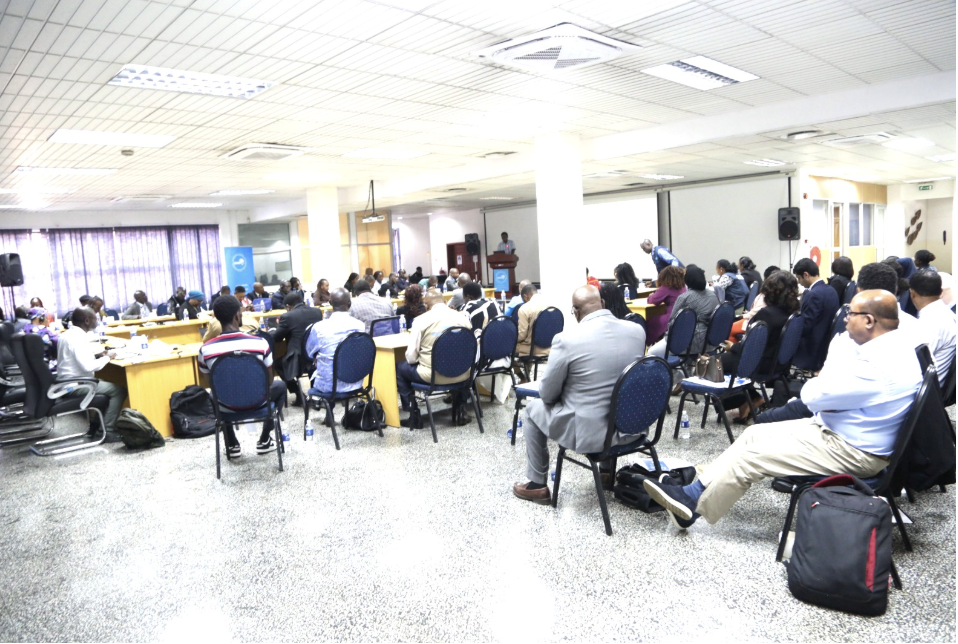
The SADC Electoral Observation Mission (SEOM) presented its preliminary statement in Lusaka on August 15, a day after uncertainty emerged around the temporary suspension of vote counting and the announcement of results.
The mission was headed by Samuel B. Tembenu, former Minister of Justice and Constitutional Affairs of Malawi.
According to SADC, its mission consisted of 106 personnel from 10 SADC member states, organized into 17 short-term observer teams and deployed across all 10 provinces of Zambia. On Election Day, SADC observers visited 277 of Zambia’s 13,529 polling stations.
SADC Reports Peaceful Election-Day Environment
One of SADC’s most significant findings concerned the overall atmosphere at polling stations.
The mission reported that 275 of the 277 polling stations it observed — approximately 99 percent — were calm and peaceful. It also found that 221 of the observed polling stations, or about 80 percent, opened at the prescribed time.
Voting proceeded without irregularities at 255 of the 277 stations observed. Where problems occurred, SADC cited issues including the positioning of voting booths in ways that could affect ballot secrecy, failure to display the voters’ register and polling officials not being in uniform.
SADC also noted that the broader political environment in most areas where its observers were deployed was peaceful. Stakeholders consulted by the mission generally considered the environment an improvement over Zambia’s 2021 election.
Electoral Commission Praised for Preparations
The mission gave positive marks to several aspects of the work of the Electoral Commission of Zambia (ECZ).
SADC said the ECZ completed its preparations in good time and to a high standard, including recruiting and training polling officials and distributing election materials.
Observers also reported transparency in the verification and custody of ballot papers and ballot boxes where SADC teams were present. The mission further highlighted the country’s conflict-management committees, which brought together political parties and state and non-state organizations to address electoral disputes.
SADC Identifies Problems Requiring Attention
Despite those positive findings, SADC stopped short of presenting the election as problem-free.
One of its strongest concerns was the absence of dedicated legislation governing the registration, management, funding and accountability of political parties.
SADC described this as the most significant structural gap in Zambia’s electoral framework, noting that political parties continue to operate under legislation governing societies generally rather than under a dedicated political-party law.
The mission also raised concerns involving the timing and communication of electoral reforms, aspects of the new Mixed Member Proportional Representation system, media freedom, participation of women and persons with disabilities, electoral violence and intimidation, and protection of ballot secrecy.
SADC recommended that Zambia undertake electoral reforms sufficiently ahead of future elections, strengthen participation by women, youth and persons with disabilities, ensure more equitable media coverage, investigate incidents of electoral violence and intimidation, and strengthen protections for the secrecy of the ballot.
The mission also recommended consultation on reforming the process for appointing commissioners to the Electoral Commission of Zambia so that the appointment process can command confidence across the political spectrum.
Concern Over Suspension of Vote Counting
The preliminary assessment also addressed one of the most sensitive developments following the election.
SADC expressed concern about the uncertainty and anxiety that followed the temporary suspension of vote counting and the announcement of results on August 14.
The process later resumed that evening.
SADC urged political contestants, supporters and other stakeholders to remain calm, avoid violence or interference with electoral officials and materials, and use Zambia’s established legal mechanisms to address election-related grievances.
Other international and regional observer missions echoed that appeal. The Joint African Union–COMESA mission, the International Conference on the Great Lakes Region mission and the Electoral Commissions Forum mission joined SADC in emphasizing restraint and respect for the official results process.
The observer missions stressed that the ECZ remains the institution responsible for completing the counting, verification and official announcement of election results.
Preliminary — Not the Final Judgment
Importantly, SADC’s August 15 statement is not its final assessment of Zambia’s election.
The preliminary report covers the pre-election period, Election Day and counting observed by the mission. SADC said its final report will also examine post-election developments, including the management and announcement of results.
That distinction is important because election observation extends beyond what happens at polling stations. How votes are consolidated, verified and officially announced — and how disputes are resolved — also forms part of determining the credibility of the overall electoral process.
For Zambia, SADC’s initial assessment therefore presents a mixed but largely positive picture of Election Day: widespread peaceful voting and generally professional administration alongside structural and procedural concerns that the regional organization says should be addressed.
For the wider Southern African region, the assessment carries additional significance. SADC’s electoral principles are intended to establish common regional standards for democratic elections. How those standards are applied in Zambia will therefore contribute to the broader debate over democratic governance, electoral credibility and political stability across Southern Africa.
SADC’s observation of the post-election period continues, meaning its final report will provide the more comprehensive regional assessment of Zambia’s 2026 general election.