
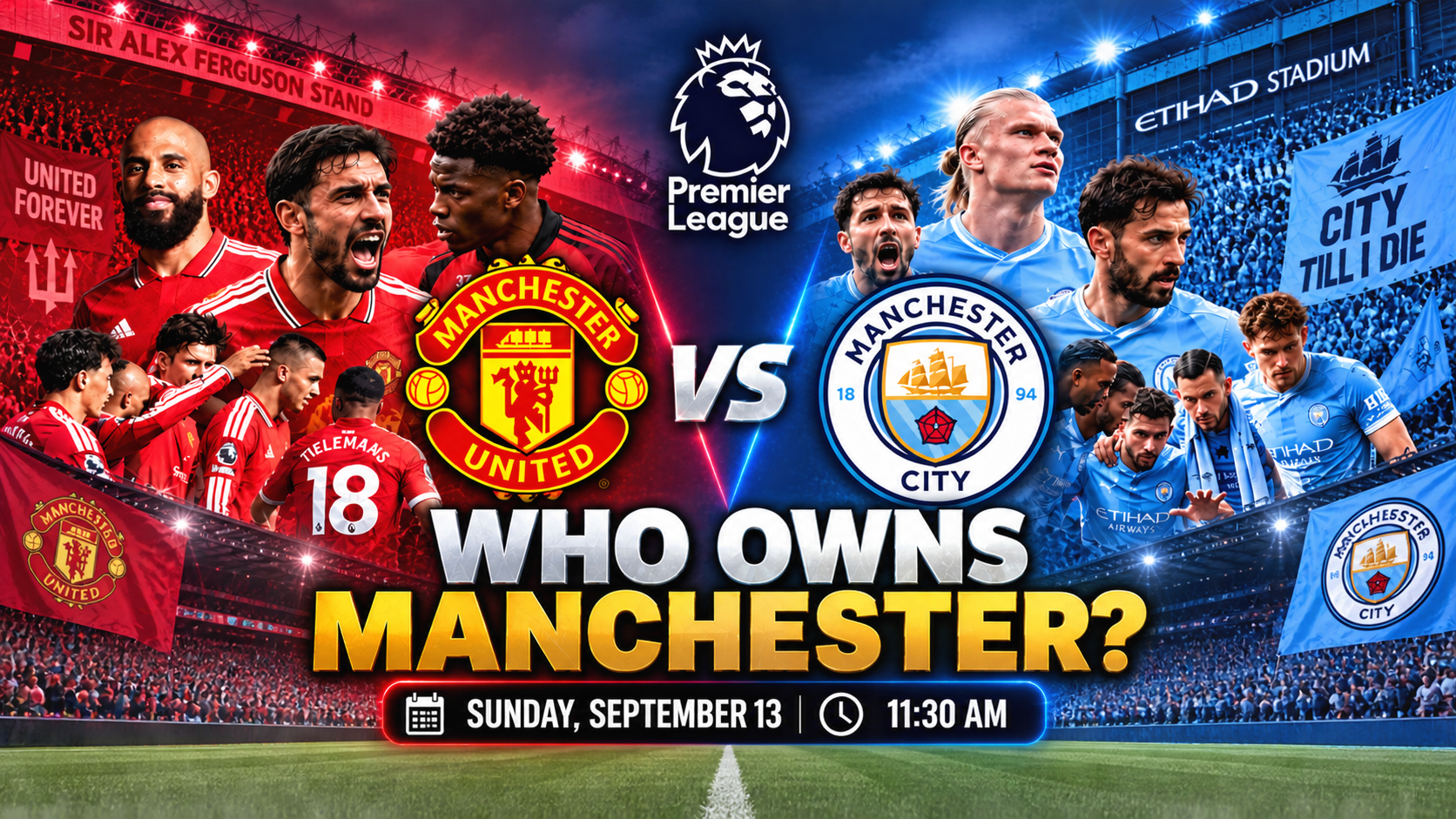
Manchester United and Manchester City will renew one of English football’s biggest rivalries on Sunday, September 13, with the Manchester derby scheduled for 11:30 a.m.
The derby arrives early in the Premier League season, but the statistics suggest there is already plenty at stake. Manchester City have made the stronger start, while Manchester United will see the match as an opportunity to slow their rivals and make an early statement of their own.
City Bring Perfect Record Into the Derby
Manchester City enter the contest sitting first in the league, having won all three of their opening matches.
City began their campaign with a 2–1 victory over Bournemouth, followed by an impressive 4–1 away win against Crystal Palace, and then defeated Coventry City 1–0.
That gives City nine points from three matches, with seven goals scored and only two conceded. They have also recorded one clean sheet.
Their underlying attacking numbers have been strong. City have produced 6.59 expected goals (xG) through the opening three matches, averaging approximately 2.2 xG per 90 minutes.
For Manchester United, stopping that attack could be one of the biggest challenges of Sunday’s derby.
United Have Goals—but Also Defensive Questions
Manchester United’s start has been much more unpredictable.
United opened the season with a 2–0 away defeat against Hull City, before producing an attacking show in a 5–2 victory over Ipswich Town at Old Trafford.
However, they were unable to maintain their perfect start in their third match, drawing 2–2 away against Everton.
United therefore enter the derby with two wins and one draw from their opening three matches, scoring nine goals while conceding four.
One statistic in particular should give United supporters confidence: their 7.29 xG is actually higher than City’s 6.59.
That suggests United are creating enough opportunities to cause serious problems for their neighbors.
History Favors United—But Recent Derbies Are Much Closer
The Premier League head-to-head record also provides an interesting backdrop.
Across 58 previous Premier League meetings, Manchester United have won 27, Manchester City have won 21, and 10 have ended in draws.
United therefore retain the historical advantage, but recent results demonstrate how unpredictable the Manchester derby has become.
The last five league meetings have produced two victories for United, two victories for City and one draw.
Most importantly for United, the most recent league derby went their way.
On January 17, 2026, Manchester United defeated Manchester City 2–0.
That result came after City had won the previous meeting 3–0 in September 2025.
Before those games, the sides played out a 0–0 draw in April 2025, while United recorded a dramatic 2–1 away victory at City in December 2024.
The recent history therefore offers little guarantee about what will happen Sunday.
The Numbers Set Up a Fascinating Derby
City may arrive as the league leaders with a perfect record, but United’s attacking statistics suggest this could be a much more competitive match than the league table alone indicates.
Both teams have shown they can score.
City have been the more balanced side so far, combining seven goals with just two conceded. United, meanwhile, have generated the higher expected-goals total but have been less convincing defensively.
That contrast could define the match.
Can Manchester United turn their attacking opportunities into goals against a City defense that has conceded only twice?
Or will Manchester City exploit the defensive weaknesses United have already shown?
There is also considerable psychological importance attached to this fixture. City have the opportunity to maintain their perfect start and strengthen their position at the top of the Premier League.
United have the opportunity to do something equally significant: end City’s winning run while reminding the league that they intend to compete with their biggest rivals this season.
Manchester Is Ready
Form, statistics and history can tell us plenty before a derby—but once Manchester United and Manchester City take the field, those numbers often become secondary.
City enter with the better league position.
United enter knowing they won the most recent meeting.
And both teams have already demonstrated considerable attacking potential this season.
On Sunday, September 13 at 11:30 a.m., Manchester will once again be divided between red and blue.
And although it is still early in the season, this derby could provide one of the first major indications of just how serious these two clubs are about their Premier League ambitions.