
ENTEBBE, UGANDA — The African Union (AU) and the Government of Uganda have taken a significant step toward strengthening Africa’s ability to respond to humanitarian emergencies by signing a host country agreement for the African Humanitarian Agency.
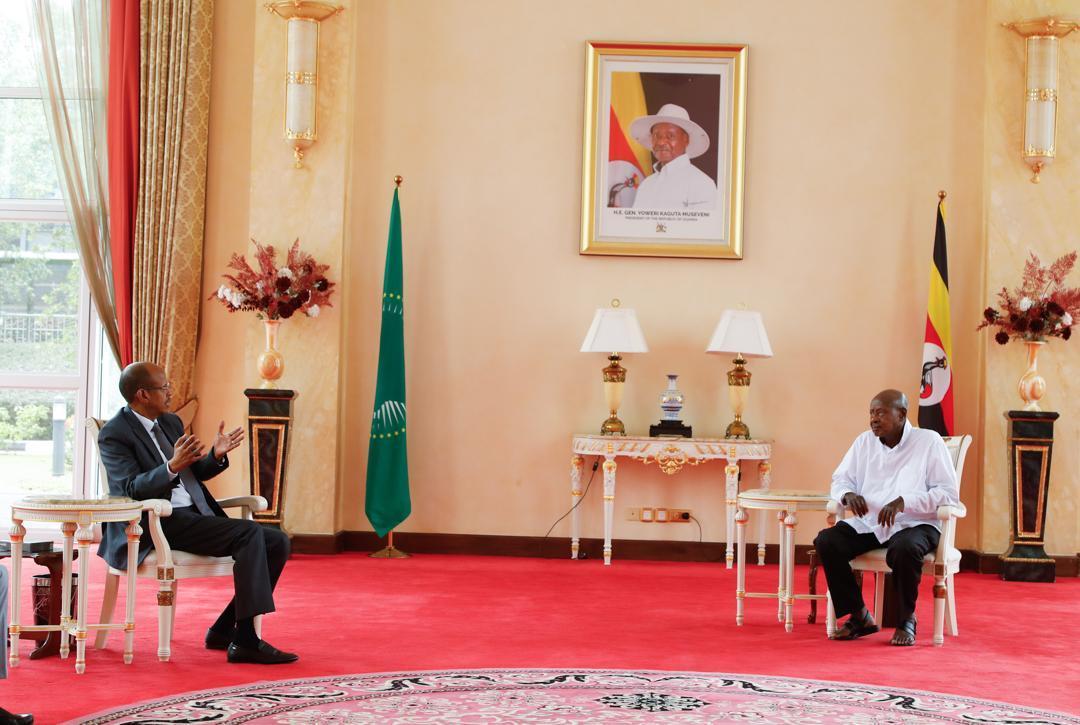
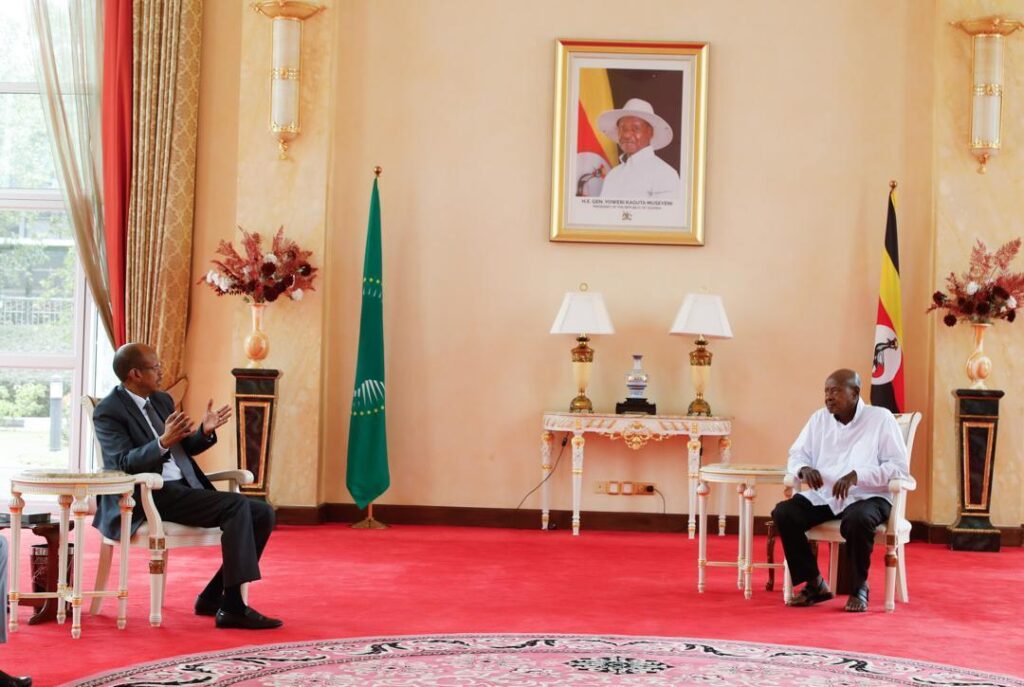
The agreement was signed at State House in Entebbe, Uganda, in a ceremony witnessed by Ugandan President Yoweri Museveni.
The signing represents an important institutional milestone in the African Union’s efforts to develop a coordinated, African-led humanitarian response system capable of addressing emergencies across the continent.
However, while the agreement establishes the framework for Uganda to host the agency, it does not mean the African Humanitarian Agency is fully operational.
A New Chapter in Africa’s Humanitarian Cooperation
The African Humanitarian Agency is part of the African Union’s broader ambition to strengthen continental institutions and improve cooperation among its 55 member states.
Africa continues to confront humanitarian challenges involving armed conflicts, population displacement, droughts, floods, food insecurity, and public health emergencies.
Many of these challenges extend beyond national borders, requiring cooperation between governments, regional organizations, humanitarian institutions, and international partners.
The establishment of a continental humanitarian agency is intended to strengthen Africa’s institutional capacity to coordinate responses to such emergencies.
By hosting the agency, Uganda is positioned to play an important role in the development of this continental humanitarian framework.
The agreement also reflects the African Union’s continuing efforts to strengthen African ownership of humanitarian policy and emergency response.
Why Uganda’s Role Matters
Uganda occupies an important geographic position in East Africa, a region that has experienced significant humanitarian pressures associated with displacement, conflict, and climate-related emergencies.
The country has extensive experience hosting refugees from neighboring states, including South Sudan and the Democratic Republic of the Congo.
Its selection as the host country provides an opportunity to connect continental humanitarian coordination with regional experience in refugee protection and emergency assistance.
However, hosting the agency should not be confused with assuming responsibility for humanitarian operations across Africa.
The African Humanitarian Agency is intended to serve the broader continental framework of the African Union, rather than operate exclusively as a Ugandan institution.
Its effectiveness will depend on cooperation among AU member states, regional economic communities, humanitarian partners, and relevant national authorities.
From Institutional Agreement to Operational Reality
Although the signing is an important achievement, several practical questions remain before the agency can be considered fully operational.
These include securing sustainable financing, establishing administrative and technical capacity, recruiting personnel, developing operational procedures, and clarifying coordination arrangements with existing humanitarian institutions.
The African Union will also need to ensure that the agency can work effectively with national disaster management authorities and regional organizations.
A host country agreement is therefore one stage in a much larger institutional development process.
The signing establishes an important foundation, but the agency’s actual readiness must be assessed through subsequent implementation milestones.
The distinction is critical: an agreement to host an institution is not the same as demonstrating that the institution has begun delivering humanitarian services.
The Role of Africa’s Regional Economic Communities
The African Humanitarian Agency could become an important component of cooperation between the African Union and Africa’s eight recognized Regional Economic Communities.
Organizations such as the East African Community (EAC), Intergovernmental Authority on Development (IGAD), Economic Community of West African States (ECOWAS), and Southern African Development Community (SADC) already operate within regions affected by different humanitarian challenges.
These institutions have varying mandates and mechanisms for addressing disaster preparedness, displacement, food security, and regional emergencies.
A functioning African Humanitarian Agency could help improve coordination between continental and regional initiatives, reduce duplication of efforts, and strengthen information sharing.
For example, humanitarian emergencies affecting several countries simultaneously could benefit from clearer communication between national governments, regional institutions, and the African Union.
However, these potential benefits will depend on the agency’s eventual mandate, resources, and operational arrangements.
Reducing Dependence on External Humanitarian Assistance
One of the larger strategic questions surrounding the African Humanitarian Agency is whether it can contribute to greater African capacity to finance and coordinate humanitarian responses.
Historically, many major humanitarian operations across Africa have relied heavily on financing and logistical assistance from international organizations and external donor governments.
Although these partnerships remain important, the development of stronger African institutions could give member states greater influence over humanitarian priorities and response strategies.
A continental humanitarian agency could potentially support earlier coordination, more consistent preparedness, and stronger cooperation among African governments.
Nevertheless, the establishment of an agency alone cannot resolve the structural challenges associated with humanitarian financing, logistics, infrastructure, and institutional capacity.
Long-term effectiveness will require sustained political commitment and measurable implementation.
What Comes Next?
The next phase will be especially important in determining whether the African Humanitarian Agency becomes an effective continental institution.
Key developments to watch include the formal establishment of its headquarters arrangements, appointment of leadership and personnel, approval of operational budgets, development of emergency response procedures, and confirmation of when the agency will begin carrying out its functions.
The African Union and Uganda’s agreement creates an institutional foundation upon which these activities may proceed.
Until further operational milestones are confirmed, the signing should be understood as progress toward implementation rather than evidence of a fully functioning agency.
WDS Analysis: Another Test of African Institutional Integration
For When the Dust Settles, the significance of this development extends beyond the signing ceremony in Entebbe.
The African Union is undertaking an unprecedented continental integration effort involving 55 sovereign countries, each with its own national institutions, priorities, and resources.
Building common institutions capable of addressing shared challenges is central to that effort.
The African Humanitarian Agency represents another opportunity to examine whether continental cooperation can produce practical results for African populations.
Humanitarian emergencies do not recognize national boundaries. Conflicts, droughts, disease outbreaks, and population movements can affect several countries at once.
Consequently, effective humanitarian coordination is not simply a matter of emergency assistance. It is also connected to regional stability, economic resilience, and the broader objectives of Agenda 2063.
The signing in Uganda demonstrates progress in establishing the institutional framework for African humanitarian cooperation.
But the central question remains:
Can the African Union transform this agreement into a fully funded, operational humanitarian agency capable of coordinating timely and effective responses across the continent?
That is the development When the Dust Settles will continue to examine.