
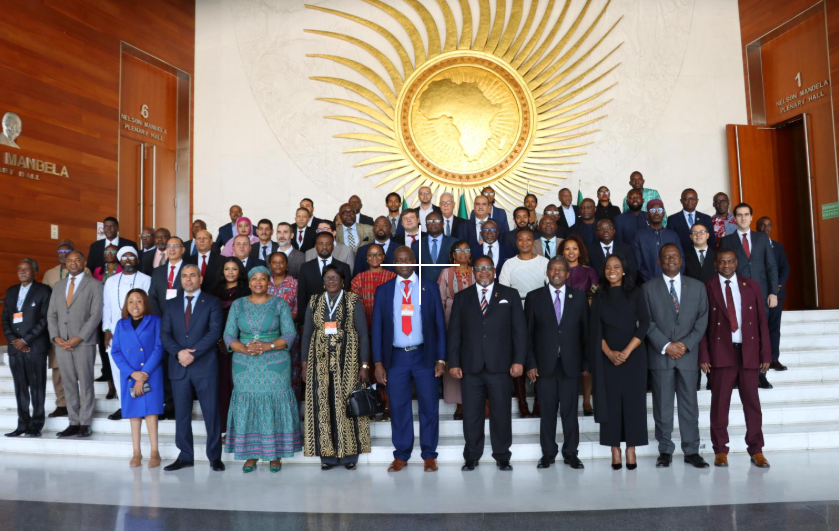
ADDIS ABABA, ETHIOPIA — The African Union (AU) has reported the conclusion of the Sixth Ordinary Session of its Specialized Technical Committee on Education, Science and Technology, with strategic declarations supporting the continent’s efforts to accelerate education transformation, strengthen technical skills and prepare African workers for emerging economic opportunities.
The declarations reinforce the African Union’s commitment to its Decade of Education Transformation and its broader development objectives under Agenda 2063, the continental blueprint for economic integration, industrialization and sustainable development.
Although the session has concluded and declarations have been reported, the effectiveness of these commitments will depend on how African governments translate them into practical education reforms, workforce development programmes and measurable improvements in employment opportunities.
Education as a Foundation for African Integration
Africa’s ambition to create a more economically integrated continent requires more than trade agreements, transportation corridors and common regulatory frameworks. It also requires a workforce equipped with the knowledge and technical abilities needed to operate across national borders.
The African Union’s education transformation agenda recognizes the importance of developing human capital capable of supporting industrial growth, technological innovation and regional economic cooperation.
Across Africa’s 55 African Union member states, differences in educational resources, workforce training systems and professional qualifications can create challenges for employers and workers seeking opportunities beyond their national markets.
Greater cooperation in education and technical training could help address these challenges.
For example, more compatible vocational qualifications could make it easier for skilled workers to pursue employment opportunities across participating countries, subject to national immigration, licensing and professional recognition requirements.
Similarly, stronger technical education programmes could help African industries recruit workers with the capabilities needed for manufacturing, renewable energy, transportation, construction and digital infrastructure.
These developments would support the broader objectives of the African Continental Free Trade Area (AfCFTA), which seeks to expand trade and economic cooperation among African countries.
Technical and Vocational Education Takes on Greater Importance
One of Africa’s major economic challenges is ensuring that education systems prepare young people for the employment opportunities emerging across the continent.
Technical and Vocational Education and Training (TVET) has an important role in addressing this challenge.
Unlike education programmes focused primarily on academic qualifications, TVET emphasizes practical competencies and occupational skills that can be applied directly in the workplace.
Across the continent, demand for specialized skills is expected to remain important in sectors including agriculture, construction, manufacturing, transportation, information technology and energy.
Strengthening vocational education could help African economies reduce skills shortages while supporting domestic production and regional value chains.
However, expanding technical education requires sustained investment in training facilities, qualified instructors, equipment, industry partnerships and reliable systems for evaluating learning outcomes.
The challenge is not simply increasing the number of training programmes. It is ensuring that graduates possess skills that employers need and that qualifications are recognized where workers seek employment.
Linking Education to Agenda 2063 and Industrial Development
The African Union’s Agenda 2063 identifies human capital development, science, technology and innovation as important foundations for the continent’s long-term transformation.
Education policy therefore has implications beyond classrooms and universities.
Consider Africa’s ambitions to expand regional manufacturing and infrastructure development.
A cross-border railway project requires engineers, technicians, electricians, logistics specialists and maintenance personnel.
Regional electricity networks require skilled workers capable of installing, managing and maintaining sophisticated energy infrastructure.
Africa’s expanding digital economy similarly depends on software developers, cybersecurity professionals, telecommunications engineers and other technology specialists.
Without sufficient investment in these capabilities, infrastructure and industrial projects may face workforce shortages that increase costs or delay implementation.
By aligning education and skills development with continental economic priorities, African governments could strengthen their ability to implement Agenda 2063.
The Role of Africa’s Eight Regional Economic Communities
The African Union’s eight recognized Regional Economic Communities (RECs) could play an important role in connecting continental education objectives with regional labour-market needs.
Organizations such as ECOWAS, the East African Community, SADC and COMESA provide institutional frameworks through which participating countries can coordinate economic policies and regional development initiatives.
Education and workforce cooperation could become an increasingly important part of these efforts.
For example, regional institutions could support greater compatibility between vocational training standards, facilitate cooperation among universities and technical colleges, and encourage agreements concerning the recognition of professional qualifications.
These approaches could help create a more mobile and productive African workforce.
However, such outcomes should not be interpreted as agreements reached during the Sixth Ordinary Session unless confirmed by the session’s official declarations.
They represent potential avenues through which the AU’s education transformation priorities could support regional integration.
From Strategic Declarations to Measurable Results
The conclusion of the Sixth Ordinary Session represents an institutional milestone, but declarations alone cannot transform Africa’s education systems.
The next stage will require national governments, regional institutions, educational organizations and private-sector partners to determine how strategic commitments can be implemented.
Several important questions remain.
Will governments allocate sufficient resources to modernize schools, universities and technical training institutions?
Will education reforms respond to the actual needs of African industries?
Can countries develop stronger systems for recognizing qualifications across borders?
And will young Africans experience measurable improvements in access to training, employment and economic opportunity?
Answering these questions will require implementation plans, financing, institutional cooperation and transparent reporting on progress.
For the African Union, success will ultimately depend on whether its education transformation agenda produces practical improvements rather than additional policy commitments.