
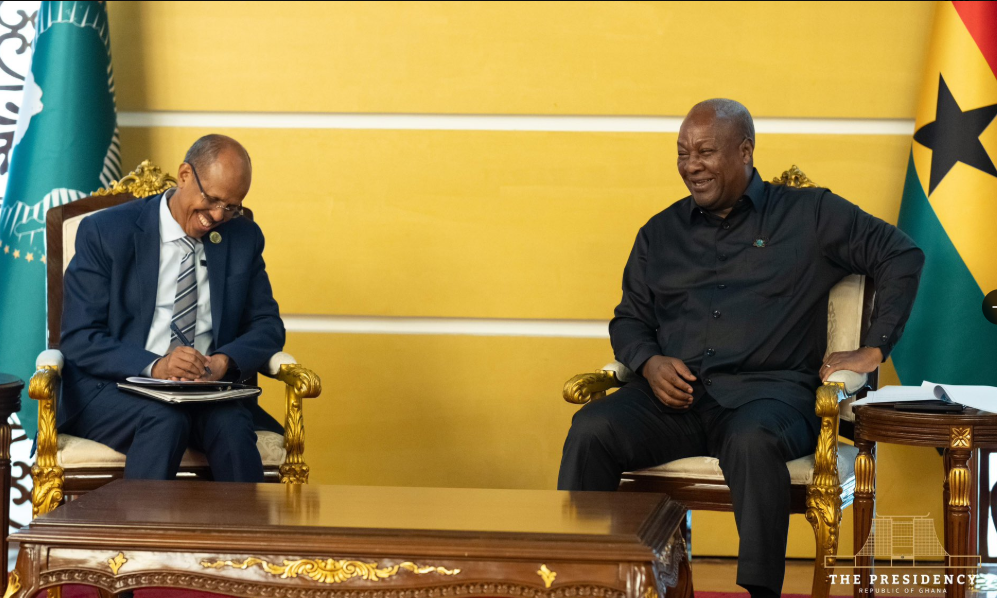
ACCRA, Ghana — Ghanaian President John Dramani Mahama has renewed calls for major reforms of the United Nations Security Council while urging developing nations to strengthen cooperation and transform their economies beyond dependence on raw-material exports.
Speaking at the Non-Aligned Movement summit, Mahama argued that countries of the Global South must move beyond declarations and translate their shared positions into coordinated action capable of influencing the international political and economic system.
A major focus of Mahama’s message was reform of the United Nations Security Council, an issue that has remained a longstanding priority for African governments and the African Union.
Africa currently lacks permanent representation on the Security Council despite accounting for more than a quarter of UN member states and frequently being the subject of Security Council discussions involving peace and security.
Mahama’s position closely reflects the African Union’s longstanding demand for greater African representation in global governance, including reform of the Security Council to address what African leaders have described as a historical imbalance in the international system.
But the Ghanaian president’s message extended beyond political representation.
Mahama also challenged developing countries to reconsider their position within the global economic system, arguing that nations of the Global South should not remain permanent suppliers of raw materials while much of the processing, manufacturing and value creation takes place elsewhere.
Ghana’s Presidency has linked this approach to what it describes as the “Accra Reset”—a vision centered on value addition, industrial development and broader economic transformation.
For African countries, the argument has significant implications.
The continent possesses substantial reserves of minerals, agricultural commodities and other natural resources. However, many African economies continue to export those resources in relatively unprocessed forms before importing higher-value finished products.
Increasing domestic processing and manufacturing could allow African countries to retain a greater share of the economic value generated from their natural resources while creating jobs, developing industries and strengthening regional supply chains.
That objective also connects with the African Union’s wider economic integration agenda and the African Continental Free Trade Area, or AfCFTA.
As AfCFTA works toward creating a more integrated continental market, greater African manufacturing and value addition could allow more products to be produced, processed and traded within Africa rather than relying heavily on markets and industries outside the continent.
Mahama’s message therefore brings together two major issues confronting Africa and the wider Global South: who has influence over global political decisions and who captures the economic value generated from developing countries’ resources.
For Ghana and the African Union, reforming global governance and transforming Africa’s economic structure increasingly form parts of the same broader conversation—building a continent with a stronger voice internationally while expanding its ability to produce, process and trade more of its own goods.
Why it matters: Mahama’s call reinforces Africa’s campaign for greater representation in institutions such as the UN Security Council while highlighting another central challenge facing the continent: transforming Africa from primarily a supplier of raw commodities into a region of interconnected producers, processors and manufacturers. That transformation could become increasingly important as AfCFTA seeks to deepen economic integration across Africa.