
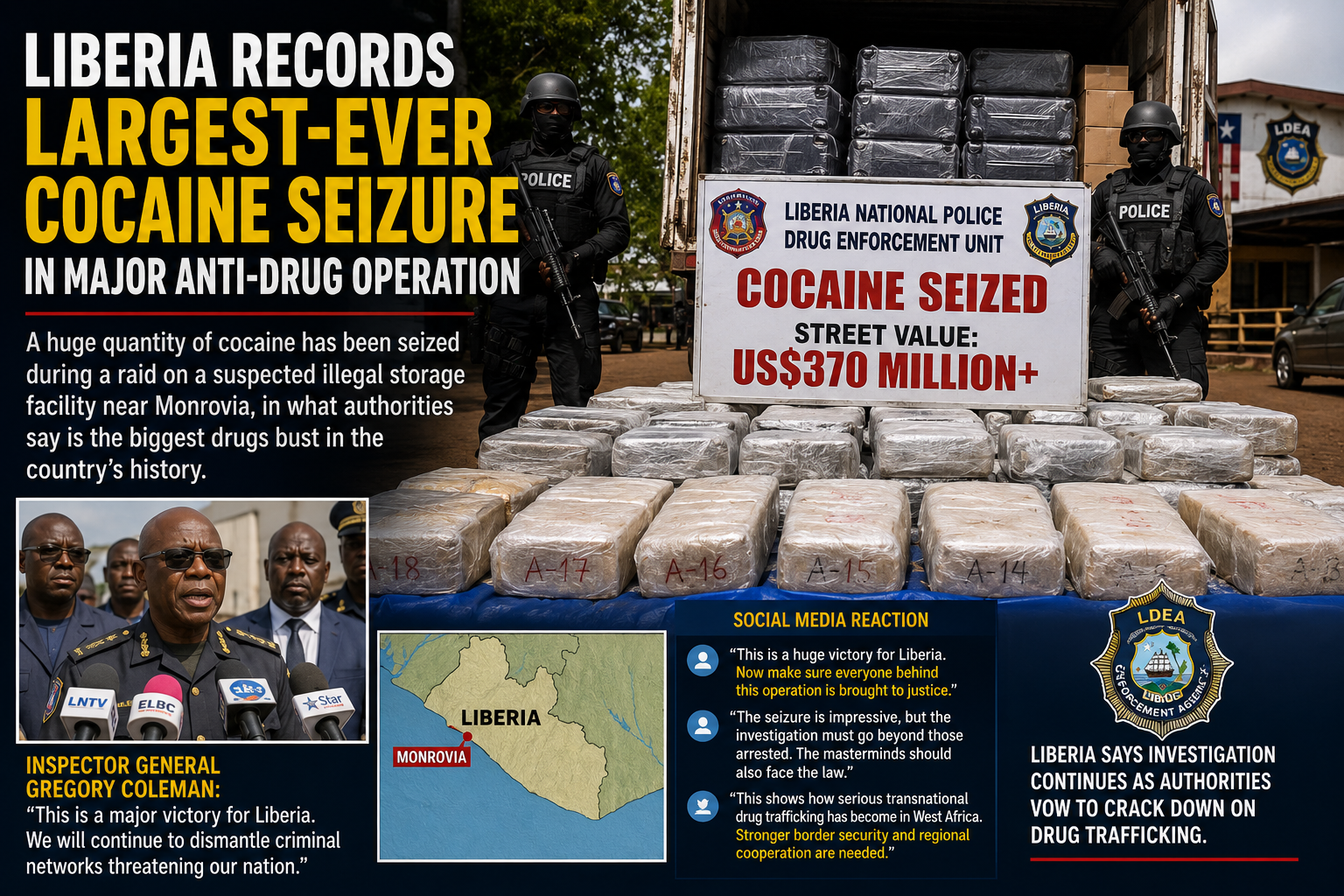
MONROVIA, Liberia — July 30, 2026 — Liberian authorities have destroyed approximately 4.2 metric tons of cocaine seized during two separate anti-narcotics operations, marking the largest cocaine seizure in the country’s history. The destruction of the narcotics comes as investigators pursue allegations that senior law-enforcement officials may have played a role in facilitating the trafficking operation.
According to Liberian law-enforcement authorities, the cocaine had an estimated street value of US$336 million, although that valuation has not been independently verified.
Police Inspector General Gregory Coleman announced that the investigation has identified several officers allegedly involved in escorting the shipment. Authorities reported that the Chief of Highway Patrol and the Head of the Major Crimes Unit have been formally charged in connection with the case. In addition, a deputy police commander assigned to Roberts International Airport remains under investigation as a suspect.
Officials emphasized that the charges represent allegations, and all individuals involved are presumed innocent unless proven guilty in a court of law.
The destruction of the cocaine follows what authorities describe as a significant breakthrough in Liberia’s efforts to combat transnational organized crime and illicit drug trafficking. The operation underscores the country’s growing role in international efforts to intercept narcotics moving through West Africa, a region that has increasingly been used as a transit route for cocaine shipments destined for Europe and other international markets.
Why It Matters
The case represents more than a major drug seizure. It raises serious concerns about possible corruption within Liberia’s security institutions and the extent to which criminal networks may have infiltrated law-enforcement agencies.
The prosecution of senior police officials will likely serve as a key test of the Liberian government’s commitment to transparency, accountability, and strengthening public confidence in its justice system. Anti-corruption advocates and international partners will be watching closely to see whether the investigation proceeds independently and whether those responsible are held accountable under the law.
As legal proceedings move forward, the case is expected to remain one of Liberia’s most closely watched criminal investigations, with significant implications for the country’s anti-drug strategy and broader efforts to combat organized crime