
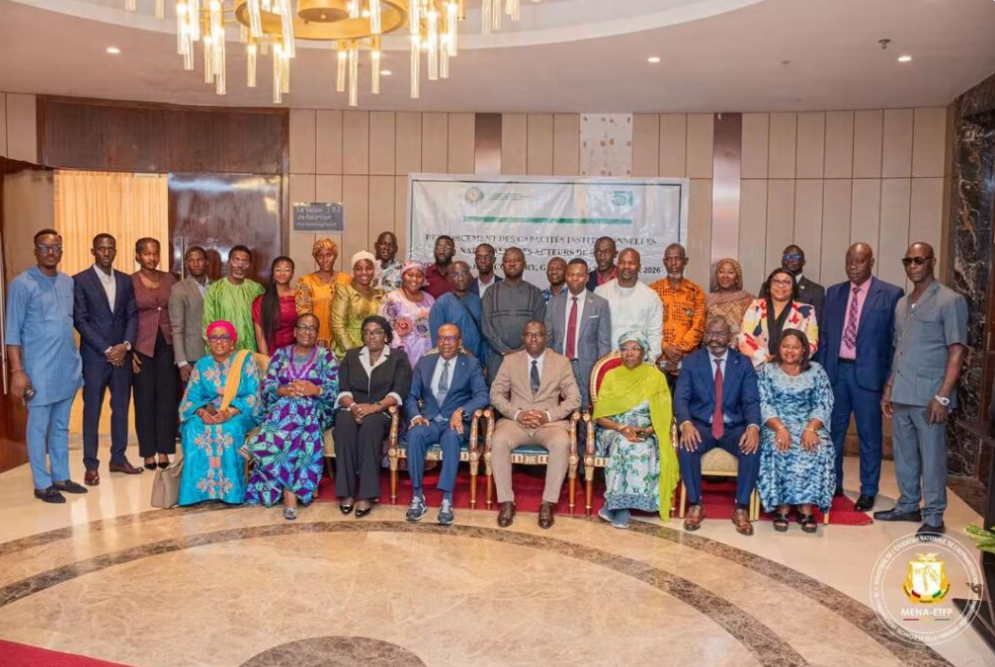
CONAKRY, Guinea — August 17, 2026 — The Economic Community of West African States (ECOWAS) is strengthening technical and vocational education and training systems as part of a broader effort to improve employment opportunities, entrepreneurship and economic development across West Africa.
In an official update published on August 16, ECOWAS said its Directorate of Education, Science and Culture organized a national training workshop in Conakry, Guinea, from August 11–13, 2026, to strengthen the institutional capacity of stakeholders involved in Technical and Vocational Education and Training (TVET).
Building Stronger Vocational Institutions
According to ECOWAS, the initiative is designed to strengthen the institutional and operational abilities of national organizations responsible for vocational and technical education.
The training focused on improving management practices within TVET institutions while making education and training more relevant to the needs of students, employers and national economies.
ECOWAS identified three major objectives: providing specialized capacity building for TVET stakeholders, improving the quality and relevance of vocational education, and promoting more transparent, inclusive, and participatory management of training institutions.
The initiative forms part of the regional body’s continuing effort to modernize training systems and better connect education with the economic development priorities of its member states.
Skills That Can Lead to Employment
The significance of vocational education extends beyond the classroom.
West African economies require trained workers in fields ranging from construction and manufacturing to agriculture, electrical work, automotive technology, information technology and other technical professions.
ECOWAS says its broader approach is intended to promote employability, innovation, entrepreneurship and inclusive economic growth across member states.
For young people, this means vocational education should increasingly provide practical skills that can lead directly to employment or help graduates establish their own businesses.
A Regional Approach to a Regional Challenge
The Conakry workshop also demonstrates how ECOWAS can use regional cooperation to address challenges facing individual countries.
Rather than every member state developing vocational-training systems independently, cooperation can help countries exchange successful practices and improve how training institutions are managed.
ECOWAS has conducted similar TVET capacity-building work elsewhere in the region. In The Gambia, for example, Mucktarr M. Y. Dabo, Deputy Permanent Secretary (Technical) at the Ministry of Higher Education, Research, Science and Technology, emphasized the importance of access, quality, relevance and partnerships in technical and vocational education.
Connecting Education to West Africa’s Economic Future
The long-term challenge will be ensuring that vocational programs teach skills that employers and industries actually need.
As ECOWAS countries pursue industrialization and greater regional economic integration, vocational institutions could play an increasingly important role in supplying the technicians, skilled workers and entrepreneurs required to support that transformation.
For ordinary West Africans, particularly young people seeking alternatives to traditional university education, stronger TVET systems could provide a more direct pathway from education to employment.
The ECOWAS initiative therefore represents more than an education program. It is part of a wider effort to connect skills development, employment, entrepreneurship and regional economic growth — and to ensure that West Africa’s young population has practical opportunities to participate in the region’s development.