
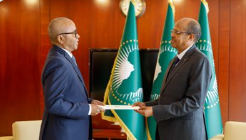
ADDIS ABABA, Ethiopia — The 49th Ordinary Session of the African Union (AU) Executive Council officially opened today at the AU Headquarters in Addis Ababa, bringing together foreign ministers and senior government officials from across the continent to deliberate on key policy issues that will shape Africa’s development agenda.
The meeting is being held under the African Union’s 2026 Theme of the Year, “Assuring Sustainable Water Availability and Safe Sanitation Systems to Achieve Agenda 2063.” Throughout the session, ministers are expected to review reports, discuss continental priorities, and formulate policy recommendations that will be presented during the next phase of the African Union’s decision-making process.
Water security, sanitation, sustainable development, regional integration, peace and security, economic transformation, and institutional reform are expected to feature prominently in discussions as member states work toward advancing the objectives of Agenda 2063, the African Union’s long-term blueprint for a prosperous, integrated, and peaceful Africa.
The Executive Council meeting also comes as preparations continue for the 8th Mid-Year Coordination Meeting between the African Union, the Regional Economic Communities (RECs), and Regional Mechanisms, which has been confirmed for 4 October 2026 in El Alamein, Egypt.
The annual coordination meeting serves as one of the African Union’s most important institutional forums, bringing together the AU Commission, the leadership of the eight recognized Regional Economic Communities, and other continental organizations to harmonize policies and coordinate implementation of Africa’s shared development priorities.
Why This Meeting Matters
The Executive Council plays a critical role within the African Union’s governance structure by reviewing policy proposals and making recommendations before they are considered by the Assembly of Heads of State and Government.
Its work directly influences continental policies on economic integration, infrastructure development, trade, agriculture, health, education, climate resilience, and peace and security.
The upcoming Mid-Year Coordination Meeting is equally significant because it strengthens cooperation between the African Union and the Regional Economic Communities, ensuring that regional initiatives complement continental priorities rather than operate independently.
This coordination is particularly important for implementing Agenda 2063 and accelerating the rollout of the African Continental Free Trade Area (AfCFTA), which seeks to create the world’s largest free trade area by connecting more than 1.4 billion people across the continent.
By aligning policies between continental and regional institutions, African leaders aim to improve cross-border infrastructure, facilitate trade, promote investment, strengthen regional value chains, and enhance collective responses to shared challenges such as climate change, food security, migration, and conflict.
Looking Ahead
As ministers continue deliberations in Addis Ababa, observers will closely watch the recommendations emerging from the Executive Council, many of which are expected to shape future decisions by the African Union Assembly.
With Africa pursuing deeper economic integration and sustainable development under Agenda 2063, the outcomes of both the Executive Council session and the October Mid-Year Coordination Meeting will play an important role in determining how effectively continental and regional institutions work together to achieve the African Union’s long-term vision for inclusive growth, prosperity, and unity.