
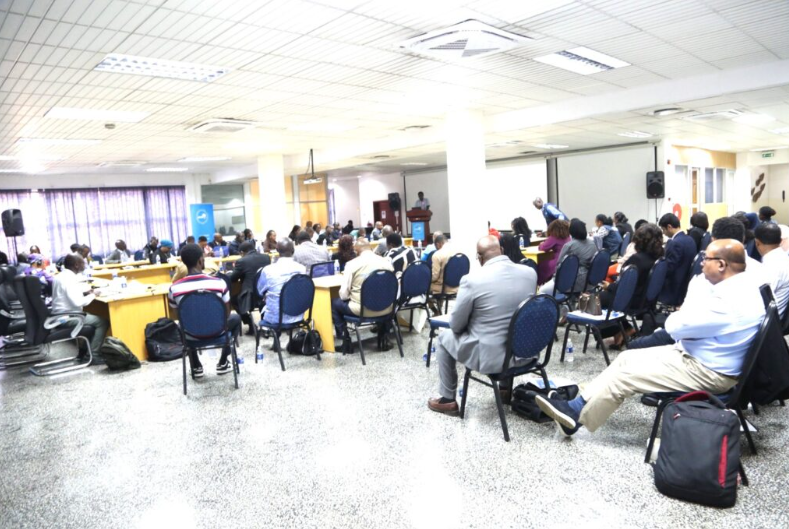
LUSAKA, Zambia — August 11, 2026 — The African Union and the Common Market for Eastern and Southern Africa have deployed a joint election observation mission to Zambia ahead of the country’s August 13 general election, placing observers across all 10 provinces to assess the electoral process.
The joint AU–COMESA Election Observation Mission consists of 93 short-term observers who will examine key stages of the election, including the pre-election environment, voting procedures, vote counting and the immediate post-election period.
The mission is being led by Hailemariam Dessalegn Boshe, former Prime Minister of Ethiopia, with Ambassador Marie-Pierre Lloyd of Seychelles serving as deputy head of the mission.
The deployment represents a coordinated effort by two major African regional institutions to provide an independent assessment of one of Southern Africa’s most significant political events this week.
Observers Deployed Across All 10 Provinces
The 93 observers are expected to operate throughout Zambia’s 10 provinces, giving the mission a nationwide presence as voters prepare to go to the polls.
Election observation involves considerably more than watching what happens inside polling stations on election day.
Observers can examine the broader environment surrounding an election, including preparations by electoral authorities, campaign conditions, voter participation, polling procedures and adherence to established electoral rules.
On election day, observers will monitor voting at selected polling stations before following parts of the counting and results process.
Their findings will then contribute to the mission’s overall assessment of the conduct of the election.
Preliminary Assessment Expected August 15
The AU–COMESA mission is scheduled to issue its preliminary assessment on August 15 in Lusaka, two days after voting.
That preliminary statement will be closely watched because it will provide an early regional assessment of how the election was conducted.
Rather than determining who should win an election, observation missions are intended to evaluate the electoral process against applicable national laws as well as regional and continental principles and standards for democratic elections.
The mission’s findings could therefore play an important role in public perceptions of the credibility and transparency of the process.
Why Regional Election Observation Matters
Election observation has become an important component of African regional cooperation.
The African Union has developed continental frameworks addressing democratic governance and elections, while regional organizations increasingly participate in observation missions within their member states.
Such missions can help identify strengths and weaknesses in electoral systems and recommend improvements for future elections.
They can also provide governments, political parties, civil-society organizations and citizens with an external assessment of whether key stages of an election were conducted according to established standards.
However, observers do not administer the election. Responsibility for conducting Zambia’s election remains with the country’s legally designated electoral institutions.
Zambia’s Election Has Regional Importance
Zambia occupies an important geographic position in Southern Africa and is a member of several regional institutions, including COMESA and the Southern African Development Community.
Developments within the country therefore have significance beyond Zambia’s borders.
Political stability and credible democratic institutions can influence regional trade, investment, infrastructure development and cooperation among neighboring states.
The joint mission also demonstrates increasing cooperation between African continental and regional organizations.
Instead of deploying completely separate missions, collaboration between the African Union and COMESA can bring together continental democratic standards and regional knowledge of the political environment.
Attention Now Turns to August 13
With observers deployed across the country, attention now turns to August 13, when Zambians are scheduled to cast their ballots.
The observers will continue assessing developments through voting, counting and the immediate post-election period.
Their first major public assessment is expected in Lusaka on August 15.
For the AU and COMESA, the mission is not about determining Zambia’s political choices. Those decisions belong to Zambian voters.
The regional institutions’ responsibility is different: to observe the process and provide an independent African assessment of whether the election was conducted in accordance with the democratic principles and electoral standards applicable to Zambia.