
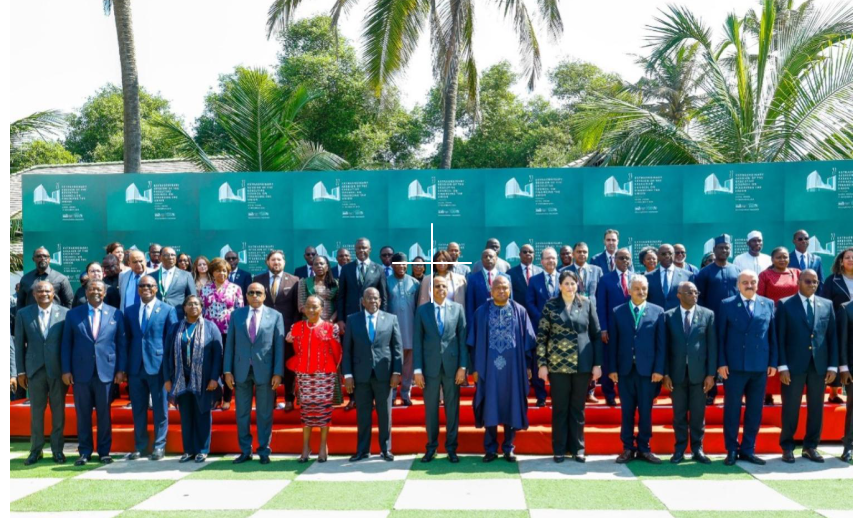
ACCRA, Ghana — The African Union has opened a major round of financial reform discussions aimed at reducing its dependence on external funding, strengthening institutional accountability, and giving African governments greater control over the continent’s development and security priorities.
The 27th Extraordinary Session of the African Union Executive Council, which opened on November 13, 2026, in Accra, Ghana, brought together foreign and finance ministers to examine how the 55-member organization can achieve greater financial independence while improving the effectiveness of its institutions.
At the center of the discussions is a fundamental question facing the continent: Can Africa finance its own integration, development, and peace initiatives without relying heavily on international partners?
AU Commission Chairperson Calls for a New Financing Agreement
African Union Commission Chairperson Mahmoud Ali Youssouf presented proposals designed to strengthen the Union’s financial foundations and connect member-state contributions more directly to institutional performance.
Among the proposals is a review of the existing ceiling on member-state contributions, a measure intended to reconsider how financial responsibilities are distributed among African governments.
Youssouf also called for broader implementation of the African Union’s 0.2% levy on eligible imports, a financing mechanism intended to generate more predictable revenue for the organization.
Another significant proposal involves establishing a 2027–2029 financing and accountability pact that would link increased financial commitments to measurable institutional results.
Under this proposed approach, stronger financial contributions would be accompanied by greater transparency, improved budget management, and clearer expectations for institutional performance.
The proposal reflects a growing recognition within the African Union that financial independence must be supported by credible accountability mechanisms.
However, the proposed pact remains under discussion and should not yet be considered an adopted agreement.
Ghana Reveals Major Gaps in African Union Financing
Ghana’s Foreign Minister, Samuel Okudzeto Ablakwa, presented figures illustrating the uneven progress toward financial independence.
According to Ablakwa, African Union member states are projected to finance approximately 99% of the organization’s operational budget in 2027.
However, the situation is dramatically different for other major spending categories.
Projected AU member-state financing for 2027
Figures reported by Ghana’s Foreign Minister
Operational budget
99%
Programme budget
4%
Peace and security budget
12%
These figures describe projected member-state financing shares, not the proportion of each budget already spent or secured.
The figures highlight a significant challenge for the African Union.
While member governments are approaching full responsibility for financing the organization’s routine operations, much of its development programming and peace and security activities remains dependent on funding from outside the continent.
This financial imbalance raises questions about long-term sustainability, institutional independence, and the ability of African governments to implement continental priorities on their own terms.
For an organization responsible for coordinating continental integration, economic development, and conflict prevention, unpredictable financing can complicate long-term planning and implementation.
Only 18 Member States Have Implemented the Import Levy
Another major issue under discussion is the slow implementation of the African Union’s 0.2% import levy.
The mechanism was developed to provide the Union with a more sustainable and predictable source of financing by applying a levy to eligible imports entering participating African countries.
However, Ghana’s Foreign Minister reported that only 18 of the AU’s 55 member states had implemented the mechanism.
18 of 55
Member states implementing the levy
32.7%
18 implemented
37 not implemented
The limited implementation illustrates the gap between continental commitments and national-level action.
Although the financing mechanism offers a potential source of greater budget predictability, its effectiveness depends on governments adopting and administering the levy within their respective national systems.
Expanding implementation could reduce reliance on external contributions while giving the African Union more consistent resources to support its priorities.
Nevertheless, questions remain about national revenue policies, administrative capacity, and the political willingness of member states to implement a common financing arrangement.
Ghana Proposes an Accra Declaration on Financial Reform
As host of the extraordinary session, Ghana has proposed an Accra Declaration intended to establish a stronger framework for African Union financing and institutional accountability.
The proposed declaration addresses three central priorities.
First, it seeks to advance reforms that would strengthen the Union’s ability to finance its activities through African resources.
Second, Ghana is calling for a unified programme-based budget that would better connect spending decisions to agreed continental objectives and measurable results.
Third, the proposal emphasizes strengthening the African Union Peace Fund, an important financial mechanism supporting the continent’s peace and security architecture.
The Peace Fund is particularly significant because the African Union continues to confront security challenges requiring sustained financial resources for conflict prevention, mediation, and peace support activities.
Strengthening the fund could improve the organization’s ability to plan and respond to crises while reducing uncertainty associated with external financing.
However, Ghana’s proposed declaration should be distinguished from a formally adopted agreement. Its final provisions and implementation commitments will depend on the outcome of the ministers’ deliberations.
Financial Independence and Africa’s Integration Agenda
The financing discussions in Accra have implications extending far beyond the African Union’s administrative budget.
The organization plays a central role in advancing Agenda 2063, the continent’s long-term development framework, and supporting cooperation among Africa’s eight recognized Regional Economic Communities.
These regional organizations are essential to efforts involving cross-border trade, infrastructure development, economic coordination, and the gradual integration of African markets.
Continental initiatives such as the African Continental Free Trade Area also depend on effective institutions, coordinated implementation, and reliable financing.
Without adequate resources, even ambitious continental agreements can face delays in implementation.
Greater financial independence could allow African institutions to establish priorities with more predictable funding, strengthen coordination with regional organizations, and improve the implementation of long-term development strategies.
However, additional revenue alone will not guarantee success.
The effectiveness of any financing reform will depend on transparent financial management, credible oversight, national implementation, and the ability to demonstrate measurable benefits to African citizens.
A Defining Test of African Ownership
The Accra discussions represent an important test of the African Union’s commitment to African ownership of its institutions and priorities.
For decades, the continent has pursued greater political and economic integration while confronting the challenge of financing shared institutions and initiatives.
The figures presented by Ghana illustrate both progress and unfinished work.
Member states are projected to cover nearly all of the Union’s 2027 operational budget, demonstrating significant progress in financing its basic institutional functions.
Yet the much smaller projected African contributions to programme spending and peace and security reveal that broader financial independence remains an unresolved challenge.
The proposed reforms could help address that imbalance, but their impact will depend on whether member states translate political commitments into national financing measures and enforceable accountability arrangements.
What Happens Next?
As the 27th Extraordinary Session continues its deliberations, attention will focus on whether ministers can establish common positions on contribution limits, wider implementation of the import levy, the proposed 2027–2029 financing pact, and Ghana’s Accra Declaration.
Any recommendations emerging from the meeting will need to be evaluated against the African Union’s formal decision-making procedures and subsequent implementation by member states.
The opening of the session and presentation of the proposals are confirmed developments. Final adoption of the proposed reforms has not been established by the information available for this article.
The Bigger Picture: Can Africa Finance Its Own Future?
The significance of the Accra meeting extends beyond financial accounting.
The African Union is attempting an ambitious undertaking: bringing 55 sovereign nations together around a shared continental vision of political cooperation, economic integration, peace, and development.
Achieving that vision requires more than declarations and agreements. It requires institutions capable of delivering results and financial systems capable of supporting them.
The central question emerging from Accra is whether African governments can build a sustainable financing model that matches the scale of their continental ambitions.