
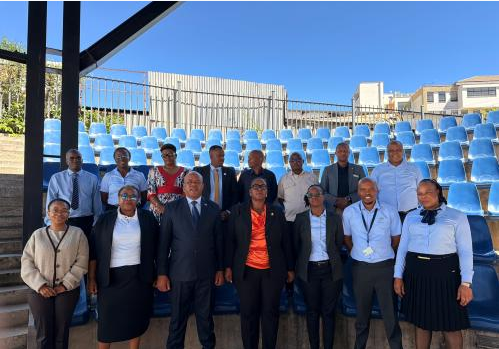
The Southern African Development Community (SADC) has announced that South Africa and Lesotho have demonstrated sufficient institutional capacity to implement the SADC Anti-Corruption Effort Index (SACEI), marking an important step toward establishing common standards for evaluating anti-corruption efforts across Southern Africa.
According to the SADC Secretariat, readiness assessments were conducted in South Africa on October 19–20, 2026, followed by Lesotho on October 22–23. Both assessments examined institutional preparedness to implement the regional framework.
The SACEI is designed to provide a standardized, evidence-based approach to assessing national anti-corruption efforts. By establishing common evaluation criteria, SADC aims to help member states identify institutional weaknesses, measure progress, and strengthen public-sector accountability.
South Africa and Lesotho Prepare for Implementation
Following the assessments, both countries developed implementation roadmaps outlining the steps necessary to introduce the index.
These roadmaps include stakeholder engagement, institutional coordination and procedures for validating national assessment findings.
Validated reports are expected to be submitted to the relevant SADC committees in 2027, providing regional institutions with information to evaluate anti-corruption initiatives and identify areas requiring additional attention.
However, demonstrating readiness to implement the index does not establish that either country has successfully reduced corruption. The assessments concern institutional capacity, while the effectiveness of the framework will depend on implementation, credible data collection and follow-through on identified weaknesses.
Why Anti-Corruption Matters for Regional Integration
Corruption remains a significant challenge to economic development and regional cooperation across Africa.
Weak public accountability can increase infrastructure costs, discourage investment, undermine public services and complicate cross-border economic activity.
For SADC, which brings together 16 member states, stronger governance institutions are closely connected to broader regional integration objectives.
Infrastructure corridors, regional energy projects, trade agreements and investment initiatives depend on transparent institutions and effective public administration.
A common anti-corruption assessment framework could therefore strengthen regional cooperation by helping countries evaluate governance reforms using comparable standards.
Regional Integration Beyond Trade
The SACEI initiative also highlights an important dimension of African integration that often receives less attention than trade agreements, transportation infrastructure and monetary cooperation.
Regional integration requires more than the movement of goods, services and people. It also depends on the effectiveness of national institutions responsible for implementing regional commitments.
By developing common approaches to evaluating anti-corruption efforts, SADC is seeking to strengthen institutional cooperation while allowing member states to maintain responsibility for their domestic governance systems.
The initiative may also provide lessons for other African Regional Economic Communities pursuing stronger governance coordination.
WDS Perspective: Building the Institutions Behind African Integration
For When the Dust Settles (WDS), the development represents another example of Africa’s integration process moving beyond economic agreements toward institutional cooperation.
The African Union’s broader integration ambitions involve bringing 55 sovereign nations together within a continental framework while respecting their national independence.
Achieving that objective requires credible institutions, transparent governance and mechanisms for evaluating whether regional commitments are being implemented.
SADC’s Anti-Corruption Effort Index represents one attempt to address that challenge through common standards and evidence-based assessments.
The critical test will come in 2027, when SADC committees are expected to receive validated national reports.
The central question is whether the findings will lead to measurable institutional improvements or remain primarily an assessment exercise.
For Southern Africa, the initiative’s significance lies not simply in measuring anti-corruption efforts, but in whether regional cooperation can help member states build more accountable institutions.
As Africa continues its unprecedented experiment in continental integration, the strength of its institutions may prove just as important as the agreements its governments sign.