
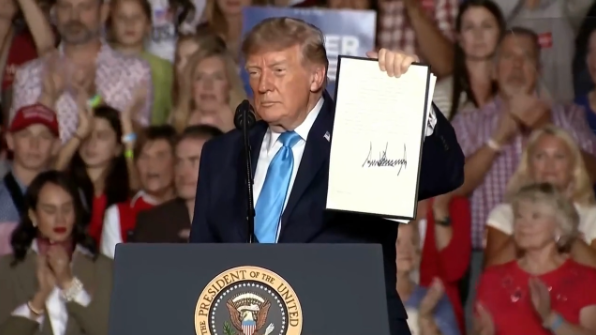
WASHINGTON — October 6, 2026 — President Donald Trump has signed an executive order aimed at immediately reducing diesel fuel costs for American truckers and farmers, a move the White House says is designed to ease transportation and agricultural expenses and potentially reduce broader inflationary pressures across the U.S. economy.
The action places diesel prices at the center of the administration’s effort to address the cost of moving goods and producing food. Diesel remains essential to the American economy, powering much of the nation’s commercial trucking fleet as well as tractors, combines and other heavy agricultural equipment.
For trucking companies and independent drivers, fuel represents one of the most significant operating expenses. When diesel prices rise, the additional cost of transporting products across the country can eventually be passed along to wholesalers, retailers and consumers.
Farmers face a similar challenge. Modern agriculture depends heavily on diesel not only for farm machinery but also for transporting seeds, fertilizer, livestock and harvested crops. Higher fuel expenses can therefore increase costs at multiple points between the farm and the grocery store.
The White House says the executive order is intended to provide immediate relief to truckers and farmers. The economic significance of the measure, however, will ultimately depend on how the order is implemented and how much it changes the actual price of diesel at the pump.
Why Diesel Prices Matter Beyond Trucking
Diesel occupies a particularly important position in the U.S. supply chain because trucks move enormous quantities of consumer products, industrial materials and agricultural goods.
A reduction in diesel costs could therefore have effects extending beyond transportation companies themselves.
Lower fuel expenses could reduce operating pressure on trucking businesses, potentially lower freight costs and provide some relief to agricultural producers. If those savings are sustained and passed through supply chains, consumers could eventually see some benefit in the prices of food and other transported goods.
The opposite is also true. Persistently high diesel prices can increase the cost of nearly everything that must travel significant distances before reaching consumers.
That makes the administration’s announcement more than an energy-policy story. It is also a transportation, agriculture, supply-chain and cost-of-living story.
Farmers Could Be Major Beneficiaries
The timing is especially important for America’s agricultural sector, where fuel costs influence both production and distribution.
Farmers use diesel throughout the production cycle—from preparing fields and planting crops to harvesting and transporting agricultural products. Reducing those expenses could improve operating margins for producers already managing costs associated with equipment, fertilizer, labor and transportation.
The policy could also have implications for rural communities, where agriculture and transportation are major economic drivers.
The Bigger Test: Will Consumers See the Savings?
The central question now is whether the executive order produces a substantial and lasting decline in diesel prices.
An announcement alone does not guarantee lower transportation or grocery costs. The impact will depend on the specific measures implemented under the order, conditions in domestic and international energy markets and whether lower fuel expenses are ultimately reflected in freight and consumer prices.
If diesel prices decline meaningfully, the effects could travel through the economy in stages:
Lower diesel prices → lower trucking and farming expenses → reduced transportation and production costs → potential relief for businesses and consumers.
That chain is why diesel policy deserves attention even from Americans who never purchase diesel themselves.
For the Trump administration, the executive order represents an attempt to use energy policy to address a broader economic concern: the cost of producing and transporting the goods Americans purchase every day.
The coming weeks will show whether the measure delivers measurable savings at diesel pumps—and whether those savings eventually make their way from America’s highways and farms to household budgets.