
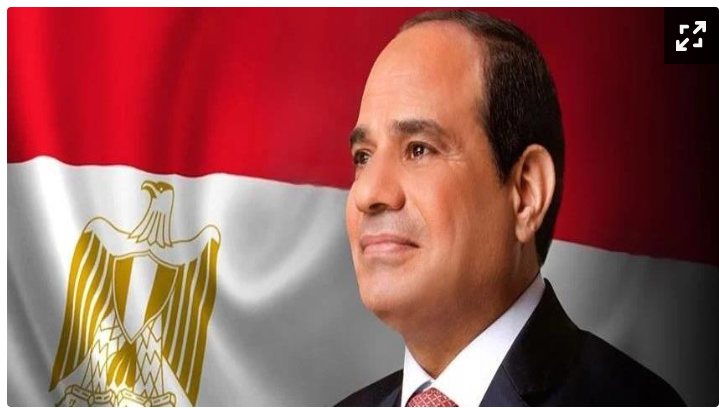
CAIRO — October 6, 2026 — Egyptian President Abdel Fattah el-Sisi departed Tuesday for the Republic of Korea, beginning a three-country Asian tour that will also take him to Malaysia and Indonesia, as Cairo seeks to deepen political ties while attracting new investment and expanding economic partnerships with some of Asia’s major economies.
The tour highlights Egypt’s effort to position itself not only as a major Middle Eastern economy, but also as a strategic manufacturing, logistics and trade gateway connecting Asia with Africa, the Middle East and Europe.
South Korea: Investment takes center stage
During his visit to the Republic of Korea, President el-Sisi is scheduled to hold talks with South Korean President Lee Jae Myung.
The discussions are expected to address bilateral relations and opportunities to strengthen cooperation between the two countries.
But one of the most important parts of the Korean leg of the tour may take place outside traditional government-to-government diplomacy.
El-Sisi is also scheduled to participate in a roundtable with major Korean companies, putting private-sector investment directly on the agenda.
For Egypt, attracting Korean companies could support its broader effort to increase industrial production, technology transfer, exports and foreign direct investment.
Egypt already possesses several characteristics that could make it attractive to Asian manufacturers: a large domestic market, access to the Mediterranean and Red Sea, the Suez Canal, and trade connections that provide potential entry points into African, Middle Eastern and European markets.
That gives Cairo an argument that investment in Egypt does not necessarily have to be aimed only at Egyptian consumers.
Factories and industrial operations established in Egypt could potentially serve much larger regional markets.
Egypt’s African Gateway Strategy
The African dimension of the trip deserves particular attention.
Egypt is a member of the African Union and participates in major continental and regional economic arrangements, including the African Continental Free Trade Area (AfCFTA) and COMESA.
As African countries attempt to expand intra-African trade and develop regional value chains, Egypt could increasingly present itself to Asian investors as a location from which companies can participate in Africa’s growing continental market.
That could become particularly significant for sectors such as manufacturing, automotive production, electronics, renewable energy, infrastructure, pharmaceuticals, food processing and logistics.
The question will be whether investment agreements ultimately translate into production inside Egypt—and whether those investments become connected to wider African supply chains.
Malaysia and Indonesia Expand the Asian Dimension
Following South Korea, el-Sisi’s tour will continue to Malaysia and Indonesia, extending Egypt’s diplomatic and economic outreach into Southeast Asia.
Both countries provide Egypt with opportunities to diversify its international economic relationships beyond its traditional partners in Europe, the Gulf and North America.
Indonesia, in particular, is one of the world’s largest emerging economies, while Malaysia has developed significant capabilities in manufacturing, electronics, finance and global trade.
Closer relationships with these economies could create opportunities for investment, industrial cooperation and expanded commercial ties.
The tour therefore reflects a wider trend in which African countries are looking increasingly toward multiple global economic centers rather than relying on a narrow group of traditional partners.
More Than a Diplomatic Tour
The significance of el-Sisi’s Asian trip will ultimately depend on what follows the presidential meetings.
Investment announcements and memoranda of understanding can generate headlines, but Egypt’s larger economic objective requires projects that create factories, infrastructure, employment, technology transfer and export capacity.
That makes the roundtable with Korean companies particularly important.
If Cairo can persuade Asian companies to establish production facilities in Egypt rather than simply sell products into the Egyptian market, the economic impact could be considerably larger.
It could also strengthen Egypt’s position within Africa’s emerging continental trade architecture.
Why It Matters for Africa
El-Sisi’s tour raises a broader question for the continent: Can African countries use their expanding trade integration to attract global manufacturing investment?
The AfCFTA is intended to create a much larger integrated African marketplace. If implemented successfully, that could change how international companies calculate the value of investing in individual African countries.
Instead of viewing Egypt solely as a market of more than 100 million people, an Asian manufacturer could increasingly view an Egyptian production base as one potential entry point into a continent-wide market.
But that opportunity depends on infrastructure, efficient borders, competitive production costs, reliable energy, predictable regulations and the actual implementation of African trade agreements.
For Egypt, therefore, the three-country Asian tour is about much more than diplomacy.
It is part of a larger attempt to position the country at the intersection of Asian capital, African economic integration, Middle Eastern markets and global trade routes.
The meetings in South Korea, Malaysia and Indonesia may establish the relationships.
The bigger test will be whether those relationships produce factories, investment, jobs, and trade after President el-Sisi returns to Cairo.