
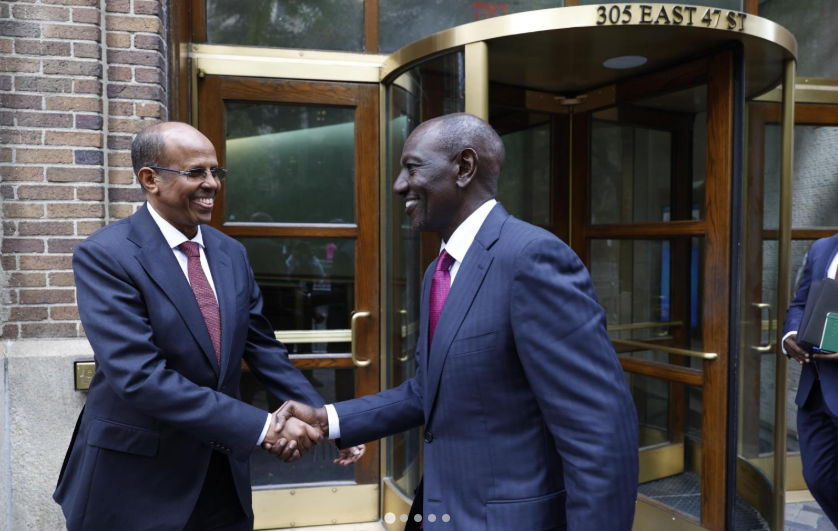
NEW YORK — September 23, 2026 — African leaders are working to strengthen a unified continental negotiating position ahead of the next two United Nations climate conferences, as the African Union seeks to turn Africa’s climate priorities into a coordinated international agenda.
Kenyan President William Ruto, who serves as Coordinator of the Committee of African Heads of State and Government on Climate Change (CAHOSCC), convened the committee at the African Union Permanent Observer Mission to the United Nations in New York on the margins of the 81st Session of the United Nations General Assembly (UNGA81).
The meeting focused on advancing Africa’s common position for COP31 in Antalya, Türkiye, while also beginning preparations for COP32 in Addis Ababa, Ethiopia, in 2027. The African Union has described CAHOSCC’s mandate as spearheading Africa’s common climate position and helping ensure that the continent speaks with a coordinated voice in global climate negotiations.
From Climate Commitments to Implementation
A central message emerging from the meeting was that Africa wants global climate negotiations to move beyond repeated commitments toward practical implementation.
President Ruto emphasized priorities including climate finance, adaptation, resilience, renewable energy, clean cooking and climate-positive economic growth. He also called for greater investment in Africa’s renewable-energy resources, green industrialization and sustainable infrastructure.
This approach reflects a broader shift in Africa’s climate diplomacy. Rather than presenting climate change solely as a challenge requiring international assistance, African leaders are increasingly linking climate action to investment, industrialization, employment, energy development and economic transformation.
Ruto said the continent should maintain the approach established through the Nairobi and Addis Ababa climate declarations, which seeks to position climate action as an opportunity for economic growth and investment. He argued that COP31 should help translate existing commitments into delivery, while COP32 should focus heavily on implementation.
Climate Finance Remains a Central Issue
Financing is expected to remain one of Africa’s most important negotiating priorities.
African governments have repeatedly argued that the continent faces substantial climate impacts while receiving insufficient and, in some cases, difficult-to-access financing for adaptation and resilience.
African Union Commission Chairperson Mahmoud Ali Youssouf told the meeting that Africa’s climate agenda should remain grounded in equity, climate justice and the principle of common but differentiated responsibilities. He identified increased and accessible adaptation finance, support for loss and damage, technology access, capacity building and just-transition arrangements among Africa’s priorities heading into COP31.
The AU is also emphasizing the importance of ensuring that climate financing does not worsen the debt pressures facing African economies. According to the Commission, climate ambition must be accompanied by accessible, affordable and predictable financing capable of supporting implementation.
Why a Common African Position Matters
The institutional significance of the New York meeting extends beyond climate policy itself.
Africa consists of more than 50 countries with different economies, energy systems, climate vulnerabilities and development priorities. If governments negotiate primarily as individual states, their influence can be fragmented across the much larger international climate process.
CAHOSCC provides a political mechanism through which African leaders can coordinate major priorities before entering global negotiations.
That does not eliminate differences among African states. Oil- and gas-producing countries, small island states, heavily indebted economies, major renewable-energy producers and countries facing severe drought or flooding may approach particular climate questions differently.
The significance of a common position is therefore not that every country has identical interests, but that African governments seek areas where those interests can be translated into shared negotiating priorities.
The AU itself defines CAHOSCC’s mandate as ensuring that Africa speaks with one voice in global climate negotiations.
COP31 Could Become the Bridge to an African COP
COP31 in Antalya will consequently have significance beyond the negotiations taking place in Türkiye.
African leaders are positioning the conference as a bridge toward COP32 in Addis Ababa, where Africa will have an opportunity to place its priorities closer to the center of the global climate agenda.
Ruto said adaptation should be a major focus as preparations move toward Addis Ababa. His remarks also stressed implementation of existing pledges rather than continually generating new commitments without adequate delivery mechanisms.
For Ethiopia, hosting COP32 will carry additional diplomatic significance. Addis Ababa is already home to the headquarters of the African Union and is one of the continent’s principal centers of multilateral diplomacy. The AU has said it intends to work with Ethiopia, its member states and international partners to make COP32 an outcomes-focused conference that advances African climate priorities.
Africa Seeking Greater Influence Through Coordination
The developing common position illustrates a broader feature of African integration: using continental institutions to increase the collective negotiating weight of African states internationally.
Climate change crosses national borders. Drought, flooding, food insecurity, changing rainfall patterns, energy systems and infrastructure investment increasingly require responses that extend beyond individual governments.
A coordinated position does not guarantee that Africa’s demands will be accepted at global negotiations. But it can give African governments a clearer platform from which to negotiate climate finance, adaptation, technology transfer, energy transition and investment.
The progression from COP31 in Antalya to COP32 in Addis Ababa could therefore become an important test of whether Africa can translate continental coordination into tangible international outcomes.
As the African Union prepares for the two conferences, its message is increasingly focused on implementation: climate commitments must be matched by financing, investment and practical action.
For Africa, COP31 will help determine how strongly that position enters the global negotiations. COP32 will then provide the continent with an opportunity to place adaptation, implementation, investment and climate-positive growth at the center of a climate conference hosted on African soil.