
Tensions over the Nile have intensified again after Ethiopia’s Ministry of Water and Energy issued a strongly worded response to recent remarks by Egyptian Minister of Water Resources and Irrigation Hani Sewilam, highlighting the continuing divide between the two countries over the use and management of the river.
In its September 22 response, the Ethiopian ministry rejected what it described as attempts by Egypt to claim authority over how upstream Nile Basin countries develop and use their water resources.
The ministry characterized Sewilam’s remarks as reflecting a “colonial mentality” toward other African states, arguing that no single country should possess approval or veto authority over the development decisions of other sovereign Nile Basin nations.
At the center of the dispute is a fundamental disagreement over how the Nile’s waters should be governed.
Ethiopia maintains that the river is a shared transboundary resource and that upstream countries have a right to pursue development while respecting principles of equitable and reasonable use. From Addis Ababa’s perspective, Nile governance should therefore be based on cooperation among basin states rather than arrangements that Ethiopia argues disproportionately protect the interests of downstream countries.
Ethiopia Points to the Aswan High Dam
In its response, Ethiopia also drew attention to Egypt’s construction of the Aswan High Dam.
The Ethiopian government argued that Egypt undertook the massive infrastructure project to advance its own national development priorities and therefore should recognize the right of other Nile Basin countries to pursue development projects using the river’s resources.
That comparison reflects a broader Ethiopian argument: African countries upstream should not be prevented from using shared water resources for electricity generation, irrigation, economic development and poverty reduction simply because those projects could alter longstanding patterns of Nile use.
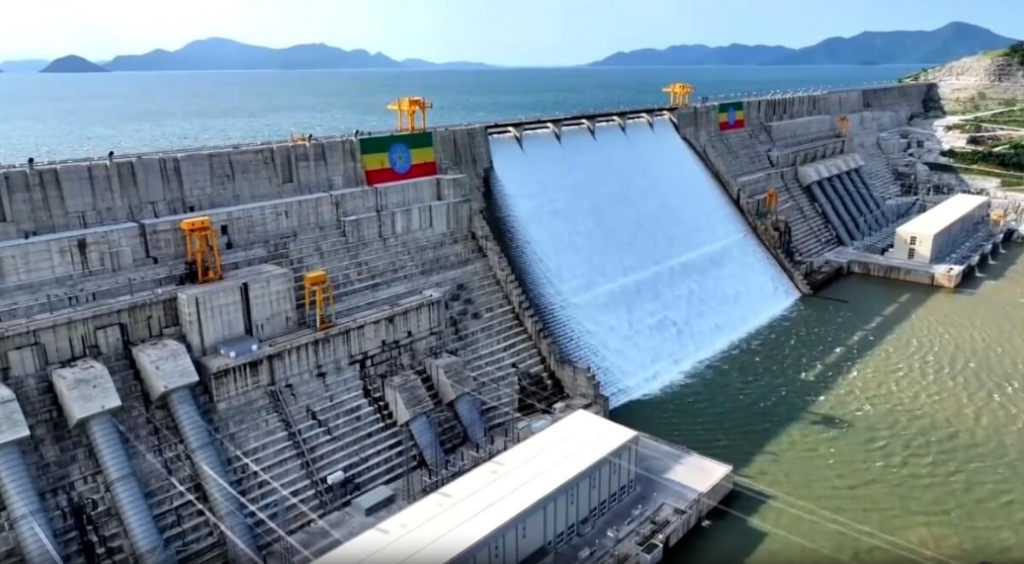
The latest exchange comes against the background of the long-running dispute surrounding Ethiopia’s development of the Grand Ethiopian Renaissance Dam, or GERD, on the Blue Nile.
The dam has become one of Africa’s most consequential transboundary water disputes, with Ethiopia emphasizing its importance for electricity generation and economic development while Egypt has consistently emphasized the need to protect its water security and secure rules governing upstream projects.
Competing Visions of Nile Governance
Beyond disagreements over an individual dam, the dispute raises a larger question about the future of Nile Basin governance.
Ethiopia argues that cooperation should be built around dialogue, sovereign equality and the equitable use of shared water resources among basin countries.
Egypt, meanwhile, has historically emphasized its heavy dependence on the Nile and the potential consequences that upstream development could have for its water supply.
Those competing concerns have made reaching a comprehensive agreement difficult despite years of negotiations involving Ethiopia, Egypt and Sudan.
The increasingly sharp rhetoric also illustrates how the Nile dispute extends beyond technical questions about water flows, dam operations and drought management. It now touches questions of sovereignty, historical agreements, development rights and the broader balance of relationships among African states sharing transboundary resources.
Why This Matters
The latest exchange is significant because the Nile is shared across multiple African countries, making its governance a regional rather than exclusively bilateral issue.
A cooperative framework could potentially allow countries to expand electricity generation, agriculture and economic development while establishing mechanisms to protect downstream states from significant harm.
But increasingly confrontational rhetoric could make diplomatic compromise more difficult.
Ethiopia’s September 22 statement makes clear that Addis Ababa wants future discussions framed around what it considers equitable rights for all Nile Basin states rather than a system in which downstream countries exercise authority over upstream development.
For Egypt, the central concern remains the security of a river on which the country depends heavily for its freshwater needs.
The challenge for both governments—and for the wider Nile Basin—is therefore how to reconcile development, sovereignty and water security within a shared river system.
As Ethiopia and Egypt sharpen their public positions, the larger question remains unresolved: Can the Nile become the foundation for deeper African cooperation, or will competing national interests continue to make one of the continent’s most important rivers a source of geopolitical tension?