
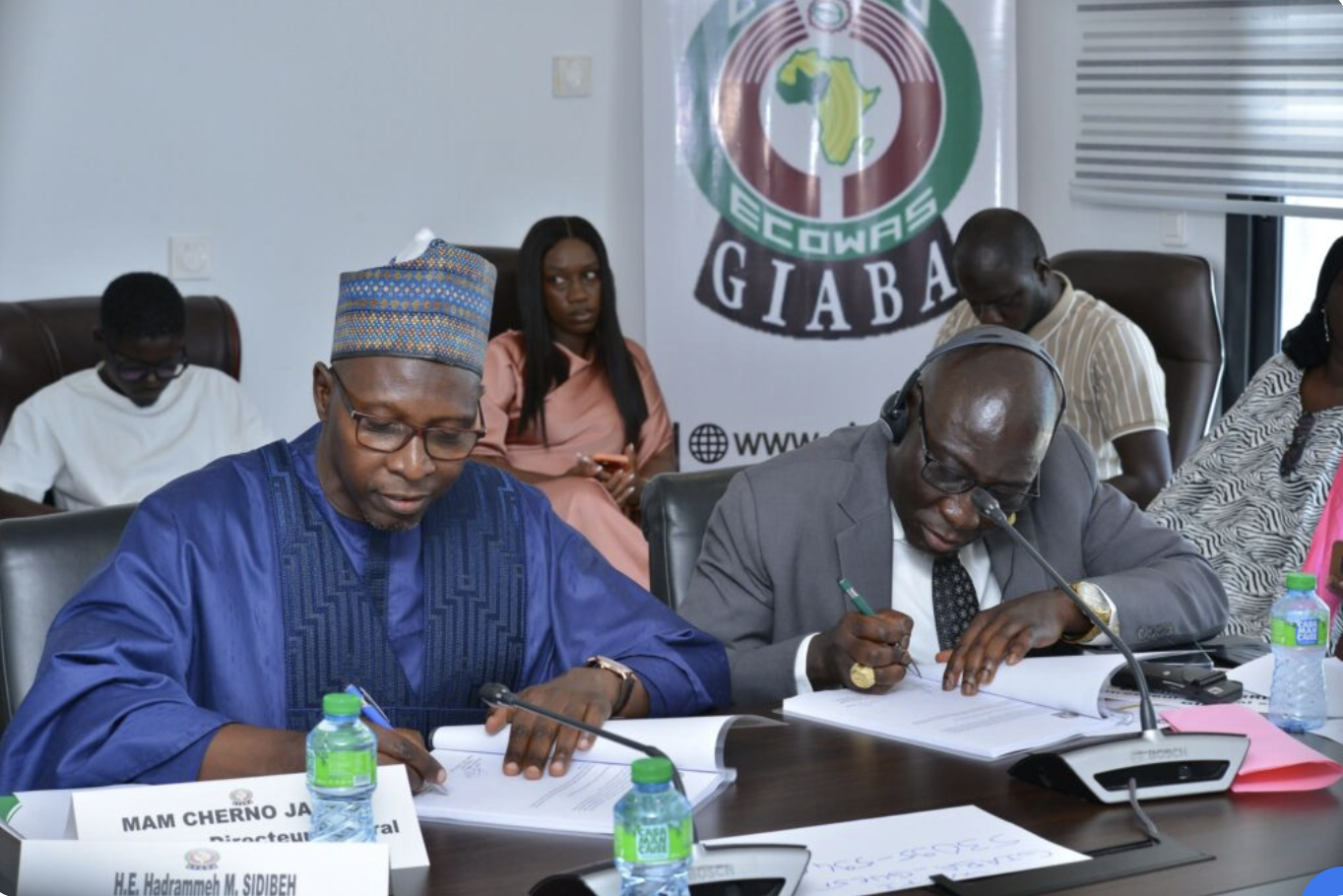
DAKAR, Senegal — September 3, 2026 — Mam Cherno Jallow has formally assumed office as Director-General of the Inter-Governmental Action Group against Money Laundering in West Africa (GIABA), taking leadership of one of ECOWAS’s key institutions responsible for combating money laundering and terrorist financing across the region.
GIABA serves as the specialized institution of the Economic Community of West African States (ECOWAS) focused on strengthening regional cooperation against illicit financial activities. Its work includes supporting member states in developing stronger anti-money-laundering and counter-terrorist-financing systems, improving financial intelligence and strengthening cooperation among national authorities.
Jallow takes office at a time when financial crime has become increasingly connected to some of West Africa’s most serious security and governance challenges.
Money generated through organized crime, trafficking, corruption and other illegal activities can move across national borders and financial systems, making cooperation between West African governments increasingly important.
Following the Money
For ECOWAS, combating terrorism and organized crime is not only about military operations, border security and law enforcement. Authorities must also identify and disrupt the financial networks that allow criminal and extremist organizations to operate.
That makes financial intelligence an important part of the region’s broader security architecture.
GIABA’s role is particularly significant because financial crimes rarely remain confined to one country. Criminal networks can move money, people and assets across borders, requiring countries to exchange information and coordinate their responses.
Financial Security and Regional Integration
From an African integration perspective, stronger financial cooperation is also important as ECOWAS works toward deeper regional trade and economic integration.
Greater movement of goods, services, capital and people can create economic opportunities, but regional institutions must simultaneously strengthen safeguards against criminals exploiting those same networks.
The challenge for Jallow and GIABA will therefore be helping ECOWAS member states improve their ability to detect suspicious financial activity, strengthen enforcement and cooperate across borders.
His arrival comes as West Africa confronts interconnected challenges involving terrorism, organized crime, corruption, illicit financial flows and regional security.
For ECOWAS, the message is increasingly clear: protecting West Africa’s integration project requires not only securing its physical borders but also protecting the integrity of the region’s financial system.