
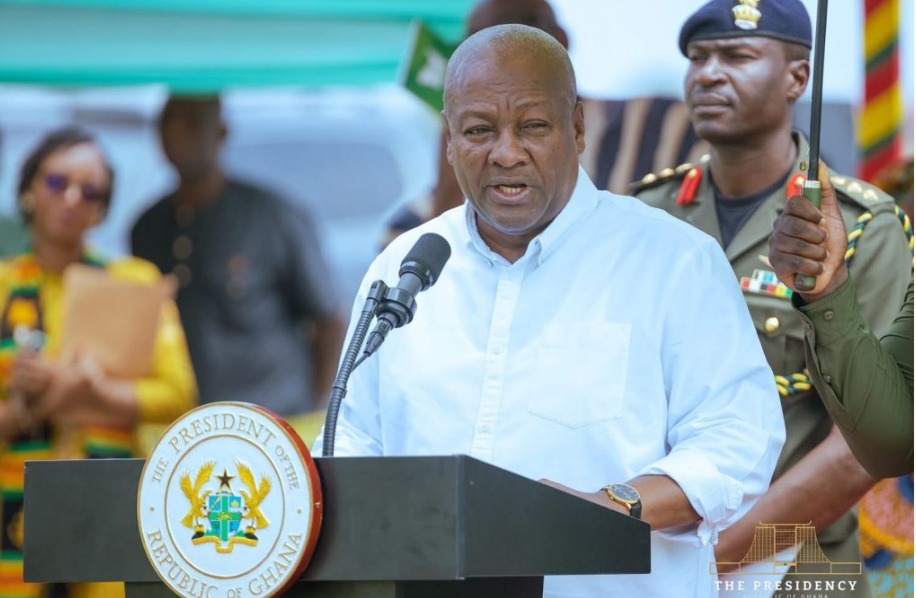
ACCRA, Ghana — Ghanaian President John Dramani Mahama has reaffirmed his government’s commitment to accelerating infrastructure development following a meeting with the Regent of Dagbon, highlighting the administration’s efforts to strengthen regional development and cooperation with traditional authorities.
According to information attributed to the Ghanaian Presidency, the engagement focused on the government’s infrastructure priorities and the importance of working with traditional leadership to advance development initiatives.
The President pledged to intensify infrastructure-development efforts, reinforcing the administration’s stated commitment to improving economic opportunities and addressing development needs across Ghana.
The announcement, however, did not establish that additional infrastructure projects had been completed or provide independently confirmed details of new funding allocations, construction schedules or specific project commitments.
Traditional Leadership and National Development
The meeting underscores the continuing importance of traditional institutions in Ghana’s governance and development framework.
Dagbon, located in northern Ghana, is one of the country’s historically significant traditional kingdoms. Its leadership maintains considerable cultural and social influence, particularly in matters involving community development, local cooperation and traditional governance.
Engagement between national political leaders and traditional authorities can provide an important channel for identifying community priorities, addressing development challenges and strengthening cooperation between government institutions and local populations.
For the Mahama administration, collaboration with traditional leaders may also support efforts to ensure that national infrastructure policies respond to the practical needs of communities.
Infrastructure as a Foundation for Economic Growth
Infrastructure development remains an important component of Ghana’s broader economic-development agenda.
Improved transportation networks, reliable electricity, water systems and public facilities can contribute to economic growth by reducing transportation costs, improving access to essential services and connecting producers with markets.
In northern Ghana, infrastructure investment has particular potential to strengthen agricultural production, commercial transportation and trade between rural communities and major economic centers.
Road improvements, for example, can help farmers transport agricultural products more efficiently, while expanded electricity and water infrastructure can support small businesses, education and healthcare services.
However, the economic impact of infrastructure commitments ultimately depends on financing, implementation, maintenance and whether completed projects meet the needs of local communities.
Northern Ghana and Regional Economic Integration
Infrastructure development in northern Ghana also carries implications beyond the country’s domestic economy.
Ghana occupies an important geographical position within West Africa, with transportation corridors connecting its coastal ports and southern commercial centers to northern communities and neighboring countries, including Burkina Faso.
Strengthening these connections could contribute to the objectives of the Economic Community of West African States (ECOWAS) and the African Continental Free Trade Area (AfCFTA).
Both regional frameworks emphasize the importance of improving trade connectivity, reducing barriers to commerce and creating economic opportunities through greater market integration.
Better transportation infrastructure could make it easier for Ghanaian producers to reach regional markets while supporting the movement of goods and services across borders.
Nevertheless, improved infrastructure alone does not guarantee greater regional trade. Customs procedures, border administration, security conditions and trade regulations also influence how effectively transportation networks support economic integration.
From Political Commitments to Measurable Results
While President Mahama’s pledge signals continued government attention to infrastructure development, the next important question concerns implementation.
The announcement provides an indication of policy direction, but further information would be necessary to determine its practical significance.
Important indicators will include the identification of specific projects, publication of financing arrangements, procurement decisions, construction timelines and measurable progress toward completion.
Public accountability will also be essential to determining whether promised investments produce improvements in transportation, public services and economic opportunities.
For communities awaiting infrastructure improvements, the most significant measure of government performance will be whether commitments translate into completed, functional and accessible facilities.
Why This Matters for Africa
Ghana’s engagement with Dagbon’s traditional leadership illustrates a broader governance challenge facing African countries: how to connect national development strategies with the priorities of local communities.
Across the continent, governments are attempting to expand infrastructure networks while strengthening domestic economies and promoting regional integration.
The African Union’s Agenda 2063 identifies infrastructure connectivity, economic transformation and inclusive development as important foundations for Africa’s long-term prosperity.
Ghana’s experience demonstrates how cooperation between national government institutions and traditional authorities could contribute to those objectives.
However, the success of such cooperation must ultimately be assessed through development outcomes rather than political announcements alone.