
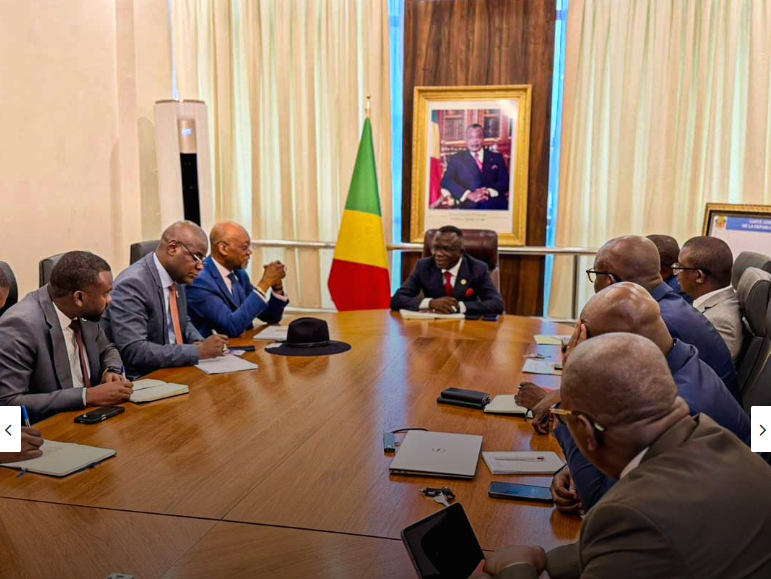
BRAZZAVILLE, Republic of Congo — August 18, 2026 — The Economic Community of Central African States (ECCAS) is continuing its regional integration efforts, with its official platform reporting fresh engagement between an ECCAS delegation and the Republic of Congo’s ministry responsible for economic planning and statistics.
The meeting places attention on areas that are critical to Central Africa’s integration agenda, including economic planning, reliable regional statistics and coordination of development priorities.
ECCAS is one of the African Union-recognized Regional Economic Communities and is mandated to promote cooperation and integration across areas including trade, transport, communications, energy, agriculture, finance and the movement of people.
Regional infrastructure is also an important part of that agenda. Previous ECCAS initiatives have included work on cross-border transport and trade corridors designed to improve connections among Central African economies. In 2025, for example, an ECCAS delegation led by Marie-Thérèse Chantal Mfoula Edjomo, Commissioner responsible for Territorial Planning and Infrastructure, participated in preparations for a regional transport and trade facilitation project involving the Central African Republic and Democratic Republic of Congo.
Economic planning and statistics are particularly important because governments need comparable information to measure trade, infrastructure investment, economic performance and progress toward regional integration.
Stronger coordination could also help Central African countries identify infrastructure gaps and develop projects that connect national economies rather than leaving transportation, energy and trade networks largely confined within individual borders.
The broader objective is to make regional integration more practical for citizens and businesses by improving connections between markets, reducing obstacles to trade and encouraging investment across national boundaries.
ECCAS has previously emphasized private-sector development, economic diversification and regional integration as important elements of its strategy for Central Africa.
Why it matters: Central Africa has significant natural resources and economic potential, but stronger regional connections are necessary to turn those advantages into greater intra-African trade and shared development. Better economic planning, comparable statistics*,* and cross-border infrastructure can help ECCAS member states build a more interconnected regional economy and contribute to the African Union’s wider continental integration agenda.