
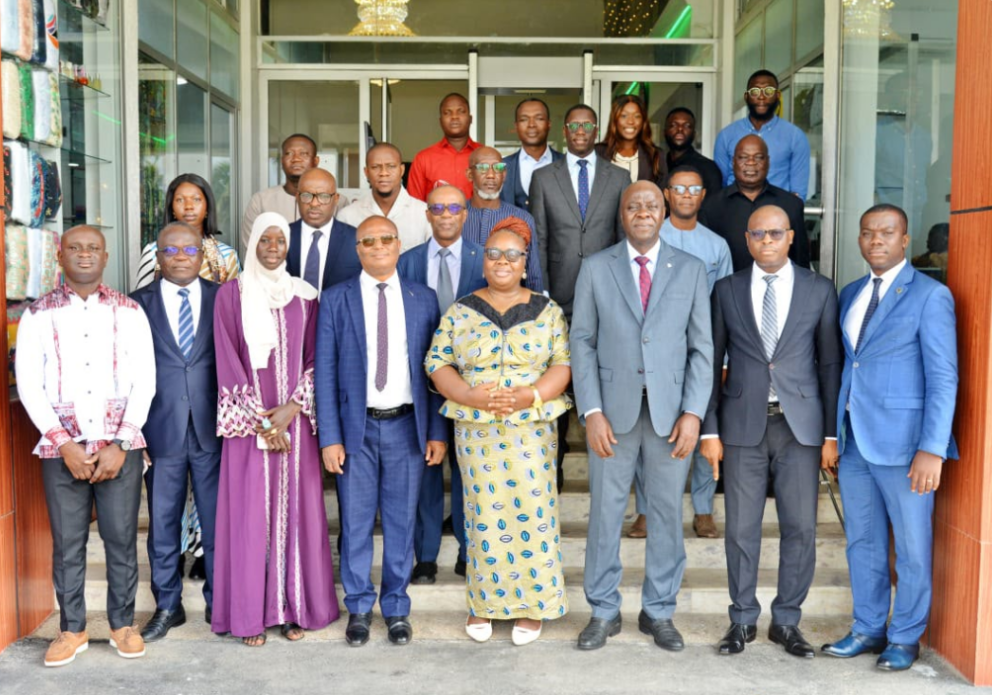
ABUJA, Nigeria — August 11, 2026 — The Economic Community of West African States is strengthening efforts to place education, science, skills development and culture at the center of West Africa’s long-term integration agenda as the regional bloc works toward the objectives of ECOWAS Vision 2050.
ECOWAS reported that its Education, Science and Culture Directorate held a presentation and information-sharing meeting on August 10 focusing on major programs being implemented under the regional vision.
The engagement highlights an important part of regional integration that can sometimes receive less attention than trade, infrastructure and political cooperation: developing the people who will ultimately participate in an integrated West African economy.
What Is ECOWAS Vision 2050?
ECOWAS Vision 2050 represents the regional bloc’s long-term framework for building a more integrated, peaceful and prosperous West Africa.
The vision places greater emphasis on people-centered development and reflects ECOWAS’s broader ambition to move from an organization primarily associated with governments toward a regional community that produces tangible benefits for ordinary citizens.
Education, scientific research, technological development and cultural cooperation are therefore important components of that transformation.
For regional integration to succeed, West Africa needs more than agreements between governments.
It also needs people with the education, technical skills and professional qualifications necessary to participate in a larger regional economy.
Education as Regional Infrastructure
Roads, ports and electricity networks are normally considered infrastructure.
But education can also be viewed as a form of regional infrastructure.
Consider a young person studying engineering in Ghana, information technology in Nigeria, agriculture in Côte d’Ivoire or another specialized field elsewhere in West Africa.
In a genuinely integrated regional economy, those skills should have value beyond the individual’s home country.
Workers should increasingly be able to pursue opportunities throughout the region, while businesses should have access to a larger pool of qualified West African professionals.
That requires cooperation among governments and educational institutions, as well as greater coordination around skills, training and qualifications.
Without that human-capital foundation, economic integration risks advancing faster than the workforce needed to support it.
Science and Research Matter Too
Science and research are equally important.
West Africa faces challenges that frequently cross national borders, including food insecurity, climate change, disease outbreaks, energy shortages and environmental degradation.
Regional scientific cooperation could allow countries to share knowledge, research capacity and technological solutions rather than addressing every challenge separately.
Agricultural researchers, for example, could cooperate on crops that are more resistant to drought and changing climate conditions.
Health researchers could collaborate on regional disease surveillance.
Universities and technology institutions could work together on renewable energy, artificial intelligence, digital infrastructure and other emerging industries.
Such cooperation could help West Africa develop more of its own solutions to regional problems.
Culture Is Also Part of Integration
The inclusion of culture in the ECOWAS agenda is equally significant.
West African borders divide communities that often share languages, traditions, music, food and historical connections.
Culture therefore provides an opportunity to build regional identity alongside economic integration.
Greater cultural exchange can help citizens see ECOWAS not simply as an institution headquartered in Abuja, but as a community connecting hundreds of millions of people across West Africa.
Sport, music, film, literature, tourism and cultural festivals can all contribute to strengthening those connections.
Preparing Young People for a Regional Economy
Perhaps the biggest issue is West Africa’s young population.
Millions of young people will enter the labor market over the coming decades.
Creating opportunities for them will require significant investment in education, vocational training, entrepreneurship, science and technology.
But regional integration could expand those opportunities.
Instead of young people viewing employment possibilities only through the economies of their individual countries, a more integrated ECOWAS could provide access to a much larger regional labor market.
For that to work effectively, however, governments must ensure that education and training programs actually prepare young people for the industries West Africa is trying to develop.
Beyond Trade Agreements
ECOWAS is widely associated with free movement, regional trade, security cooperation and political diplomacy.
But Vision 2050 raises a broader question:
What kind of West African community is ECOWAS ultimately trying to build?
If the objective is deeper integration, then roads must connect countries, businesses must be able to trade across borders and people must be able to move.
But citizens must also have the education and skills necessary to take advantage of those opportunities.
Universities and researchers must be able to cooperate.
Young entrepreneurs must be able to innovate.
And West Africans must increasingly see regional integration as something that affects their everyday lives.
The August 10 meeting of the ECOWAS Education, Science and Culture Directorate may appear technical, but the issues behind it reach directly into the future of the region.
Because ultimately, West African integration will not be achieved by trade agreements alone.
It will also be built in classrooms, universities, laboratories, training centers and cultural institutions across the region.