
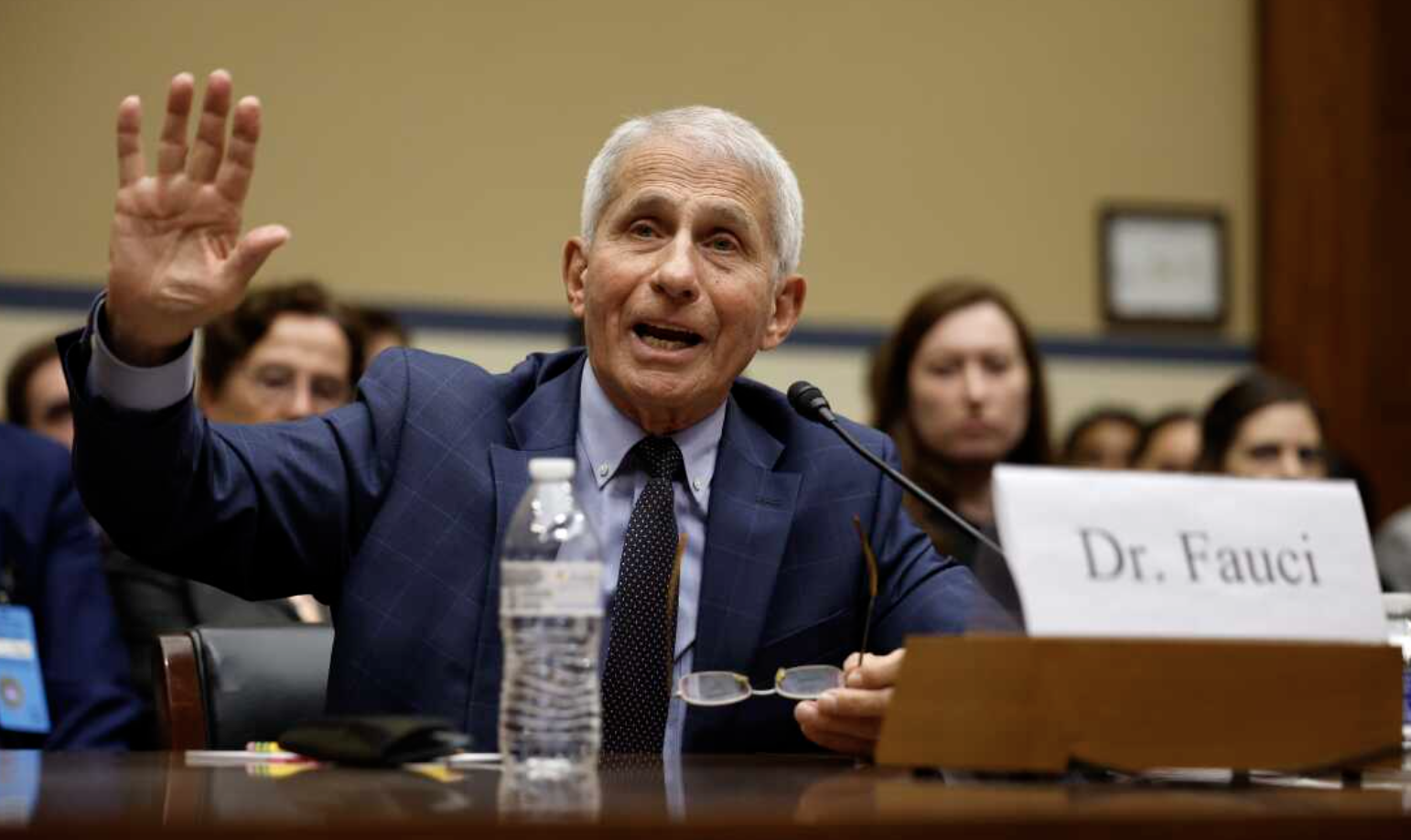
The contentious Senate hearing involving Dr. Anthony Fauci was about much more than the former public health official’s decision to invoke the Fifth Amendment. It became another vivid example of America’s deep political divisions—and a reminder of why so many Americans have lost confidence in Congress as an institution.
Supporters of the hearing argued that Congress was fulfilling one of its most important constitutional responsibilities: oversight. From their perspective, lawmakers have a duty to examine the government’s response to the COVID-19 pandemic, including decisions surrounding lockdowns, vaccine policies, federal research funding, and the origins of the virus. They contend that no public official, regardless of status or past service, should be beyond congressional scrutiny when government decisions have affected the lives of millions of Americans.
Critics, however, viewed the hearing through an entirely different lens. They argued that it was less about uncovering new information and more about staging a political spectacle. Democratic lawmakers maintained that the proceedings were designed to place Fauci in legal and political jeopardy rather than advance the public’s understanding of the pandemic. Many scientists also defended Fauci’s record, arguing that the allegations raised against him were not supported by credible scientific evidence.
Regardless of where Americans stand on Dr. Fauci personally, the hearing exposed a broader concern that extends far beyond one individual. Increasingly, many citizens believe Congress devotes more energy to highly publicized investigations than to solving the problems that directly affect everyday Americans.
Public confidence in Congress has remained consistently low for years. Across the political spectrum, many voters believe lawmakers spend too much time fighting partisan battles while making too little progress on issues such as inflation, healthcare costs, immigration, housing affordability, education, crime, infrastructure, and the growing national debt. These are the concerns many Americans expect Congress to address with the same urgency displayed during nationally televised hearings.
For many observers, the Fauci hearing reinforced this perception. Rather than serving as a bipartisan effort to establish facts or evaluate lessons learned from the pandemic, the hearing often reflected entrenched political positions. Republican senators questioned Fauci’s credibility and decisions during the pandemic, while Democratic senators defended his decades of public service and criticized the investigation as politically motivated. The result was two sharply different narratives, leaving many Americans with little expectation that either side was genuinely seeking common ground.
Fauci’s decision to invoke the Fifth Amendment became one of the hearing’s defining moments. Legally, the Fifth Amendment is a constitutional safeguard that protects individuals from self-incrimination, and exercising that right should not be interpreted as proof of guilt or innocence. Yet in today’s political climate, such decisions rarely remain legal questions alone. Supporters of the hearing viewed the move as evasive, while Fauci’s defenders argued that any statement he made could have been used against him in an increasingly polarized environment.
This divide reflects a larger problem confronting Congress itself. Too often, congressional investigations are viewed through partisan lenses before testimony even begins. Lawmakers frequently enter hearings with conclusions already formed, leaving little room for genuine fact-finding or broad public consensus.
Another factor contributing to declining trust is the widespread perception of selective accountability. Many Americans believe congressional investigations are pursued aggressively when political opponents are involved but receive far less attention when members of one’s own party face similar allegations. Whether this perception is entirely justified or not, it has become deeply rooted in public opinion and continues to erode confidence in Congress as an impartial oversight body.
Congress unquestionably has a constitutional responsibility to investigate executive branch actions and ensure accountability. Vigorous oversight is one of the cornerstones of American democracy. However, oversight is most effective when it is viewed as fair, objective, evidence-based, and aimed at improving public policy rather than generating political headlines.
The COVID-19 pandemic was one of the most significant events in modern American history. Decisions made by elected officials, federal agencies, scientists, governors, businesses, and local governments affected virtually every household in the nation. Reasonable people can disagree about whether those decisions were appropriate, excessive, or insufficient. Those debates deserve thoughtful examination grounded in evidence, transparency, and accountability—not partisan loyalty.
Ultimately, the Fauci hearing may be remembered less for the testimony that was delivered—or withheld—and more for what it revealed about the state of American politics. It underscored the deep mistrust between political parties, between elected officials and public health experts, and increasingly between citizens and their government.
Restoring public confidence in Congress will require more than high-profile hearings or televised confrontations. It will require transparency, consistency, equal application of oversight, bipartisan cooperation whenever possible, and a demonstrated commitment to addressing the challenges Americans face every day.
Whether one believes Dr. Fauci was unfairly targeted or appropriately questioned, the broader lesson remains the same. Americans expect both accountability and effective governance. Oversight and policymaking are not competing responsibilities—they are complementary ones. Until Congress demonstrates that it can deliver both with fairness and consistency, public skepticism is likely to remain one of the defining features of American politics.