
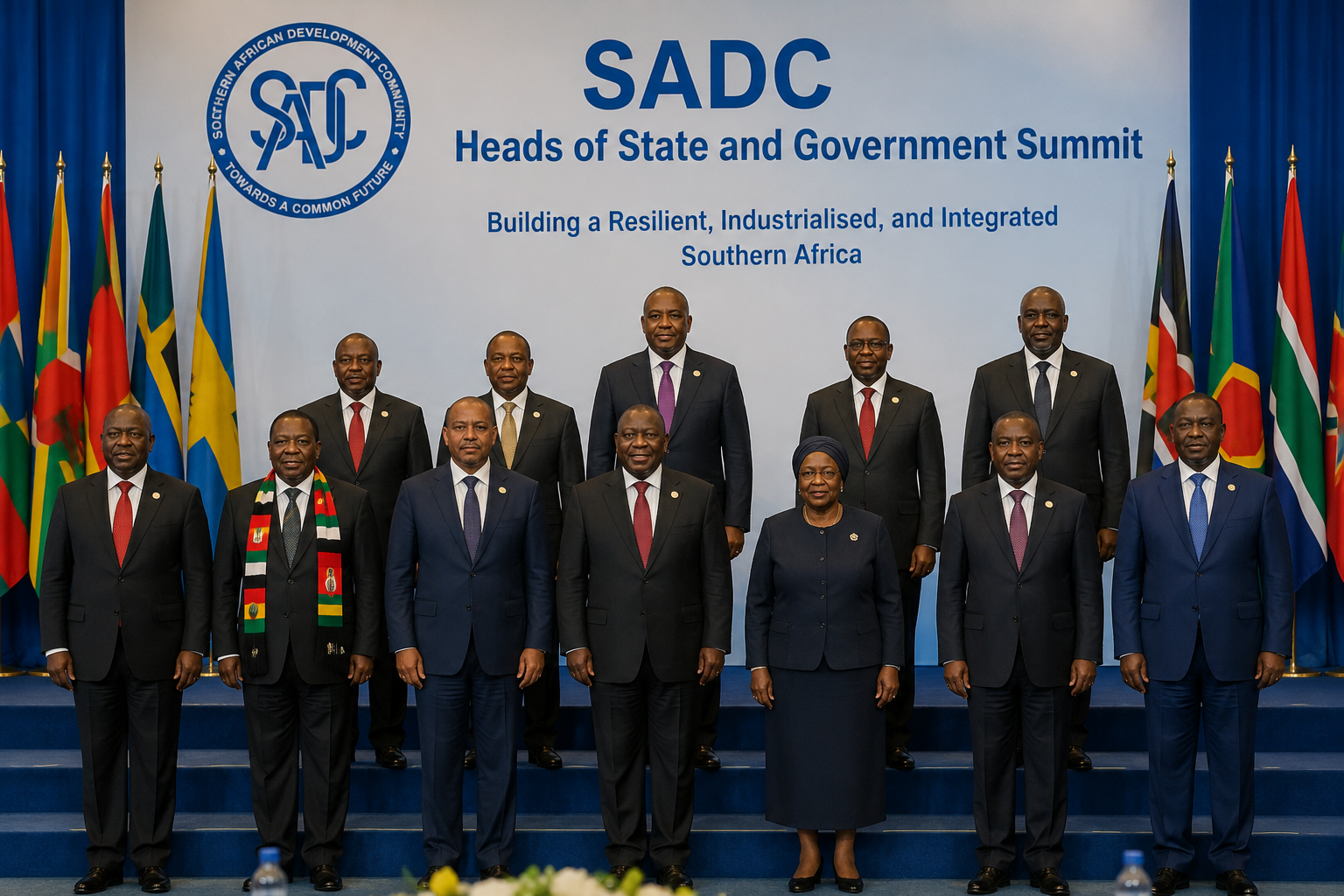
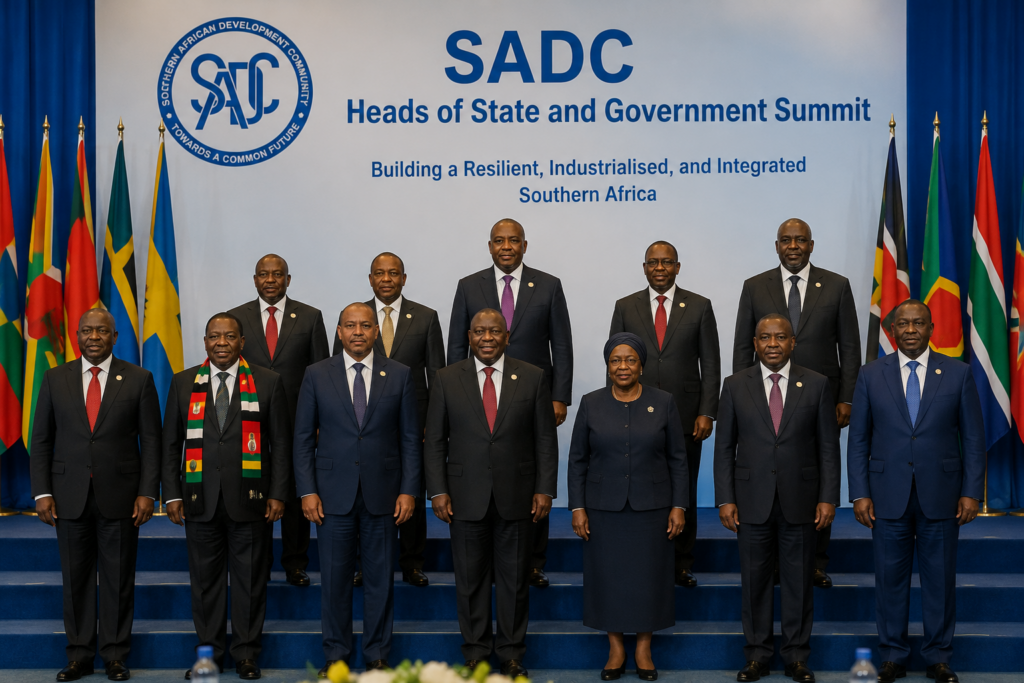
DURBAN, South Africa — The Southern African Development Community (SADC) is entering a critical period of regional decision-making as leaders, policymakers, investors, and business executives gather in Durban for the 9th Annual SADC Industrialisation Week, while preparations continue for the 46th Ordinary Summit of SADC Heads of State and Government next month. The meetings underscore the bloc’s effort to advance economic transformation while strengthening regional security, democratic governance, and disaster resilience.
Industrialisation Week, taking place July 27–31 at the Durban International Convention Centre, is being held under the theme “Resilient, Sustainable and Inclusive Industrialisation through Infrastructure Development, Agricultural and Critical Minerals Transformation in Pursuit of a Just World.” The event is regarded as SADC’s premier platform for promoting industrial development, regional investment, value addition, and cross-border economic integration.
The week-long program is expected to bring together government leaders, private-sector executives, development finance institutions, researchers, and investors to discuss expanding regional manufacturing, strengthening supply chains, improving transport and energy infrastructure, and increasing investment in agriculture and critical minerals. South African President Cyril Ramaphosa is expected to deliver the keynote address, alongside SADC Executive Secretary Elias Magosi and ministers from across the region.
The gathering also serves as a key precursor to the 46th SADC Summit of Heads of State and Government, scheduled for August 17 in Durban. During the weeks leading up to the summit, ministers and senior officials will meet to shape the regional agenda on economic integration, infrastructure, governance, and security before heads of state make final policy decisions.
Beyond industrial development, SADC continues to place significant emphasis on regional resilience. The organization recently announced a regional cyclone and flood simulation exercise in Mozambique, aimed at strengthening coordination among member states in responding to natural disasters. The exercise is intended to improve emergency preparedness, information sharing, and humanitarian response as Southern Africa faces increasingly frequent climate-related disasters.
Regional governance and security also remain high on SADC’s agenda. The bloc has continued preparations for electoral observation missions, including Zambia’s upcoming general election, while meetings of the Organ on Politics, Defence and Security Cooperation focus on democratic governance, regional stability, and conflict prevention.
Taken together, these initiatives illustrate SADC’s broad approach to regional integration. Rather than focusing solely on trade, the organization is pursuing a strategy that links industrial development, infrastructure investment, democratic governance, disaster preparedness, and regional security as interconnected pillars of long-term growth and stability.
As Southern Africa prepares for its annual summit, decisions made in Durban over the coming weeks are expected to influence the region’s economic and political direction for the year ahead while advancing SADC’s long-term vision of a more resilient, integrated, and industrialized Southern Africa.