
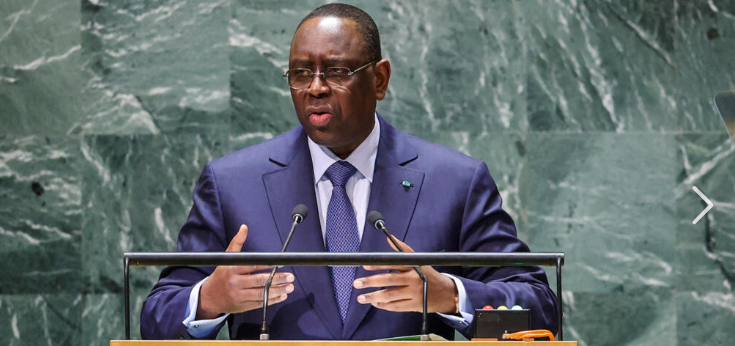
UNITED NATIONS, NEW YORK — The race to become the next Secretary-General of the United Nations is gaining momentum as the organization prepares to choose a successor to António Guterres, whose second five-year term expires on December 31, 2026.
Six candidates are expected to participate in a public debate at United Nations Headquarters in New York, offering member states and the international community an opportunity to hear their visions for leading the world’s largest multilateral organization. The debates form part of the informal selection process before the U.N. Security Council begins considering nominees later this year.
The next Secretary-General will inherit an organization confronting multiple global challenges, including armed conflicts in Ukraine, Gaza and Sudan, rising geopolitical tensions, climate change, humanitarian crises, and growing financial pressures on the United Nations itself.
Among the candidates is former Senegalese President Macky Sall, whose campaign received a significant boost after Senegalese President Bassirou Diomaye Faye officially endorsed his candidacy despite years of political rivalry between the two leaders.
According to Senegal’s Ministry of Foreign Affairs, President Faye instructed the government and the country’s diplomatic network to fully support Sall’s bid, describing it as “Senegal’s candidacy in the service of Africa.” The endorsement followed a meeting between the two leaders and represents a rare display of national unity after a period of strained political relations.
Sall served as President of Senegal from 2012 to 2024 before leaving office following the election of Faye. Although the current administration has frequently criticized Sall’s record, President Faye’s backing is seen as an effort to strengthen Africa’s voice within the United Nations and rally continental support for a single candidate.
Sall’s nomination was initially put forward by Burundi, the current Chair of the African Union, before receiving the formal endorsement of Senegal. His candidacy is expected to compete alongside several prominent international figures seeking the U.N.’s highest office.
The selection of the next Secretary-General follows an established process in which candidates participate in public dialogues before the 15-member U.N. Security Council privately deliberates and recommends a single nominee. Any recommendation requires the approval of the Council’s five permanent members—the United States, China, Russia, the United Kingdom and France—each of which holds veto power. The successful nominee must then be confirmed by the U.N. General Assembly.
While there is no formal rule governing regional rotation, many diplomats argue that it is Latin America’s turn to hold the post, a factor that could complicate Sall’s campaign. Others have renewed calls for the United Nations to appoint its first female Secretary-General, adding another layer of uncertainty to what is expected to be a closely watched selection process.
With Guterres preparing to leave office after a decade leading the United Nations, the coming months are expected to shape the organization’s future direction as member states seek a leader capable of navigating one of the most challenging periods in the U.N.’s history.